
Warriors Struggles Without Steph Curry and Lendeborg’s Role
Explore the Warriors' struggles without Steph Curry and how Yaxel Lendeborg is stepping up to create offensive advantages.
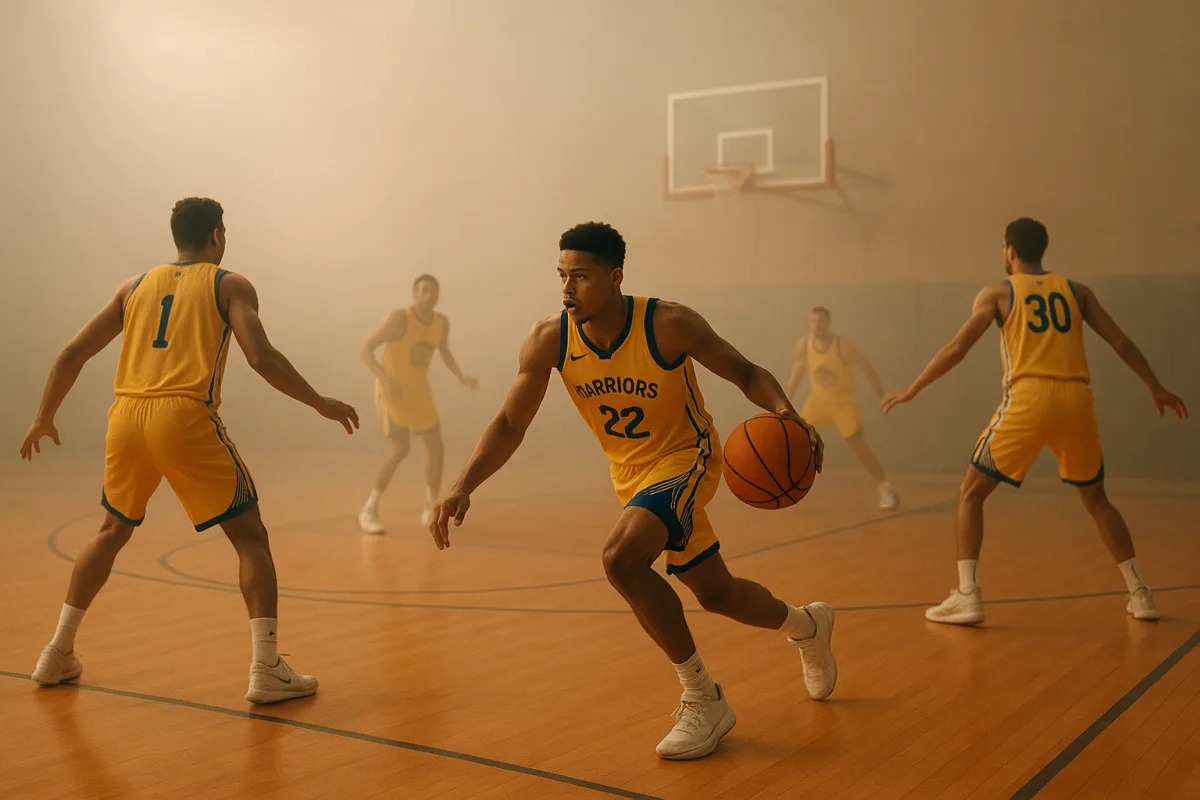
The Spurs game put the problem in plain view
San Antonio beat Golden State 123-85 in an NBA Cup game on Nov. 13, a result NBA.com highlighted after the Warriors’ offense bottomed out without Stephen Curry.[2] The score was lopsided, but the shooting split explains where the game got away.
Golden State made 31 of 93 field-goal attempts, 33.3%, while converting 15 of 41 threes, 36.6%.[2] Those numbers tell you the Warriors did not lose because every perimeter shot failed. They lost because almost everything inside the arc did.
Fifteen made threes account for 45 points. The Warriors’ other 16 made field goals were twos, meaning they generated only 32 points from those makes, a thin return from 52 two-point attempts.
That is the central problem Curry normally solves. He creates a defensive emergency before the ball reaches the rim, whether by shooting off movement, drawing two defenders, or pulling a big man away from the paint.
Without him, a possession needs another player to create the first crack. If nobody does, the offense can still produce a three-point attempt, but it often arrives late in the clock or without the advantage that makes it efficient.
Advantage creation is Lendeborg’s new assignment
Yaxel Lendeborg, Golden State’s 24-year-old rookie forward, entered this stretch averaging 20.2 points, 7.4 rebounds, and 3.5 assists per game.[2] Those are strong numbers, but they do not automatically describe the demands of leading an offense without Curry.
The Athletic reported that Lendeborg said he needed to be “a lot, lot, lot more aggressive” in Curry’s absence, while placing his confidence at “6 out of 10.” That is a candid assessment of a role change, not an indictment of his readiness.
Aggression, in this setting, does not mean taking every available shot. It means recognizing when the defense has not loaded up, attacking before it can organize, and accepting that his drives now set the shot quality for everyone else.
CBS Sports framed the assignment after Curry’s injury clearly: Lendeborg has to score in isolation, create for teammates, and fuel transition chances. Those are three different forms of advantage creation, and the Warriors need all of them.
An isolation score beats a set defense directly. A drive that draws a second defender can create an open kickout. A defensive rebound pushed into transition can produce a shot before an opposing center reaches the paint.
Curry creates many of those openings with shooting gravity. Lendeborg has a different route. His value comes from putting the ball on the floor, reaching the paint, seeing the extra defender, and delivering the pass before the defense recovers.
That sequence has a cost. Once opponents identify him as the lead threat, they can send help earlier, crowd his driving lanes, and make him read a rotating defense. CBS Sports anticipated that opponents would circle his name and increase their focus.
The Spurs presented an especially hard version of that test. Victor Wembanyama, San Antonio’s center and the league’s most disruptive interior defender, has averaged 30.3 points, 11.7 rebounds, 4.4 blocks, and 2.8 assists this season.[2]
When a rim protector of that caliber is waiting behind the first defender, a straight-line drive is rarely enough. The initial attacker must force the help defender to commit, then locate the open man, or make a quick decision before the shot blocker arrives.
Lendeborg finished the Spurs loss with seven points, seven rebounds, and six assists.[2] The six assists matter because they suggest he still found teammates, but seven points left Golden State without enough direct scoring pressure to bend San Antonio’s defense.
Why the three-point math needs a creator
Golden State’s early-season three-point volume gave it a potential survival plan. CBS Sports reported the Warriors were making an NBA-leading 16.5 threes per game at a league-leading 39.7% before Curry’s injury, with several rotation players shooting well.
Lendeborg was among them, making 2.4 threes per game at 42.5%, according to CBS Sports. Brandin Podziemski and De’Anthony Melton also gave Golden State reliable volume, while Georges Niang, Al Horford, LJ Cryer, and Will Richard expanded the shooting pool.
The important distinction is between making open threes and generating them. Curry’s 4.3 made threes per game at a 45.7% rate were a direct scoring loss, but his movement also helped create attempts that teammates could take in rhythm.
Lendeborg can replace part of that value if his drives create two-on-one decisions. The defense either stays attached to shooters and lets him attack the lane, or sends help and leaves a shooter briefly available on the perimeter.
That is why his assist total matters, but only in context. An assist records a made basket after a pass. It does not capture every drive that forces a rotation, every hockey assist, or every advantage that becomes a later shot.
The Spurs game exposed the other side of the math. Golden State hit 36.6% of its threes, a credible percentage, but shot only 30.8% on twos, based on its 16 makes on 52 attempts inside the arc.[2]
If you are watching the next games, track whether Lendeborg gets downhill early enough to make the weak-side defender choose. A kickout three after a collapsed defense is a different possession from a contested perimeter attempt with no paint touch.
The possession game still sets the floor
Curry’s absence changes Golden State’s margin for error because he is the team’s bailout player. A disorganized possession can still end in a Curry three, a clever pass, or a late-clock shot that few other players can create.
CBS Sports identified turnovers and rebounding as the broad requirements for surviving without him. Those are possession categories: turnovers end your chance to score, while offensive rebounds extend it and prevent the opponent from starting its transition attack.
Lendeborg’s turnover data deserves care. StatGrades lists his turnovers per 100 possessions as slightly above average and gives him a modest overall grade, but a per-possession assessment does not tell you what happened specifically in Curry-less games.[3]
No published split establishes Lendeborg’s individual numbers without Curry. You should avoid treating a single seven-point performance against San Antonio, or a single 37-point outing against the Clippers, as a complete verdict on his ability to lead the offense.
The Clippers game did show the upside. Al Jazeera reported that Lendeborg scored 37 points with six assists, six made threes, and one turnover in a Curry-less win, production that illustrates how much scoring and playmaking he can supply on the right night.[4]
But the Spurs brought a higher defensive bar, and the schedule will not always cooperate. The point is not that Lendeborg must reproduce Curry’s shot profile. It is that Golden State needs him to create enough efficient possessions to preserve its shooting advantages.
Bigger lineups have not solved the rating problem
The post-injury starting group has featured Will Richard at point guard, alongside Podziemski, Melton, Lendeborg, and Draymond Green.[5] It is a larger group than a Curry-led unit, with more defensive size and more potential rebounding across positions.
Still, lineup size does not guarantee stops. In the Warriors’ Curry-free minutes this season, StatMuse lists a 120.3 offensive rating and a 123.4 defensive rating, which works out to a minus-3.1 net rating per 100 possessions.[6]
An offensive rating measures points scored per 100 possessions. A defensive rating measures points allowed per 100 possessions. These are pace-neutral figures, so they help separate efficiency from a game that happened to have more or fewer possessions.
The 120.3 offensive rating is not inherently weak. The 123.4 defensive rating is the larger problem, because Golden State has needed elite offense to overcome the points it has surrendered during these Curry-free stretches.[6]
CBS Sports noted that Golden State ranked ninth defensively after removing garbage time before Curry’s injury, citing Cleaning the Glass. It also suggested Melton’s likely expanded role could give the club another perimeter defender in Curry’s place.
There is no published evidence yet for a detailed schematic overhaul, and the Spurs result alone cannot establish one. What you can say is that a larger starting group has not yet produced the possession control Golden State needs.
Green’s role grows here as much as Lendeborg’s does. Lendeborg must create the first offensive advantage, while Green must help organize the defense, finish possessions with rebounds, and connect actions without wasting possessions.
What would count as progress before Curry returns
The Warriors have officially said Curry will miss at least two weeks after suffering an oblique tear, with a reevaluation after that period.[1] Reports about typical injury timelines cannot substitute for Golden State’s medical update because no exact return date has been announced.
Curry himself has praised Lendeborg as the “full package,” according to NBC Bay Area, while teammates and coach Steve Kerr have also publicly emphasized the rookie’s versatility and maturity.[7] The organization’s message has been belief, not doubt.
For Golden State, progress does not require Lendeborg to score 30 every night. It requires him to create enough paint pressure that Podziemski, Melton, Richard, and the frontcourt shooters receive clean attempts before the defense resets.
A better Warriors possession starts with a purposeful first action, reaches the paint or forces help, and ends with a shot the defense had to concede. Against San Antonio, too many possessions ended after the defense had already won that first battle.
Frequently Asked Questions
How are the Warriors struggling without Steph Curry?
The Warriors have faced offensive challenges without Curry, as shown in their 123-85 loss to San Antonio. They made 15 three-pointers but shot only 31-for-93 overall, indicating a major problem inside the arc where Curry’s ability to create paint pressure is missed. Their offense still scores at a high rate per 100 possessions, but defensive struggles and lack of efficient inside scoring have hurt their overall performance.
What role does Yaxel Lendeborg play without Curry?
Lendeborg’s role shifts to creating advantages by forcing defensive help and then finding open shots, free throws, or extra possessions. He is expected to be more aggressive in attacking the paint, creating isolation scoring opportunities, and facilitating teammates, rather than replicating every aspect of Curry’s game.
How does Steph Curry's injury affect Warriors' offense?
Curry’s injury removes their primary advantage creator who draws multiple defenders and opens up efficient scoring chances inside the arc. Without him, the Warriors rely more on three-point shooting and other players to generate early offensive pressure, but this often results in less efficient, late-clock attempts and fewer high-quality inside opportunities.
Can Yaxel Lendeborg create advantages like Curry?
Lendeborg creates advantages differently by driving to the paint, drawing help defenders, and making quick passes before the defense recovers. While he can generate open shots and assist teammates, opponents can focus more on him, making it harder to consistently break down defenses as Curry does with his shooting gravity.
What challenges does Golden State face without Curry?
Golden State struggles to generate paint pressure and efficient two-point scoring without Curry’s ability to draw defenders and create openings. Opposing defenses can crowd driving lanes and rotate help defenders, making it difficult for Lendeborg and others to maintain offensive flow. Defensively, the team’s rating has also suffered, contributing to overall difficulties.
How we researched this
This article was assembled from 4 published articles, 9 cited references.
Nothing here is based on hands-on testing. Where a figure or finding appears, it belongs to the source cited beside it, and the writing says so rather than implying otherwise. Every source is listed below so you can check it.
Sources
Yaxel Lendeborg knows he must be 'a lot, lot, lot more aggressive' without Steph Curry, The Athletic NBA
How can Warriors survive Stephen Curry's absence? Yaxel Lendeborg has to step up, but that's not all, CBS Sports NBA
3 takeaways from the Trail Blazers' thumping of the Kings, OregonLive.com
Highlights: Warriors vs. San Antonio Spurs (NBA Cup) | 11/13/26, NBA.com
Stephen Curry Injury Update - 11/12/26 | Golden State Warriors
Yaxel Lendeborg Stats, Height, Weight, Position, Draft Status and more | Basketball-Reference.com
Yaxel Lendeborg (F, Golden State Warriors), NBA Stats, Grade & Game Log | StatGrades
‘Dance like Steph’: Lendeborg helps Warriors sink Clippers without Curry
Golden State Warriors Depth Chart 2026-27: Starting Lineup and Rotation | AskScores
Warriors Offensive Rating, Defensive Rating, Pace Without Curry This Season | StatMuse
Yaxel Lendeborg is ‘full package’ for Warriors, per Steph Curry, NBC Bay Area
Warriors Announce Injury Return Timeline for Steph Curry's Oblique Tear
Related Articles

Steph Curry Warriors Contract Future and Over-38 Rule
Explore Steph Curry's contract future with the Warriors and how the Over-38 Rule shapes his extension options and team roster decisions.
Yaxel Lendeborg Rookie Breakout and Impact on Warriors
Explore Yaxel Lendeborg's rookie breakout and how he's impacting the Golden State Warriors' offense and team dynamics in 2026.
Yaxel Lendeborg Warriors Rookie Faces Criticism Amid Team Struggles
Explore Warriors rookie Yaxel Lendeborg's defensive struggles and Steve Kerr's critique amid Golden State's early season challenges.
Stephen Curry Contract Talks and Warriors 2026-27 Outlook
Explore Stephen Curry contract talks, NBA rules, and how his decisions shape the Warriors' 2026-27 roster and salary cap outlook.