
Lakers vs Hornets Game Analysis: Key Plays and Team Dynamics
Detailed Lakers vs Hornets game analysis highlighting turnovers, Quentin Grimes' performance, and late-game team dynamics.
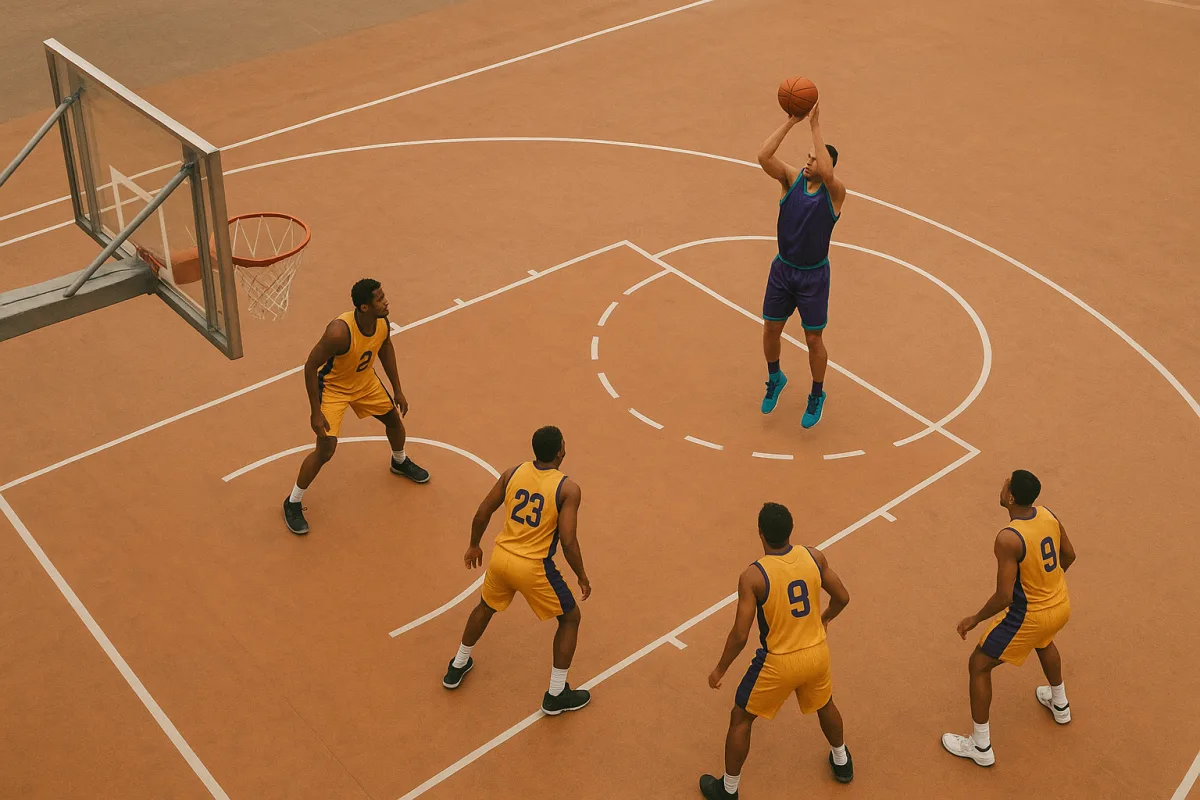
The final 1.7 seconds changed the whole game
With 1.7 seconds left in regulation, Quentin Grimes drilled his 10th three-pointer to force overtime, completing the Lakers’ comeback from 18 points down. Los Angeles eventually won 118-114, its ninth straight victory and a result that pushed the team to 13-2. [1][2]
The shot made Grimes’ 47 points the headline, and reasonably so. He posted 16-of-24 shooting, hit 10 of 14 threes, made five of six free throws, and added six rebounds, four assists, and a steal in 41 minutes. [1]
But if you want to understand why this game turned, start with Charlotte’s empty possessions. A turnover is not a missed shot. A missed shot can produce an offensive rebound, a foul, or a scramble. A turnover ends the possession immediately.
That difference decided the fourth quarter and overtime. Charlotte committed 11 turnovers in those periods after committing nine through the first three quarters, a dramatic jump precisely when the Lakers were reducing the margin. [6]
Grimes made difficult shots. The Hornets also made the game easier to lose because they stopped getting shots at all. Those two facts fit together, and one explains why a team that led for most of the night could not protect the game.
What an empty possession costs
NBA possessions are scarce late in a close game. Every one carries more weight because teams slow down, tighten rotations, and often seek one trusted creator. If you produce a shot, you at least force the defense to finish the possession with a rebound.
A turnover gives the opponent an immediate chance to run before its defense is organized. Even when it does not create a transition layup, it lets the trailing team attack a defense that has not set its matchups or called its coverage.
For Charlotte, that was especially damaging against a Lakers team with Luka Dončić and Grimes available to create from the perimeter. The Hornets kept handing back the initiative, then had to defend another high-leverage possession without the benefit of a score.
The game film shows the pattern in several forms: loose ball handling under pressure, passes that did not reach their target, and late possessions that never developed into a clean attempt. Those plays looked different, but each produced the same result, no Hornets shot.
That is why a fourth-quarter turnover total can tell you more than a raw shooting percentage. Charlotte did not need to shoot perfectly to win after building an 18-point lead. It needed to finish enough possessions with attempts and make Los Angeles work.
Instead, the Lakers got repeated opportunities to cut into the margin. Grimes scored 21 points in the fourth quarter, an extraordinary individual burst, but the Hornets’ giveaways made each of those makes feel larger. [6]
Why Grimes kept finding room
Grimes’ 10 made threes were not all the same shot. He hit quick-trigger attempts, pull-ups, and shots created after the Lakers moved Charlotte’s defense side to side. His scoring eruption was not built on one static play call.
The key was that he could hurt Charlotte before it settled into its preferred coverage. If the Hornets switched a smaller defender onto him, Grimes could rise into a pull-up. If they helped toward Dončić, the pass back out found Grimes ready to shoot.
When the ball stayed with Grimes, Charlotte had another problem. Overhelping opened passing lanes or put a rotating defender late to the closeout. Underhelping left a hot shooter with enough daylight to fire before the contest arrived.
That is what shooting changes for a lineup. Grimes did not have to run every possession to bend Charlotte’s defense. His presence outside the arc made defenders reluctant to leave him, which created more operating room for Dončić and the Lakers’ other drivers.
The reverse was also true. Whenever Charlotte’s offense ended in a turnover, it denied its own shooters the chance to create a spacing problem for Los Angeles. A live-ball turnover is often a lineup problem as much as an individual mistake.
Grimes’ final regulation three carried the largest consequence, but his earlier work set up that moment. Charlotte had already seen him score from multiple spots and in multiple ways. It could not sell out fully on Dončić without risking another clean Grimes look.
Charlotte’s late-game lineup narrowed its options
Charlotte’s most controversial overtime sequence came with 18 seconds remaining and the Hornets down one. Head coach Charles Lee used Christian Anderson, Sion James, Royce O’Neale, Liam McNeeley, and Grant Williams, without Coby White, Brandon Miller, or Naz Reid. [6]
The unit could not get the ball inbounds. Grimes disrupted the pass, Los Angeles regained possession, and the Lakers closed the game at the foul line. Grimes made two free throws with 11.5 seconds left in overtime to seal the win. [3]
Lee said afterward that White and Miller were under minutes restrictions while returning from injury. “You’re always tempted as a competitor,” Lee said, “but we have a big picture in mind and it’s a long year.” [6]
That explanation is important because it frames the decision as availability management, not a late-game preference. The Hornets did not voluntarily sit their best creators for tactical novelty. Their rotation constraints were already limiting the choices available.
Still, the cost was clear on that possession. White is a guard who can receive pressure and initiate offense. Miller is Charlotte’s primary wing scorer. Reid had scored efficiently inside and from the perimeter. None was available for the inbound sequence.
McNeeley had not played before that overtime possession, while Anderson had played only three minutes in the third quarter. [6] You do not need to blame those players to recognize what the lineup lacked: established on-ball reps together under pressure.
An inbound play is its own possession battle. The offense needs a safe receiver, a credible secondary option, and enough spacing that the inbounder has a passing lane. If the first read is denied, hesitation can turn a manageable situation into a five-second violation or turnover.
Life after LaMelo Ball has made those possessions harder
Charlotte entered this season after trading LaMelo Ball on June 25, a deal that returned Naz Reid, future draft picks, and pick swaps. Hornets president Jeff Peterson has presented the move as a longer-term rebuild decision. [4][5]
Ball averaged 20.1 points, 4.8 rebounds, and 7.1 assists in 2025-26. [5] Replacing the assists is not only about finding another player who can pass. It means replacing someone who could begin a possession, draw help, and create a usable shot late.
Through November 18, Charlotte was 4-10 and 11th in the Eastern Conference. Its 104.4 offensive rating ranked last in the NBA, while its 115.2 defensive rating ranked 17th. [3]
Offensive rating measures points scored per 100 possessions, not total points per game. Charlotte’s 104.4 figure tells you that even after adjusting for pace, the Hornets have struggled to turn possessions into points across their first 14 games. [3]
That makes the Lakers collapse feel less random than the 18-point lead suggests. Charlotte has enough talent to generate strong stretches, particularly with Miller, White, and Reid involved. Sustaining those stretches requires reliable ball security and a dependable late-possession organizer.
Injuries have complicated that work. White returned from an offseason calf injury on November 2, while Kon Knueppel remains out with a left hamstring strain until at least December 12. Dennis Schröder has been sidelined by a left hamstring strain, and Grayson Allen was out with a concussion. [9]
Those absences matter because they reduce the number of playable ball-handlers and shooters. You can withstand one difficult matchup when your rotation has redundancy. You struggle when every late-game choice removes a creator, a spacer, or a player accustomed to handling pressure.
The Lakers earned it, but Charlotte gave away too much
Los Angeles deserves credit for continuing to attack. Grimes stayed aggressive, Dončić created pressure with the ball, and the Lakers did not let Charlotte’s large lead turn the game into a low-energy finish. The comeback required real shotmaking.
Grimes’ 47 points were a career high, and 10 made threes on 14 attempts is not a product of luck alone. He recognized openings quickly, shot with confidence, and punished a Hornets defense that repeatedly failed to contain the Lakers’ perimeter threats. [1]
We would focus less on the most unusual overtime lineup than on the possessions that made that lineup decisive. Charlotte had a lead, had productive scorers, and had enough game control to avoid a single-possession finish. Eleven late turnovers changed that math. [6]
For the Hornets, the next step is not finding one miracle closer to replace Ball overnight. It is building repeatable possession structure: cleaner inbounds execution, safer first passes, and lineups that can produce a shot when pressure takes away the first option.
For the Lakers, Grimes’ performance offers a different lesson. A high-volume shooting night can transform the geometry of a game. When a wing converts 10 threes, defenses cannot tilt freely toward Dončić, and every turnover becomes more dangerous for the opponent.
Frequently Asked Questions
How did turnovers affect the Lakers vs Hornets game outcome?
The Hornets committed 11 turnovers during the fourth quarter and overtime, significantly disrupting their offensive flow when they needed clean possessions. These turnovers gave the Lakers additional scoring opportunities and prevented Charlotte from taking quality shots, which helped Los Angeles erase an 18-point deficit and ultimately win the game.
What was Quentin Grimes' impact in the Lakers vs Hornets game?
Quentin Grimes scored a career-high 47 points on 16-of-24 shooting, including 10-of-14 from three-point range. His scoring burst, especially 21 points in the fourth quarter, was crucial in the Lakers' comeback. Grimes’ 10th three-pointer with 1.7 seconds left in regulation forced overtime, and his overall shooting created spacing that challenged the Hornets’ defense throughout the game.
Why did the Hornets struggle late in the Lakers game?
The Hornets struggled late due to a combination of turnovers and a lack of reliable possession creation. Their NBA-worst offensive rating of 104.4 reflects difficulties in generating effective offense without LaMelo Ball. Late in the game, turnovers prevented them from getting clean shots, and their lineup decisions limited their offensive options, contributing to their inability to close out the game.
How did the Lakers manage to come back against the Hornets?
The Lakers capitalized on Charlotte’s turnovers, turning empty possessions into scoring chances. Quentin Grimes’ scoring, especially his three-point shooting, pressured the Hornets’ defense and forced them to make difficult choices. The Lakers exploited these mistakes and maintained offensive efficiency, allowing them to erase an 18-point deficit and force overtime.
What lineup decisions influenced the overtime in Lakers vs Hornets?
In overtime, the Hornets’ coach used a lineup without key players Coby White, Brandon Miller, or Naz Reid, instead relying on Christian Anderson, Sion James, Royce O’Neale, Liam McNeeley, and Grant Williams. This lineup narrowed the Hornets’ offensive options and may have contributed to their late-game struggles, as they lacked reliable possession creators to counter the Lakers’ pressure.
How we researched this
This article was assembled from 1 video source, 8 published articles, 10 cited references.
Nothing here is based on hands-on testing. Where a figure or finding appears, it belongs to the source cited beside it, and the writing says so rather than implying otherwise. Every source is listed below so you can check it.
Sources
Los Angeles Lakers vs Charlotte Hornets Full Game Highlights | Nov 17, 2026 | FreeDawkins, FreeDawkins
The Hornets’ collapse against Lakers was so bizarre fans are crying conspiracy, SB Nation NBA
Wizards rumors: ESPN NBA insider shines light on $60 million Anthony Davis trade complication as buzz gets louder, Yahoo Sports
76ers vs Magic Prediction, Pick, NBA Odds for Wednesday, November 18, Action Network
Lakers Match Steph Curry-Kevin Durant Warriors in NBA History After Hornets Win, Yahoo Sports
Andrej Stojakovic Joins Nikola Jokic in Elite Company After Illinois Win at Duke, Yahoo Sports
Former Vol questionable for Wizards-Raptors NBA game, Yahoo Sports
Warriors Unlikely to Explore Trades For Jimmy Butler, Yahoo Sports
Suns vs Kings Prediction, Pick, NBA Odds for Wednesday, November 18, Yahoo Sports
Quentin Grimes Scores 47 in Lakers' Win vs Hornets on Tuesday | Knup
Quentin Grimes scores 47 points, propels Lakers to statement win - Los Angeles Times
Charlotte Hornets vs Los Angeles Lakers Nov 17, 2026 NBA Blueprint | NBA.com
2026-27 Charlotte Hornets Transactions | Basketball-Reference.com
Hornets president explains his thinking behind trading LaMelo Ball - NBC Sports
Hornets fall to Lakers in overtime for third straight loss | WFAE 90.7 - Charlotte's NPR News Source
Lakers Overcome 18-Point Deficit to Beat Hornets in Overtime
Charlotte Hornets Injury Report and Status 2026-27 - CBS Sports
Watch Lakers vs Hornets Game and Team Dynamics on Youtube
Related Articles
Luka Dončić and Quentin Grimes Lead Lakers OT Win vs Hornets
Analyze Luka Dončić and Quentin Grimes' standout performances in the Lakers' 118-114 OT win over the Hornets, highlighting key plays and strategy.
Lakers vs Heat Game Highlights and Key Matchups Analysis
Explore Lakers vs Heat game highlights and key matchups, including Luka Doncic's performance and Lakers' top offensive and defensive strategies.
San Antonio Spurs' 18-0 Game Start vs Warriors Analysis
Explore the Spurs' historic 18-0 start in their win over the Warriors, highlighting key players and game strategies.
LaMelo Ball Trade Impact and Hornets’ Draft Strategy Explained
Explore the LaMelo Ball trade impact on the Hornets, draft pick swaps, and how Charlotte plans to rebuild long-term.