
Steph Curry vs Luka Doncic Analysis: Key Moments and Impact
In-depth analysis of Steph Curry's dominance over Luka Doncic, including key plays, defensive strategies, and game impact.
Steph Curry’s Ankle Breaker Was the Finish, the Switch Hunt Was the Game
The possession that put Dončić on an island
On October 30, the Warriors erased a 25-point deficit against the Lakers and won 112-95 in NBA Cup group play. Curry scored 31 points with six assists and four rebounds, hitting eight of 14 threes. [1]
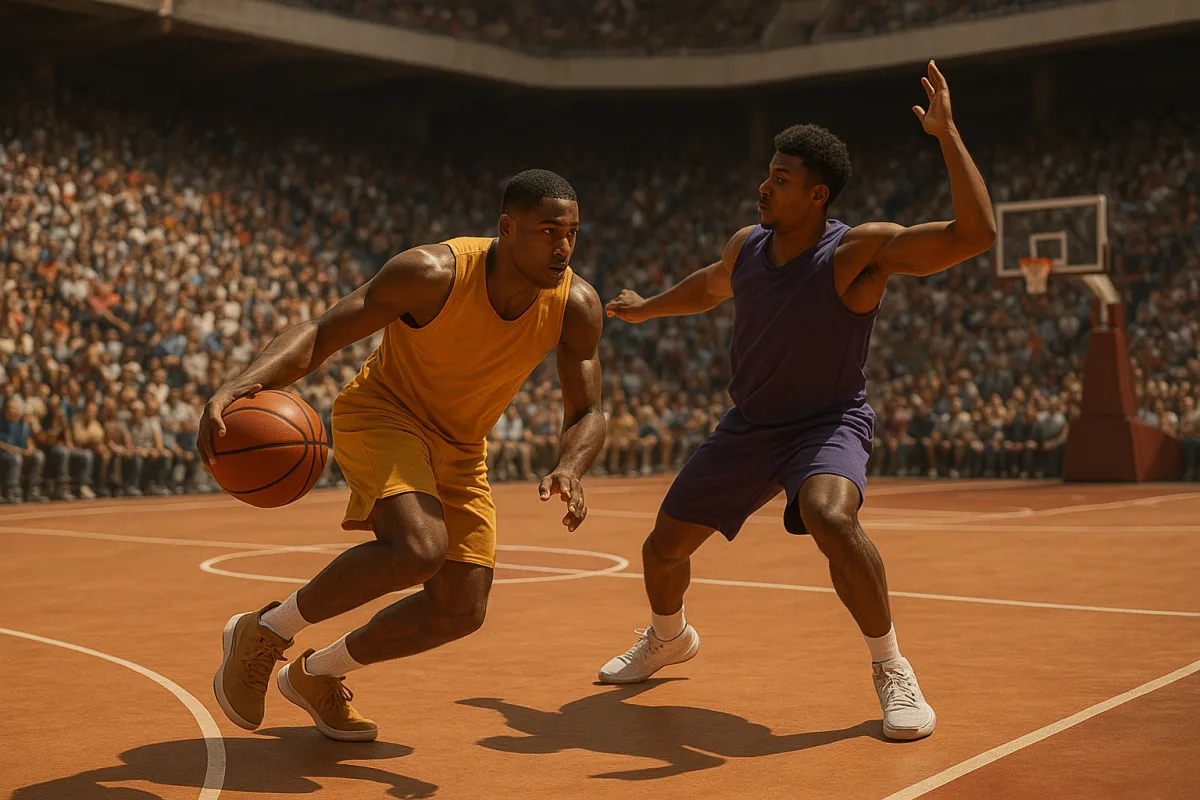
The sequence people will remember arrived early in the third quarter. Curry hunted a switch until Dončić was his primary defender, drove left, stopped sharply, stepped back, and made a three as Dončić fell. [6]
That is an ankle breaker in the highlight sense, but the important play began earlier. Curry did not need to beat every Laker defender, he needed Golden State to create the one defensive decision that placed Dončić in open space.
A switch hunt is an offensive effort to force a specific defender onto the ball handler through screens. Against a player such as Curry, it can turn a standard half-court possession into a series of defensive compromises.
The Lakers could have tried to keep Dončić away from Curry by having the original defender fight around the screen. That asks the on-ball defender to chase the league’s most dangerous off-ball mover while also remaining attached to him on the catch.
They could switch, as the play ultimately allowed. Switching prevents Curry from walking into an open catch-and-shoot three, but it gives him a defender with a different physical profile and often removes the defense’s original structure.
They could also send a second defender at Curry after the switch. That protects Dončić from a long isolation, but it opens a passing lane and asks the other three defenders to cover four offensive players.
This is Curry’s enduring value as a scorer. His three-point range means a defender cannot comfortably retreat, while his handle and acceleration mean that crowding him creates a driving lane.
Why the stop worked
Curry’s move was built on a simple imbalance: Dončić had to respect both the drive and the pull-up. Once Curry went left, Dončić had to slide with him and prepare for contact near the lane.
Then Curry stopped. A defender moving laterally carries momentum because he is trying to stay chest-to-chest with the ball handler, and that momentum makes a sudden backward step difficult to match.
The stepback itself was not especially complicated. Curry created the separation by making Dončić commit to the possibility of penetration, then moving from forward pressure into a clean shooting pocket before Dončić could reset.
Curry acknowledged afterward that he was seeking space, though he said he did not expect the result to become “that nasty” on the Chaz NBA channel. He also said he had not been that open “in a long time.”
The fall made the play famous, but the open jumper was the actual reward. If Dončić stays upright yet cannot recover to contest, Curry has still won the possession because the shot is a high-value look for him.
That is why an ankle breaker can mislead you if you treat it as a measure of defensive effort. One defender losing footing is memorable, but the possession was decided by the offensive threat that made a hard closeout necessary.
There is no published matchup tracking from this season that isolates Dončić’s defense against Curry, or measures how that specific play changed Dončić’s later defense. Broad individual defensive-rating figures would not answer that question because they reflect team possessions, not one-on-one assignments. [3]
Dončić also did not disappear after the highlight. He finished with 37 points, seven rebounds, five assists, and six made threes, an elite offensive night even in a loss. [7]
So we would not frame this as Curry proving that Dončić could not guard him for 48 minutes. The cleaner read is that Curry won a designed possession when the Lakers accepted a matchup that gave him room to weaponize his change of pace.
The price of switching against Curry
Switching is popular because it removes confusion. When a ball screen arrives, defenders exchange assignments instead of trying to weave around each other, reducing the open threes and layups created by late communication.
Curry changes the calculation because the switch often solves the first problem and creates a second. You may avoid an immediate pull-up over a trailing defender, but now your slower or larger defender must contain Curry alone.
Dončić is strong enough to absorb contact and skilled enough to survive many mismatches. Against Curry, though, strength matters less once the possession moves from the chest to the feet.
A defender must hold a low stance, stay balanced through Curry’s first burst, and recover backward when Curry stops. Those demands arrive in seconds, and Curry’s shooting range means even a small cushion becomes a real opening.
The Lakers could have shaded help toward Curry’s driving hand. Yet helping off Golden State’s shooters carries its own cost, especially in a game where the Warriors made 22 threes and shot 47.8 percent from deep. [1]
Curry made eight of those 22 threes himself. The other 14 meant Los Angeles could not sell out on every Curry action without risking a sequence of catch-and-shoot looks for Golden State’s supporting cast. [1]
That is the system around the superstar moment. Curry’s individual gravity creates a defensive choice, and the other Warriors make the choice expensive by converting the passes and open looks it produces.
Golden State also recorded 31 assists, a useful number because it counts made baskets directly created by a teammate’s pass. It does not capture every advantage Curry generated, but it shows the comeback was not built on isolations alone. [1]
The comeback was won at the defensive end
The Warriors trailed by 25 points, and Los Angeles scored 38 in the opening quarter. Golden State then limited the Lakers to 57 points over the final three quarters, the defensive swing that made Curry’s shotmaking decisive. [1]
Curry described the early offense as “stuck in mud” on Chaz NBA. His explanation for the turnaround was not a scoring duel, but defensive activity, steals, hustle, and extra possessions.
That matches the final score. A team cannot come back from 25 simply by making difficult jumpers unless it also stops the opponent from trading baskets, particularly against a Lakers offense led by a 37-point Dončić performance. [7]
Golden State’s defense gave its offense time to normalize. Stops create transition opportunities, transition opportunities force cross-matches, and cross-matches can make it easier for Curry to find the defender he wants to attack.
The Warriors’ bench also mattered. Brandin Podziemski scored 21 points, added five rebounds and six assists, and provided another creator alongside Curry’s shooting. [1]
Curry pointed to the value of those varied lineups after the game, particularly with Jimmy Butler and Moses Moody unavailable. His point was structural: veterans such as Curry and Draymond Green were playing around 30 minutes, leaving meaningful responsibility for the rest of the rotation.
That context matters for how you read Curry’s dominance. His 31 points were the highest-leverage scoring force in the game, but Golden State’s lineup depth prevented Los Angeles from loading every possession toward one player.
Curry’s scoring impact was bigger than 31 points
Thirty-one points can describe volume, but it cannot fully describe pressure. Curry’s eight made threes forced the Lakers to defend beyond the arc, changing where help could come from and how aggressively defenders could recover.
His own scoring also arrived with efficiency. Making eight threes on 14 attempts gives you 24 points from one shot type, before counting any two-pointers or free throws in his final total. [1]
For a defense, the problem is not only those 24 points. Every made Curry three strengthens the next possession’s threat, making defenders more likely to crowd his handle and expose themselves to the drive-and-stepback sequence.
This is why the Dončić clip belongs inside the comeback rather than above it. Curry’s move was the sharpest image of Golden State taking control, but it worked because the Lakers had already been pushed into defending him with less margin for error.
The NBA Cup stakes added a layer to the night. Group-play games count in the regular-season standings, and each team plays four group games on designated Tuesdays and Fridays before the December knockout rounds. [5]
You should still judge the game as a regular-season basketball result, not a separate exhibition. Curry and the Warriors needed a win, and their response showed the version of Golden State that can survive a cold start.
We would remember the highlight, because it was exceptional even by Curry’s standards. But we would trust the repeatable part more: force the switch, make the defense choose, punish the coverage, then defend well enough for each made three to matter.
Frequently Asked Questions
How did Steph Curry dominate Luka Doncic in their recent matchup?
Steph Curry dominated by hunting a switch until Luka Doncic was his primary defender, then using his stop-start timing and change of pace to create separation. Curry scored 31 points, including eight made three-pointers, which forced the Lakers into difficult defensive choices and opened driving lanes. The Warriors also contributed with strong team defense and depth, enabling a comeback from a 25-point deficit.
What was the significance of Steph Curry's ankle breaker on Luka Doncic?
The ankle breaker was the result of Curry forcing a defensive switch to isolate Doncic, then using a sharp stop and step-back to create an open three-point shot. While the fall was memorable, the key was Curry’s ability to make Doncic commit to defending a drive, then pull back for a clean shot. This play exemplified Curry’s skill in creating high-value scoring opportunities rather than simply a moment of defensive failure.
How does Steph Curry's shooting affect Luka Doncic's defensive strategy?
Curry’s deep shooting range prevents defenders like Doncic from comfortably retreating, forcing them to stay close and risk giving up driving lanes. This creates a dilemma where defending Curry tightly can open space for his pull-up shots or drives. Doncic must balance staying low and balanced to react quickly while respecting Curry’s ability to shoot from well beyond the three-point line.
What defensive challenges does Luka Doncic face guarding Steph Curry?
Doncic faces the challenge of containing Curry’s quick first burst and sudden stops, which require rapid lateral movement and recovery. Curry’s shooting range means even a small cushion can lead to open threes, and switching onto Curry often leaves Doncic isolated without help. Strength matters less once Curry moves off the ball, so Doncic must rely on balance and anticipation.
How did Golden State Warriors' defense contribute to their win over the Lakers?
After allowing 38 points in the first quarter, the Warriors’ defense tightened to hold the Lakers to 57 points over the final three quarters. This defensive effort, combined with depth and balanced scoring, helped fuel the comeback. The defense created stops that led to transition opportunities and open three-point shots, which were critical in overcoming the early deficit.
How we researched this
This article was assembled from 1 video source, 1 published article, 7 cited references.
Nothing here is based on hands-on testing. Where a figure or finding appears, it belongs to the source cited beside it, and the writing says so rather than implying otherwise. Every source is listed below so you can check it.
Sources
Steph Curry talks ankle breaker on Luka Doncic and Yaxel Lendeborg, Chaz NBA
Steph Curry dropped Luka Doncic with an ankle breaker and splashed 3 over him, SB Nation NBA
4 Takeaways: Warriors open Group Play with historic comeback win | NBA.com
Steph Curry posts 31 in 25-point comeback, fourth 30-point NBA Cup game, Wire Report
Lakers vs. Warriors Player Stats: Curry Leads 112-95 Comeback Win on October 30, 2026
NBA Cup Explained: Format, Rules, Tiebreakers And Prize Money
Steph Curry reacts to his ankle breaker on Luka Doncic - Basketball Network
Watch Steph Curry's Dominance Over Luka Doncic on Youtube
Related Articles

Steph Curry Warriors Contract Future and Over-38 Rule
Explore Steph Curry's contract future with the Warriors and how the Over-38 Rule shapes his extension options and team roster decisions.
Lakers Offensive Strategy with Luka Doncic's Leadership
Explore the Lakers' offensive strategy featuring Luka Doncic's pocket pass and leadership driving team success.
Stephen Curry Contract Talks and Warriors 2026-27 Outlook
Explore Stephen Curry contract talks, NBA rules, and how his decisions shape the Warriors' 2026-27 roster and salary cap outlook.
Yaxel Lendeborg Warriors Rookie Faces Criticism Amid
Explore Warriors rookie Yaxel Lendeborg's defensive struggles and Steve Kerr's critique amid Golden State's early season challenges.