
Lakers Offensive Strategy with Luka Doncic's Leadership
Explore the Lakers' offensive strategy featuring Luka Doncic's pocket pass and leadership driving team success.
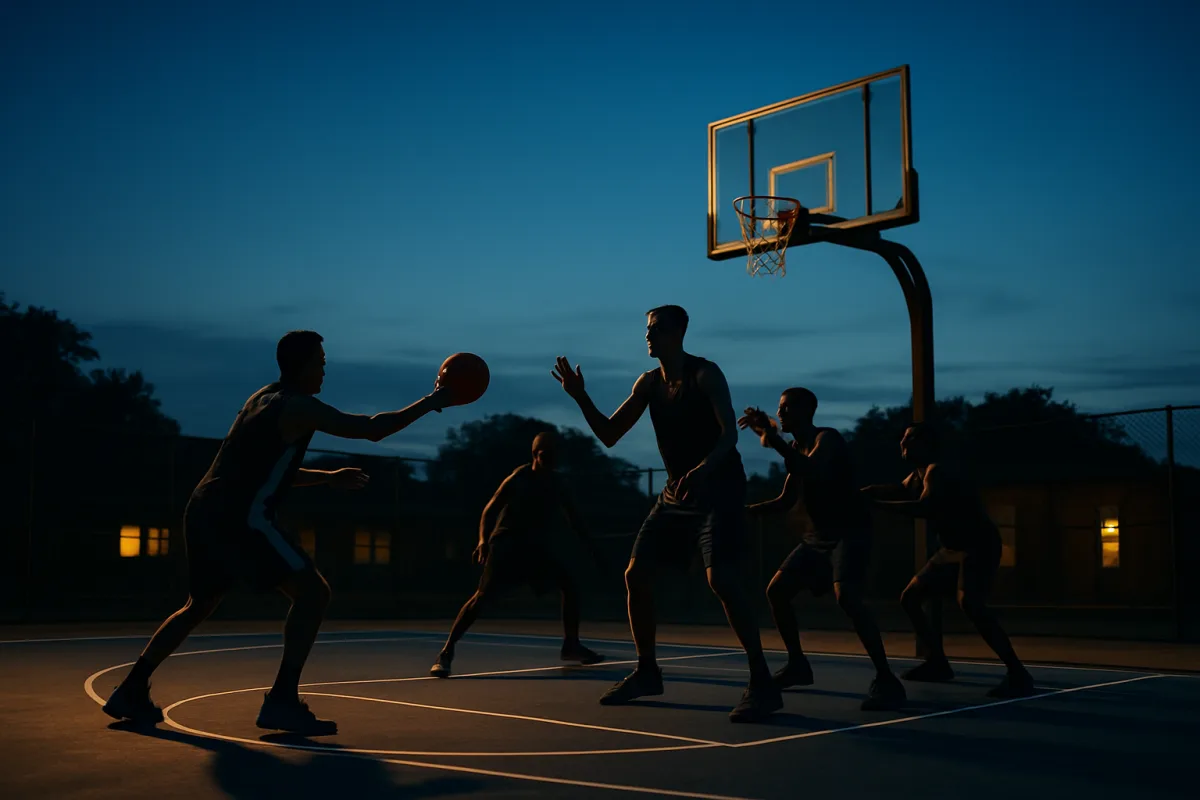
Luka Dončić’s Pocket Pass Is the Lakers’ Offensive Multiplier
The important number was not 127
The Lakers scored 127 points in their season-opening win over the Golden State Warriors, and the immediate temptation is to call that offensive firepower. It was certainly a productive night. But one game’s point total can be inflated by transition, shooting variance, opponent absences, or a fourth-quarter margin.
The more revealing number was Walker Kessler’s 12 made field goals without a miss. Kessler finished with 26 points, nine rebounds and two blocks in 30 minutes, with most of his scoring arriving at the rim. [8] That does not mean the Lakers found a center who will shoot 100 percent.
It means the Lakers repeatedly manufactured the same high-value shot: a dunk or layup for a seven-footer after Luka Dončić forced the defense to choose between guarding the ball and guarding the rim. The choice is called the pocket.
That pocket is the small strip of floor around the foul line and just inside the free-throw line area, behind the first line of pick-and-roll defense but ahead of the rim protector. It is where a rolling center can receive the ball after the on-ball defender and big man commit to the ball-handler.
What the pocket pass actually solves
A standard Dončić-Kessler pick-and-roll begins with Kessler setting a screen for Dončić’s defender. Kessler’s immediate job is not merely to make contact. He must create an angle that lets Dončić turn the corner while keeping himself available for a clean roll.
If the defense plays drop coverage, the opposing center retreats toward the paint rather than meeting Dončić high. That puts the on-ball defender in a chase position and gives Dončić room for his pull-up, floater, or probing drive.
If the drop big steps up to stop Dončić’s pull-up, Kessler has a lane behind him. The pass does not need to reach the rim directly. It can hit Kessler around the foul line, where he catches, takes a stride, and finishes.
That is the pocket pass. It is not a flashy assist by definition. It is a timing pass that turns a two-on-one into a decision for the center: contest Kessler’s dunk, rotate from the corner, or concede the finish.
Golden State’s opening-night personnel made those decisions harder. The Warriors were missing Jimmy Butler III, Kristaps Porziņģis and Brandin Podziemski, among others, according to pregame injury reporting. [10] Any analysis of the Lakers’ opener has to begin there.
Still, a shorthanded opponent does not explain the geometry. Kessler’s rim runs created the same problem any defense will face: when Dončić gets downhill with a live dribble, the help defender must leave someone.
Why Kessler changes the possession
The Lakers have used skilled bigs before. What Kessler adds is a more specialized vertical role. He does not need the ball on the block, nor does he need to make a series of post reads. His value starts with sprinting into screens, rolling with force, and presenting a huge target.
The FreeDawkins game footage repeatedly showed Kessler arriving at the rim as Dončić drove or manipulated a second defender. On several possessions, Kessler did not even need a conventional lob. He simply occupied the dunker spot, waited for the help to shift, and finished.
That distinction matters. A lob can be disrupted by a defender recovering over the top. A pocket pass is often safer because it travels lower and earlier. Once Kessler catches it behind the first defender, the defense is already reacting late.
Los Angeles also used Austin Reaves as a second ball-handler in those actions. Reaves’ job was not to imitate Dončić possession for possession. He attacked a defense already conditioned to worry about Kessler diving toward the basket.
Reaves scored 23 points and added six assists in the opener. [8] The relevant film question is not whether he scored efficiently in one game. It is whether Kessler’s roll gave Reaves clearer driving lanes and simpler reads.
The answer appeared to be yes. When the low man moved toward Kessler, Reaves could finish before a second rim protector arrived. When defenders stayed home in the corners, Kessler had room to roll. The Lakers did not need to win every option. They needed one defender to blink.
The cost of building around a rolling center
There is no free offensive weapon. Kessler’s dunks came with trade-offs, and better opponents will force the Lakers to pay them. A non-shooting center narrows spacing if he drifts too close to the ball before the screen action begins.
The Lakers need Kessler to remain disciplined about his starting position. If he camps in the lane, his defender can stay near the rim without making a real choice. The possession works when he begins high enough to screen, then rolls quickly enough to pull the big away from the basket.
The other cost is perimeter coverage. If the defense sends a wing to tag Kessler’s roll, the Lakers have an open shooter somewhere. But that only becomes an advantage if Dončić, Reaves, and the wings make the next pass on time.
This is why raw assist totals can miss the point. An assist credits the final pass leading directly to a basket. It does not fully capture the possession where Dončić draws two defenders, passes to Kessler, and Kessler kicks the ball to an open corner shooter.
Nor does it capture a hockey assist, in which Dončić’s initial manipulation creates the rotation that produces the final shot. The Lakers’ offensive ceiling depends on these chain reactions becoming automatic, not merely on Dončić recording seven or 12 assists on a given night.
The Lakers also have to be prepared for switching. Teams with versatile defenders may switch the Kessler screen rather than allow Dončić to attack a trailing guard or force their center into movement. That can flatten the pocket pass.
Against switches, Kessler has to seal the smaller player early, while Dončić must identify whether the mismatch is truly exploitable. A rushed post entry to a center surrounded by help is not a good shot merely because a guard is technically defending him.
Dončić’s leadership is embedded in the read
There is a broad version of the Luka Dončić leadership story: he is now the public face of the Lakers, and he has embraced that responsibility. Dončić described the role as an honor after the opener. [8] That is real, but it is not the most useful way to understand his effect.
The more concrete form of leadership is whether he establishes a shared offensive language. The Lakers need Kessler to know when to roll, Reaves to know when to lift from the corner, and wings to know whether their responsibility is spacing, cutting, or crashing the glass.
Dončić reportedly organized a five-day August minicamp in Slovenia intended to help a new roster build relationships and on-court familiarity. [7] That matters less as a symbolic retreat than as rehearsal time for these exact reads.
Pick-and-roll chemistry is not produced by a playbook alone. The ball-handler has to trust that the center will arrive at the correct depth. The center has to know whether a delayed roll will create a better passing window than an immediate sprint.
Kessler described the early connection through his actions, and Dončić was specific after the opener: when he drove, Kessler stepped up; when Dončić was doubled, Kessler operated in the pocket. [8] That is the vocabulary of a functioning partnership.
It is also why Dončić’s own caution about chemistry deserves attention. He has not promised a timetable for the group to click, and reporting around the team has characterized his leadership as adaptive rather than imposed. [6] That is a sensible stance for a roster with new roles.
A leader cannot force chemistry by declaring it complete. He can make the right pass often enough that teammates trust the next rotation, and he can create an environment in which a missed read becomes film work rather than blame.
What the Warriors game did, and did not, prove
The Lakers took control after a tight opening quarter, and the FreeDawkins broadcast footage showed their offense gaining speed as stops became transition chances. That matters because Dončić’s half-court orchestration is more dangerous when the defense cannot set its matchups.
But the Warriors were not a full-strength measuring stick. Butler, Porziņģis and Podziemski were unavailable, and Porziņģis’ indefinite absence related to Postural Orthostatic Tachycardia Syndrome carries obvious implications beyond a single matchup. [10]
The Lakers’ own defense remains a separate question. They finished 2025-26 with a 116.4 defensive rating, 19th in the NBA, and preseason play exposed cohesion issues that will not disappear because Kessler blocked two shots in an opener. [5]
Coach JJ Redick has identified Kessler as a new defensive asset, particularly as a rim protector who can change opponents’ shot selection. [11] But defensive rating measures points allowed per 100 possessions, not simply blocks, and it takes time to establish whether the entire unit is connected.
Los Angeles also entered the early season with Cameron Carr and Adou Thiero ruled out, while Collin Sexton was listed as questionable with a right soleus strain. [1] That matters to offensive continuity because bench ball-handling determines how long Dončić and Reaves must carry every creation burden.
The test is the second defender
The Lakers do not need Kessler to repeat a perfect shooting night. In fact, treating 12-for-12 as a baseline would miss the lesson. The useful repeatable outcome is that Kessler forces the defense to send help, and that help opens the next decision.
If opponents stay in drop coverage, Dončić can hunt his pull-up and pocket passes. If they blitz him, Kessler must catch in traffic and quickly locate the weak-side shooter. If they switch, the Lakers must punish the mismatch without stopping their offensive flow.
That is the offensive firepower Los Angeles displayed against Golden State. Not merely a 127-point total, and not merely a remarkable box score from a new center. It was the outline of an offense in which Dončić’s attention-drawing gravity gives every teammate a defined job.
The Lakers’ ceiling will depend on how often those jobs are carried out against healthy, prepared opponents. The opening tape suggested the mechanism works. The rest of the season will determine how many coverages it can survive.
Frequently Asked Questions
How does Luka Doncic's pocket pass enhance the Lakers' offense?
Luka Doncic’s pocket pass creates a high-value scoring opportunity by delivering the ball to Walker Kessler in the "pocket"—the area near the foul line just inside the free-throw line—before the defense can recover. This timing pass turns a two-on-one situation into a difficult choice for defenders, often leading to uncontested dunks or layups for Kessler. It exploits defensive rotations and opens up the floor for other Lakers players.
What role does Walker Kessler play in the Lakers' pick-and-roll strategy?
Walker Kessler acts as a vertical finisher who sets screens and rolls aggressively toward the basket. His role is to create a large, reliable target near the rim, forcing defenses to decide between contesting his finish or rotating to cover other threats. His ability to catch and finish quickly in the pocket makes the pick-and-roll more effective and changes how opponents defend the Lakers.
How does Luka Doncic demonstrate leadership on the Lakers' offense?
Doncic’s leadership is reflected in his ability to consistently make the simple but effective pocket read as defenses adjust their coverages. He focuses on fostering team chemistry and cohesion, exemplified by organizing a five-day minicamp in Slovenia before the season. His leadership style is inclusive and adaptive, emphasizing team dynamics over individual spotlight.
What are the strengths and weaknesses of the Lakers' new offensive system?
The system’s strength lies in creating high-percentage shots near the rim through Kessler’s rolls and Doncic’s timing passes, which also open driving lanes for players like Austin Reaves. However, the system requires Kessler to maintain disciplined spacing; if he drifts too close to the basket early, it limits floor spacing and allows defenders to stay near the rim. Additionally, if defenses tag Kessler’s roll with a wing defender, the Lakers must execute timely passes to exploit open shooters or secondary drivers.
How does Austin Reaves benefit from Luka Doncic and Walker Kessler's play?
Austin Reaves gains clearer driving lanes and simpler decision-making when defenses focus on Kessler’s roll. If defenders tag Kessler, it often leaves Reaves open to attack before help arrives. This dynamic allows Reaves to score efficiently and contribute as a secondary ball-handler, benefiting from the attention Doncic and Kessler draw.
How we researched this
This article was assembled from 3 video sources across 2 channels, 4 published articles, 12 cited references.
Nothing here is based on hands-on testing. Where a figure or finding appears, it belongs to the source cited beside it, and the writing says so rather than implying otherwise. Every source is listed below so you can check it.
Sources
Golden State Warriors vs Los Angeles Lakers Full Game Highlights | Oct 21, 2026 | FreeDawkins — FreeDawkins
The Time Westbrook TRASH Talked Curry And Instantly Regretted It — MJ2KALLDAY
Lakers/Warriors Postgame x Analysis: J.Worthy, Luka, Yaxel, Reaves, Kessler, Redick Reactions — FreeDawkins
Luka Doncic Says Lakers' 'Ceiling Is Even Higher' After Opening Rout Of Warriors — RealGM
The Luka-era Lakers showed out vs Warriors opening night — SB Nation
Lakers explosive offense made to look easy a sign of things to come — NY Post Sports
Malika Andrews makes playful Luka Dončić post after viral Lakers interview — NY Post Sports
Lakers injury report includes Collin Sexton, Adou Thiero and Cameron Carr
JJ Redick identifies key areas Lakers must improve ahead of 2026-27 NBA season opener - Bolavip US
2025-26 Los Angeles Lakers Roster and Stats | Basketball-Reference.com
Doncic refuses to predict Lakers chemistry timeline, defers on leadership style - Eurohoops
Luka Doncic Embraces Leadership Role for New-Look Lakers - Fantasy Nerds
Lakers open season at home against the Warriors | FOX Sports
JJ Redick Identifies New Defensive Weapon for Lakers Ahead of Season
Watch Lakers' Offensive Firepower and Luka Doncic's Leadership on Youtube
Also from the sources
Related Articles
LeBron James 76ers Preseason Impact and Team Dynamics
Explore LeBron James' 76ers preseason impact, his playing style, and how he influences team offense and Embiid's role.
NBA Preseason Game Highlights and Player Performances
Explore NBA preseason game highlights and player performances, including team strategies and standout rookies from recent matchups.
Bronny James Lakers Roster Moves Explained
Explore the Lakers' roster moves involving Bronny James and Dalton Knecht amid the NBA 15-player limit and contract guarantees.
LeBron James 76ers Title Contention and Team Dynamics
Explore LeBron James' impact on the 76ers and their realistic title contention prospects for the 2026-27 NBA season.