
LeBron James 76ers Preseason Impact and Team Dynamics
Explore LeBron James' 76ers preseason impact, his playing style, and how he influences team offense and Embiid's role.
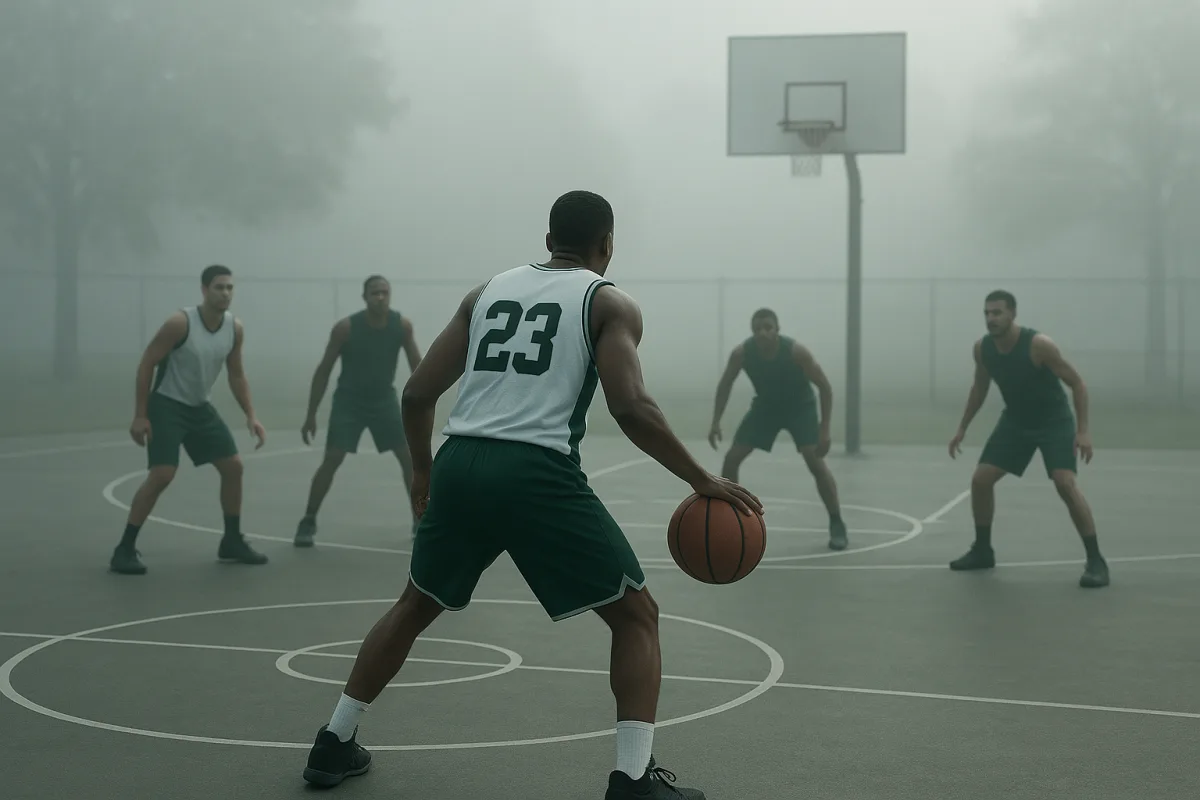
LeBron’s first Sixers game was about defensive attention
LeBron James’ first preseason appearance for the Philadelphia 76ers came in Brooklyn on Oct. 8, a 114-108 loss to the Nets. He finished with 10 points, five assists, four rebounds and no turnovers in 18 minutes. [1]
The useful part of that line is not the scoring total. Preseason scoring can be shaped by minutes limits, experimental lineups and a defense declining to reveal its preferred coverage before games count.
The five assists and zero turnovers tell a narrower story. Philadelphia gave James enough on-ball responsibility to test its spacing, and he did not waste possessions trying to prove he could still dominate every matchup.
That is why the word “gravity” keeps appearing around his debut. AS described James as creating substantial gravity and attention in his first Sixers action, which is accurate as basketball language, but it needs more precision. [8]
Gravity is not an official NBA statistic. It is shorthand for a defender changing position, a second defender preparing to help, or an entire coverage bending because it expects one player to create an advantage.
A player has gravity when defenders treat his threat as urgent. That threat can be a pull-up jumper, a rim drive, a post-up, a screen, or simply the possibility that he will find an open teammate before the defense rotates back.
LeBron’s particular version is less about standing 30 feet from the rim and pulling a defender out of position. It is about what happens once he crosses half court, calls for a screen, or gets a live-ball rebound.
The first defender has to contain the drive. The big defender has to decide whether to meet James at the nail or protect the rim, while weak-side defenders must account for corner shooters and Embiid’s size.
That is three or four simultaneous decisions, not one. Philadelphia’s offensive question is whether it can place the correct players in the spaces those decisions open, then make the next pass before a scrambling defense recovers.
What a LeBron-led possession actually changes
Consider a standard high pick-and-roll. James brings the ball up, Embiid sets a screen near the top, and the defense usually has three broad options: switch, drop the big defender, or send extra help at the ball.
Against a switch, James may get a smaller defender in the post while Embiid seals a guard near the basket. The immediate matchup is attractive, but Philadelphia cannot let the possession stall into ten seconds of watching.
Against drop coverage, the opposing center stays nearer the paint rather than stepping up to James. That grants the ball handler a pocket of space for a pull-up, a downhill drive, or a pass to Embiid slipping toward the foul line.
Against a blitz or hard hedge, two defenders temporarily commit to the ball. That is the coverage that creates the clearest version of gravity, because the offense briefly plays four-on-three behind the pressure.
The costly part comes next. If Embiid catches in the middle and holds the ball, the defense can rotate, tag cutters and recover to shooters. If he makes a quick read, Philadelphia gets the advantage James created.
This is why a five-assist night can understate a creator’s influence. Assists only credit the final pass before a made basket, not the drive that triggers two defenders, or the pass that turns a four-on-three into a corner three.
Likewise, zero turnovers does not prove an offense is solved. It does show that Philadelphia’s first look at James as an organizer did not immediately produce the predictable costs of a new system: mistimed cuts, crowded driving lanes and confused outlets. [1]
LeBron said after an earlier team scrimmage that he was trying to learn Philadelphia’s offensive and defensive commands, reads and calls. That is a more useful frame for preseason than assigning permanent roles after one appearance. [7]
In the same early media availability, James said the coaching staff had not yet assigned roles. That matters because an offense with James, Embiid and Tyrese Maxey cannot be reduced to deciding who is “the point guard.” [7]
The ball will begin with different players on different possessions. The structural issue is who can bend the defense, who can punish the second rotation, and who can finish after the first advantage has already been created.
The Embiid question is speed, not sacrifice
Embiid’s preseason context complicates the optimism. He missed Philadelphia’s Oct. 5 preseason opener, then posted six points on 1-for-5 shooting with three assists and eight turnovers in 24 minutes against Brooklyn on Oct. 9. [2] [3]
That performance should not be treated as evidence that Embiid cannot coexist with James. It does show why “more talent” does not automatically make an offense cleaner, especially when a center is asked to process help defenders faster.
Embiid said after the preseason scrimmage that he felt “pretty good,” and reporting indicated he was fully participating in practice. [9] Health participation and game sharpness are separate questions, particularly for a player working through a limited preseason sample.
The eight turnovers are not merely a negative box-score event. Turnovers can come from loose handles, but they can also reveal delayed reads, unfamiliar timing with cutters, or a big man catching in a crowd after the defense has already loaded up. [3]
Philadelphia does not need Embiid to stop touching the ball. It needs to make his touches more decisive. A trail three after a LeBron drive, an elbow touch flowing into a handoff, or a quick post seal against a switch are all different jobs.
Reports have suggested Embiid’s usage rate could fall below his career low of 32.9 percent, with more facilitation and fewer isolation possessions expected. That remains a reported expectation, not an announced coaching directive or a confirmed tactical plan. [4]
Usage rate measures the share of team possessions a player ends while on the court through a field-goal attempt, free-throw trip or turnover. It does not measure every decision, screen, hockey assist or defensive rotation a player makes.
So a lower Embiid usage rate would not necessarily mean a smaller Embiid role. He could take fewer difficult late-clock shots while becoming more central to the possessions that begin with James forcing help and end with a defense in rotation.
That distinction is where the language of “sacrifice” can become misleading. Philadelphia does not need its stars to become passive. It needs each of them to exchange low-efficiency self-creation for the shot the defense is least equipped to concede.
Athlon reported that sacrifice had become a Sixers buzzword following James’ arrival. [5] On the floor, the useful version is not ceremonial deference. It is accepting that an open teammate’s shot can be a better outcome than a star’s contested one.
Maxey is the release valve that makes the system work
Tyrese Maxey is essential because he prevents defenses from solving the LeBron-Embiid pairing with one extra helper. If Maxey receives the ball against a shifting defense, he can attack a closeout before the opponent’s big man gets back into position.
That changes the geometry of a possession. A defense may be comfortable helping off a non-shooter or living with a slow swing pass, but it cannot casually abandon a guard who turns one hard closeout into a paint touch.
The best Philadelphia possessions may therefore not end with a James assist or an Embiid shot. They may end with James drawing two, Embiid making the middle read, and Maxey attacking the defender assigned to repair the rotation.
That is also why lineups matter. James plus Embiid creates immense size and passing, but only if Philadelphia surrounds them with enough shooting and cutting to punish help. Two non-shooters would allow opponents to clog the lane without consequence.
Conversely, a smaller group can create more driving space for James and Maxey, but it may lose Embiid’s ability to punish switches or command help at the rim. Every lineup choice changes which defensive compromise Philadelphia can force.
The NBA’s season preview identified Philadelphia’s new star arrangement as an unusually talented group, but talent does not answer those spacing questions on its own. [6] The preseason task is locating combinations that preserve both rim pressure and passing lanes.
Do not invent drama where the tape shows experimentation
There has been outside speculation about adjustment issues because James joined an established core and because Embiid’s preseason line was rough. The available reporting, however, found no internal conflict or chemistry problem during camp.
That is important because preseason narratives often mistake unfamiliarity for dysfunction. A missed read can look like disagreement from the broadcast angle, when it is simply two players making different assumptions about whether a screen will be slipped or held.
James’ public comments have emphasized learning the system rather than imposing one. After the scrimmage, he described a process of getting more comfortable with the coaching staff’s terminology and Philadelphia’s existing offensive and defensive structure. [7]
Embiid described the fit in similarly practical terms. He said high-IQ players should be able to work together, particularly when both are willing passers and opponents must make difficult help decisions. [6]
That is the correct early standard for this group. Not whether the stars can produce one highlight sequence, but whether their possessions repeatedly force the defense to choose between protecting the rim, staying attached to shooters and containing the second drive.
LeBron’s debut supplied an initial affirmative signal, not a final answer. Ten points, five assists and no turnovers in 18 minutes show a low-error organizing performance, while Embiid’s next outing showed how much timing still needs refinement. [1] [3]
The most revealing regular-season possession will not be a James isolation or an Embiid post-up. It will be the mundane one: James draws help, Embiid catches with an advantage, Maxey relocates, and Philadelphia makes the defense pay before it can recover.
Frequently Asked Questions
How did LeBron James perform in his 76ers preseason debut?
LeBron James scored 10 points, provided five assists, grabbed four rebounds, and committed zero turnovers in 18 minutes during his preseason debut against the Brooklyn Nets on October 8, 2026. His performance was efficient and showed good ball control, particularly in his ability to initiate offense without wasting possessions.
What is the impact of LeBron James on the 76ers' preseason offense?
LeBron’s presence creates significant “gravity,” meaning he commands defensive attention that forces opponents to make multiple simultaneous decisions. This opens up opportunities for teammates if they occupy the right spaces and make quick passes. His ability to initiate offense reduces the burden on other creators like Joel Embiid and Tyrese Maxey.
How does LeBron James' playing style affect Joel Embiid's role?
Embiid does not need to reduce his usage drastically but should make quicker decisions on LeBron-initiated plays, such as shooting trail threes, executing elbow handoffs, or finishing with single dribbles. LeBron’s playmaking encourages Embiid to be more of a facilitator and to capitalize on the space and attention LeBron draws.
What does "gravity" mean in basketball regarding LeBron James?
“Gravity” refers to the defensive attention a player attracts, causing defenders to change position, prepare to help, or adjust coverage. For LeBron, gravity occurs when defenders must decide whether to contain his drive, protect the rim, or cover shooters, creating multiple simultaneous defensive decisions that can open up offensive advantages.
Can LeBron James improve 76ers' team chemistry during preseason?
While one controlled preseason game cannot establish full chemistry, Philadelphia’s early offensive structure with LeBron suggests he can reduce the number of possessions where Embiid or Maxey must create against a loaded defense. There have been no reported internal conflicts or chemistry issues involving LeBron during the preseason.
How we researched this
This article was assembled from 5 video sources across 4 channels, 4 published articles, 10 cited references.
Nothing here is based on hands-on testing. Where a figure or finding appears, it belongs to the source cited beside it, and the writing says so rather than implying otherwise. Every source is listed below so you can check it.
Sources
This NBA Preseason Is Out of Control — A.M. Hoops
Jaylen Brown says Ant needs c*ndoms after Ant roasted his & LeBron's hair 😂 — Chaz NBA
VJ Edgecombe goes on Jaylen Brown's Twitch Stream - talks Bahamas, 76ers & more🔥 — Chaz NBA
LeBron James x Joel Embiid On Playing Together For The First Time | October 10, 2026 — FreeDawkins
LeBron James FIRST 76ers Media Day was a SNOOZEFEST... — TheRealMindCrime
Knicks pause contract negotiations with Karl-Athony Towns, Josh Hart, others until 'later in the season' — CBS Sports NBA
Knicks take rare step to say no contract talks until 'later in season'. What's next for KAT, others? — The Athletic NBA
LeBron James controls 76ers' offense in preseason debut against Nets — The Athletic NBA
LeBron James expected to make 76ers debut in preseason game vs. Nets: Source — The Athletic NBA
LeBron James sits out 76ers' preseason opener against Knicks. Embiid, Maxey also out | FOX Sports
76ers' Joel Embiid: Modest performance Thursday - CBS Sports
Joel Embiid's Usage Could Slip Below a Career Low in 2026-27 - NBA News | Fantasy Basketball
Report Reveals 76ers' Plan For LeBron James: 'The Buzzword Around The Sixers is Sacrifice' - Athlon
LeBron se estrena con los Sixers: "Crea tanta gravedad y atención..."
Joel Embiid Says He Feels Pretty Good Following Sixers Scrimmage - RealGM Wiretap
The LeBron Era in Philadelphia Has Officially Begun. There Isn’t Hope—Only Expectations
Watch LeBron James and 76ers Preseason Impact on Youtube
Also from the sources
Related Articles
Philadelphia 76ers Preseason Struggles and Player Dynamics
Analyze Philadelphia 76ers preseason struggles, key player performances, and evolving roster dynamics including Embiid, James, and Brown.
Sixers Trade Activity and New Era in 2026 Season
Explore the Sixers' 2026 trade activity and new era, including key roster moves and strategy shifts around Embiid, Brown, and LeBron James.
NBA Eastern and Western Conference Dynamics Explained
Explore NBA Eastern and Western Conference dynamics, offensive strategies, and team challenges in the 2025-26 season.

NBA Legends on Michael Jordan and Other Basketball Greats
NBA legends reflect on Michael Jordan and other greats, comparing legacies, Finals impact, and playing styles in basketball history.