
LaMelo Ball Travel Call Explained and NBA Referee Admission
Explore LaMelo Ball's travel call, NBA traveling rules, and the referee admission of the missed violation in this detailed analysis.
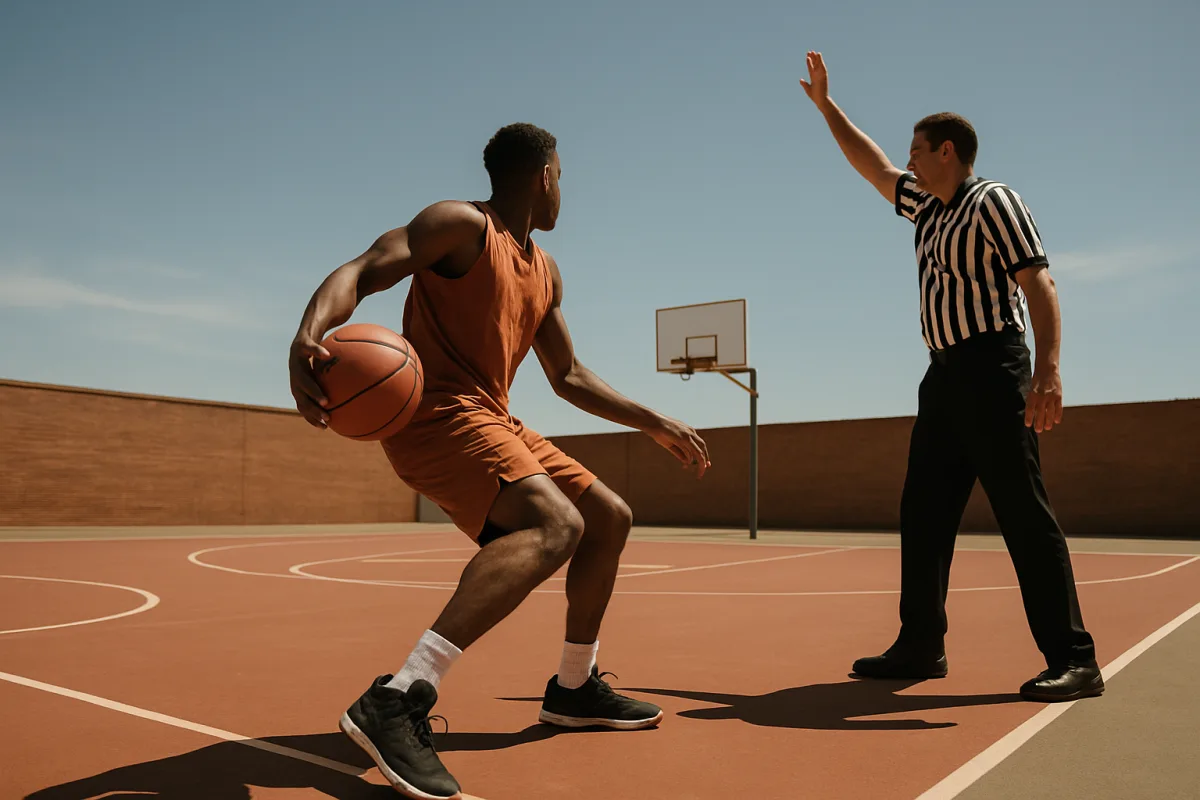
LaMelo Ball’s Moonwalk Travel Was Not a New Rule Problem. It Was a Gather Problem
The correction needs a correction
The viral clip was simple enough to create a misleadingly simple argument. LaMelo Ball appeared to slide backward, create separation, and make a step-back three. The obvious reaction was that he had taken too many steps.
That reaction was substantively correct, according to the NBA referees’ official social-media account. It acknowledged that Ball took four steps after gathering the ball, twice the two steps allowed under the NBA’s traveling standard. [7]
But the framing around the acknowledgment matters. Some reports described it as a referee-union admission, including a New York Times headline cited in the reporting package. That is not what the available evidence establishes.
There was no public statement from the National Basketball Referees Association, no league press release, and no on-record explanation from the NBA’s officiating department. The acknowledgment came through the referees’ official account, which is meaningful but not the same thing institutionally. [2][7]
That distinction does not make the play legal. It changes what the incident tells us. This was not a formal postgame ruling that altered a result, nor evidence that the league is installing a new standard.
It was an unusually blunt public acknowledgment of a missed call. The more useful basketball question is why this particular violation became difficult to officiate in real time, even though the replay looks clear once slowed down.
The gather is the whole play
Travel debates often collapse into a crude count. Fans see a player move one foot, then another, then another, and call it three steps. NBA mechanics are more specific than that.
The count begins at the gather, not necessarily at the first visible movement. The NBA’s traveling clarification allows a player who gathers the ball while progressing to take two steps to stop, pass, or shoot. [3]
A gather is the moment the player has sufficient control of the ball to do basketball things with it. In practical terms, it is when the dribble has ended and the player can pass, shoot, or hold the ball. [4]
That sounds clean in a rulebook, but it becomes complicated on tape. Ballhandlers routinely touch the ball with one hand as it rises from the floor, redirect it, carry it across their body, then transfer it into shooting position.
The first touch is not automatically the gather. A player can still be dribbling while the ball is in one hand, particularly if it has not come to rest and the player has not established clear control.
The NBA’s clarification was meant to account for precisely that reality. The league recognizes a “zero step,” sometimes called a gather step, before the player’s two legal steps are counted. [3][4]
That is why a layup can look like three steps to someone using the old schoolyard rule. A player may gather while one foot is touching, then take two additional steps before releasing the ball.
The same logic applies to a step-back jumper. A player is allowed to gather, establish the first counted step, use a second counted step to create backward space, and shoot before either taking another step or returning the ball to the floor.
The legal move is not “two steps from whenever the player starts moving.” It is two steps after control. The hard work is locating control accurately while bodies are moving at NBA speed.
How Ball’s move exceeded that allowance
The referees’ account did not merely say the play “looked like” a travel. It said Ball took four steps after gathering, which identifies both the violation and the part of the sequence officials believed they missed. [7]
That wording matters because it removes the usual escape hatch in travel arguments. This was not primarily a disagreement over whether Ball’s first backward foot was a permissible gather step.
According to the public acknowledgment, the gather had already occurred. Once that decision is made, the remaining calculation is straightforward: two steps are allowed, and four steps are not. [7]
The play became known as a “moonwalk” because the backward movement was so visibly extended. But the useful film-room description is not that Ball moved backward. Step-backs are supposed to move backward.
The violation is that he continued moving after the dribble was over and after the legal two-step sequence should have ended. His ability to create space was tied directly to extra footwork that a defender could not legally match.
That last point is why traveling standards matter tactically. A legal step-back already gives a skilled shooter a major advantage because the defender must honor the drive before recovering backward to contest the jumper.
Add an extra step or two, and the offensive player gets more than aesthetics. He gets additional separation, a more stable shooting base, and extra time for the defender’s momentum to carry in the wrong direction.
On a possession, that is not a small detail. The whole defensive coverage can be correct, with the defender square at the point of the gather, and still be defeated by space created after the dribble should have ended.
Why a basic violation can be missed
A travel referee is not reviewing a freeze frame from the baseline. The officiating crew is dividing responsibility among ball, primary defender, weak-side help, off-ball contact, and the possibility of a foul at the rim.
On a step-back, the lead official may have the clearest angle at the shooter’s lower body, but that official is also judging whether the defender hits the arm, body, or landing space on the shot.
The trail official may see the dribble and upper-body control better, but can be screened by the player’s torso or defender. A center official may have a cleaner look at feet but a worse view of the ball.
That is not an excuse for the missed call. It is the cost of asking officials to make a sequencing judgment involving ball control and foot placement while preserving the ability to officiate contact.
The angle is particularly difficult when the player changes direction. A conventional forward drive usually gives the official a visual rhythm: dribble, gather, first step, second step, release.
A lateral or backward move disrupts that rhythm. The official must decide whether the ball was still live on the dribble as the player crosses his feet, then determine whether the later retreating foot is the first or third counted step.
Replay makes the answer appear obvious because it separates events. Slow motion lets viewers stop at the gather, track each foot, and ignore every other responsibility an official had on the possession.
That does not mean viewers are wrong. It means the league should be careful about using social-media admissions as proof that every future borderline travel is equally easy to call in real time.
There is no publicly available 2026 data showing how often traveling is called, how often it is missed, or whether one type of player receives a looser standard than another. Claims of systematic favoritism go beyond the evidence.
Consistency is the real standard
The Ball play revived a familiar NBA complaint: that the rulebook says two steps while elite creators are allowed more. A similar debate followed a Giannis Antetokounmpo sequence the next day. [5]
Those debates often become arguments about whether the NBA should call traveling “more tightly.” That phrasing is less useful than asking whether officials are applying the same gather definition across similar possessions.
A league can choose a liberal or strict interpretation at the margins. What it cannot sustain is a standard in which the same completed dribble produces two legal steps in one game and four in another.
The practical problem is that travel enforcement sits on a spectrum. Some plays are plainly legal, some are plainly violations, and some depend on a disputed gather moment that only a close replay can isolate.
Ball’s shot belongs closer to the clear-violation end because the referees’ own account located four post-gather steps. [7] That makes it a poor test case for arguing that travel rules are inherently impossible to enforce.
Instead, it is a test of whether officiating crews are trained and positioned to recognize the modern step-back. The move is no longer a rare isolation trick. It is central to how perimeter stars manufacture efficient jump shots.
The NBA has already shown that it can alter enforcement through process when it wants to. The league made the in-game flopping penalty permanent beginning with the 2023-24 season and expanded Coach’s Challenge opportunities. [6]
Neither tool solves Ball’s play. A coach cannot use a challenge to retroactively erase every missed live-ball travel, and a travel call is not reviewable simply because social media later finds the cleanest angle.
That limitation is deliberate. Constantly reviewing footwork would damage the game’s flow and create more stoppages around ordinary possessions. The league has to decide which errors justify that cost.
Technology will not fix this play yet
The NBA is testing technology that could eventually improve officiating communication and tracking. Trials have included Wilson basketballs with Bluetooth sensors and referee wrist wearables linked to the replay center. [1]
Those experiments are not a regular-season travel solution. A smart ball may help establish possession-related data, but it cannot independently determine whether a player’s foot was down, whether the ball had truly come to rest, or whether control existed.
Those are still human judgments, shaped by video angle and rule interpretation. A sensor can tell the league something happened to the ball. It cannot fully adjudicate the basketball meaning of that event.
Nor has the NBA announced a new replay protocol, procedural reform, or travel-specific mandate because of Ball’s step-back. The existing rule remains the rule: gather, then two steps. [3][4]
The league’s broader accountability structure also matters. Commissioner Adam Silver said in 2023 that the NBA disciplines referees for missed calls, although the league does not publicly detail individual discipline. [6]
Albert Sanders Jr., appointed to lead officiating operations in 2023, came to the role with legal and strategic experience rather than an on-court officiating background. [1] That makes communication and process part of his department’s test.
The most constructive response is not to pretend one viral miss proves the sport is ungovernable. It is to identify the possession accurately, admit what happened, and teach the exact trigger officials missed.
Ball did not expose a mysterious loophole. The two-step rule already covers the move. The missed call exposed the narrow but decisive gap between having a rule and consistently recognizing the gather that activates it.
Frequently Asked Questions
Did LaMelo Ball commit a travel violation in the NBA game?
Yes. The NBA referees’ official social media account acknowledged that LaMelo Ball took four steps after gathering the ball, which exceeds the two-step limit allowed under NBA traveling rules. This means the step-back move was a travel violation, although the call was missed during the game.
What is the NBA gather step in traveling rules?
The gather step is the moment when a player gains sufficient control of the ball to pass, shoot, or hold it, marking the end of the dribble. The two-step allowance for traveling violations begins after this gather, meaning a player can legally take two steps following the gather before passing, shooting, or dribbling again.
How did NBA referees admit the missed travel call on LaMelo Ball?
The admission came through the NBA referees’ official social media account, which publicly acknowledged the missed call and confirmed Ball took four steps after gathering the ball. However, there was no formal statement from the National Basketball Referees Association or the NBA league office.
Why was LaMelo Ball's step-back considered a travel?
It was considered a travel because Ball took four steps after the gather, which is double the two steps permitted by NBA rules. The key issue is that the step count starts after the player has established control of the ball, not simply from when the player begins moving.
What challenges do referees face in calling traveling violations?
Referees must quickly identify the exact moment a player gathers the ball, determine the pivot foot, and count steps in a very fast, often lateral and complex move like a step-back. This requires split-second judgment, making it difficult to call traveling violations accurately in real time.
How we researched this
This article was assembled from 1 video source, 8 published articles, 7 cited references.
Nothing here is based on hands-on testing. Where a figure or finding appears, it belongs to the source cited beside it, and the writing says so rather than implying otherwise. Every source is listed below so you can check it.
Sources
'Not the Same NBA I Fell in Love With' | Kyrie Irving on Retirement Plans — FreeDawkins
Bucks' Gary Trent Jr. doesn't play in season opener despite $64 million contract — The Athletic NBA
‘He’s no good’: Donald Trump demands apology from LeBron James for disrespecting ‘Great American Warriors’ — Yahoo Sports
NBA referee union admits LaMelo Ball’s moonwalk stepback 3 was actually a travel — The New York Times
Defector’s Completely Decentralized NBA Season Preview Has Now Been Recentralized — Defector
NBA Refs Call Out LaMelo Ball's Travel After Viral Video From T-Wolves' Opener vs. Heat — Bleacher Report
NBA referees' official account admits mistake on LaMelo Ball's traveling violation — Yahoo Sports
NBA Referees’ social media gives final word on viral LaMelo Ball uncalled travel — Yahoo Sports
Duke in the NBA: Jalen Johnson and Paolo Banchero square off — Yahoo Sports
NBA hires former Obama counsel, Google exec Albert Sanders Jr. to head ref operations
NBA Board of Governors approves clarification of rule governing traveling violations | NBA.com
Possession, the gather and legal movement — Basketball · NBA | The Rule Guide
Adam Silver says NBA disciplines referees for missed calls - ESPN
NBA refs, Lonzo Ball admit LaMelo got away with egregious travel call - Yahoo Sports
Watch LaMelo Ball's Controversial Travel Call and NBA Referee Admission on Youtube
Related Articles
NBA Salary Cap Circumvention Investigation
Explore the NBA salary cap circumvention investigation into Gary Trent Jr.'s contract and understand Early Bird rights and potential violations.
LaMelo Ball Trade and Its Impact on Hornets Roster Changes
Explore how the LaMelo Ball trade reshaped the Hornets roster and offense, including Kon Knueppel's role and Naz Reid's impact.
Bronny James Preseason Struggles Raise Lakers' Doubts
Explore Bronny James' preseason struggles and Lakers' doubts about his NBA readiness and ball-handling performance.
Knicks Contract Extension Issues and Team Dynamics Explained
Explore the Knicks contract extension issues, roster challenges, and how salary cap rules impact team dynamics and future moves.