
NBA Salary Cap Circumvention Investigation
Explore the NBA salary cap circumvention investigation into Gary Trent Jr.'s contract and understand Early Bird rights and potential violations.
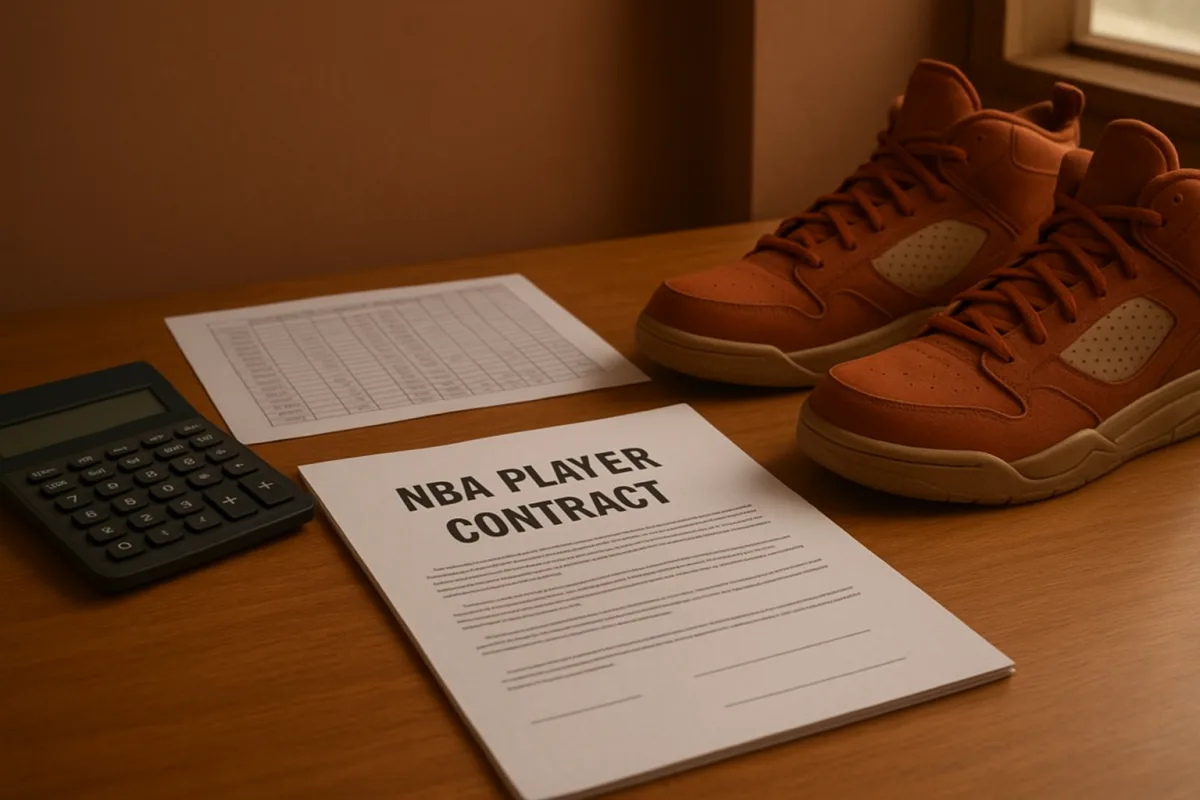
The concept at the center of this case: Early Bird rights
The cleanest way to understand the Bucks investigation is to put Gary Trent Jr.’s shooting numbers, Milwaukee’s rebuilding direction, and the contract’s headline total to one side for a moment. The case is really about a roster-building exception called Early Bird rights.
The salary cap is not a literal spending ceiling in the way a hard cap operates. NBA teams routinely carry payroll above the cap because the collective bargaining agreement gives them exceptions for retaining players, signing minimum contracts, and making other limited additions.
Bird rights are among the most important of those exceptions. They let a team keep a player it already has even when that team does not possess cap room to replace him at market price. In basketball terms, they preserve continuity without forcing a contender to choose between its own rotation player and the cap.
Early Bird rights are the shorter-service version of that system. As explained in the 2026-27 Bird-rights guide from Stocks and Buckets, a player earns them after two consecutive seasons with the same club, allowing that club to exceed the salary cap to re-sign him. [3]
That does not mean the new salary disappears from the payroll. It absolutely counts against team salary, tax calculations, and eventually apron thresholds. The advantage is procedural: Milwaukee can sign the player despite already being over the cap, because it has an exception permitting the transaction.
The exception has limits. Stocks and Buckets reports that an Early Bird contract must run at least two years, and its first-season salary can be the greater of 175 percent of the player’s prior salary or 105 percent of the league-average salary. [3]
That ceiling matters because it is far higher than a minimum deal can be. A team can sign a player cheaply, retain him through two consecutive seasons, then have a pathway to offer a substantially larger contract without first clearing matching cap space.
There is no wrongdoing in that sequence by itself. Teams are supposed to use Bird rights. A front office that identifies a useful wing defender, backup center, or movement shooter, signs him at a modest number, and later pays him more through an earned exception is operating inside the normal cap system.
The line is crossed only if the cheap contracts were part of a prior bargain. The question is not, “Did the player eventually receive more money?” It is, “Did the team and player agree in advance that the player would accept below-market pay now in exchange for a later payoff?”
That distinction is why the language in reporting matters. The Athletic’s description of the investigation, in its limited published excerpt, says the league needs to determine whether the Bucks and Trent intentionally entered cheaper contracts with a plan to reward him later. That is the alleged cap workaround.
Why the Bucks deal created the question
The public facts are straightforward. Gary Trent Jr., a veteran guard represented by Klutch Sports Group, signed a four-year, $64 million fully guaranteed contract with Milwaukee in July 2026. The NBA opened an investigation that month and hired the law firm Hecker Fink, according to Sports Business Journal. [8]
The $64 million total produces a simple average annual value of $16 million. It does not establish that Trent will actually receive exactly $16 million in each season, because the annual breakdown and any performance incentives have not been publicly released. [2][13]
That is more than a bookkeeping distinction. Cap mechanics work year by year. A front office’s trade options, tax status, use of exceptions, and proximity to an apron are determined by the salary assigned to the particular league year, not merely the contract’s average value.
What made the number stand out was the gap between the deal and Trent’s immediately preceding season. Operation Sports reported that he averaged 8.1 points per game while shooting 38.7 percent overall in 2025-26, his lowest scoring output and field-goal percentage since his rookie season. [2]
That production does not prove a cap violation. Scoring average is a poor standalone measure of a perimeter player’s value, especially for a guard whose useful possessions may involve spacing, off-ball relocation, defensive matchups, or reducing creation burdens for a star teammate.
But market logic is part of why an investigator would ask harder questions. When a player signs near the minimum, then receives a contract with a $16 million average after two seasons, the league will naturally examine whether normal competition for his services produced the raise.
The reported theory is that Milwaukee used a series of shorter, cheaper agreements to position Trent for Early Bird eligibility, then paid him once the club could legally use that exception. RealGM reported that the alleged arrangement involved two two-year contracts with player options, which Trent exercised by opting out after each first season.
Again, that sequence can be completely lawful if each negotiation stood on its own. A player may rationally choose a one-year opportunity, use a player option to return to free agency, and take the best available offer later. The NBA would need evidence that the future contract was promised beforehand.
That evidence could come in many forms, none of which has been disclosed publicly: messages, emails, agency communications, witness accounts, contract drafts, or discussions that describe a future payment as consideration for present sacrifice. Public skepticism about a deal is not proof of any of those things.
Sports Business Journal reported that the Bucks and Klutch Sports Group were cooperating with the inquiry. [8] Hoops Wire subsequently reported that the investigation remained ongoing. [9] There are still no public internal NBA documents, legal filings, or announced findings establishing a side agreement.
What Early Bird rights change on an actual roster
Early Bird rights change a team’s menu of transactions, not the player’s on-court role. Imagine a capped-out team with a productive rotation shooter who would cost more than the minimum to replace. Without an exception, keeping him might require shedding salary elsewhere.
With Early Bird rights, that club can retain him and remain above the cap. It can keep its spacing and continuity, while preserving other contracts and exceptions for different needs. In possession terms, the team is buying back a familiar lineup action rather than starting over with a cheaper substitute.
That is why the rule exists. The cap is intended to distribute talent, but the CBA also recognizes that clubs should have a route to retain players they developed or integrated successfully. Otherwise, every useful non-star would be pushed toward unrestricted movement once a team became capped out.
The risk is equally clear. If clubs could privately guarantee a later reward, they could recruit players into below-market contracts during years when cap space is scarce. The player sacrifices current salary, the team gets present-day value at a discount, and a future exception becomes the reimbursement vehicle.
That would distort competition even if the later contract technically fits the Early Bird formula. The violation would not be an incorrect exception calculation. It would be the hidden agreement that turned separate contracts into one long, prearranged compensation package.
Milwaukee’s cap sheet gives that question practical weight. Hoops Nightly listed the Bucks roughly $10.1 million below the $200.4 million luxury-tax line for 2026-27. [11] A significant long-term contract affects not only present payroll but also which trades and exceptions are realistic as the club reshapes its roster.
This is especially consequential after the Bucks’ trade of Giannis Antetokounmpo to the Miami Heat, as described in the reporting around the investigation. A rebuilding team usually values optionality: expiring money, cap room, tradeable contracts, and the ability to absorb unwanted salary in exchange for draft assets.
A $64 million commitment can still be useful if the player contributes or becomes a movable contract. It can be restrictive if the player’s market value falls below his cap number. That is a basketball-management problem, however, not evidence that the Early Bird process was manipulated.
Why the Clippers and Joe Smith precedents matter, but do not decide this case
The NBA’s recent Los Angeles Clippers case is relevant because it shows the league is willing to impose severe penalties for circumvention. The NBA found that the Clippers and Kawhi Leonard were involved in an arrangement involving compensation outside the salary cap structure. [4]
The league fined the Clippers $30 million, suspended owner Steve Ballmer for one year, and penalized Leonard $700,000. It also took five future first-round picks, while imposing additional discipline on team personnel and banning Leonard’s business manager from NBA dealings for five years. [1][4]
That case is not mechanically identical to Milwaukee’s. The Clippers matter because the alleged benefit was external compensation, while the reported Bucks theory centers on using a future Early Bird contract as the eventual payoff for earlier below-market contracts.
The older Minnesota Timberwolves and Joe Smith case is closer in structure. CBS Sports described that 2000 matter as involving a prearranged future contract after Smith accumulated the Bird rights needed for Minnesota to pay him more. [5]
The penalties there included a $3 million fine, five forfeited first-round picks, one-year suspensions for owner Glen Taylor and executive Kevin McHale, and voiding Smith’s contract. [5] The contrast with Leonard is instructive: Leonard’s contract remained in place despite the Clippers penalties. [4][5]
That contrast means there is no automatic remedy if Milwaukee is found to have violated the rules. A contract could be upheld, changed, or voided depending on the league’s findings and the specific conduct involved. Draft-pick losses, fines, suspensions, and roster restrictions are possible benchmarks, not predictions.
The film-room version of the issue is simple. A team may use an Early Bird exception to keep a player it values, even if the public thinks the price is high. The NBA’s concern begins only if the cheap initial seasons and expensive later season were all one transaction in disguise.
For now, the evidence available to the public does not establish that. Trent’s $64 million number, his modest 2025-26 output, and Milwaukee’s changed competitive timeline explain why the deal invited scrutiny. They do not answer the only question that can determine the case: what was agreed to, and when.
Frequently Asked Questions
What is the NBA salary cap circumvention investigation involving Gary Trent Jr?
The NBA is investigating Gary Trent Jr.’s four-year, $64 million fully guaranteed contract with the Milwaukee Bucks for possible salary cap circumvention. The league is examining whether there was a prior agreement for Trent to accept below-market pay initially with a plan for a larger payoff after earning Early Bird rights. As of now, no public evidence has confirmed any secret agreements or rule violations.
How do Early Bird rights work in the NBA salary cap system?
Early Bird rights allow a team to re-sign a player after two consecutive seasons with that team, even if the team is over the salary cap. The new contract must be at least two years and start at the greater of 175% of the player’s previous salary or 105% of the league-average salary. This exception lets teams retain players without clearing cap space but does not remove the salary from payroll or tax calculations.
Why is the Milwaukee Bucks contract with Gary Trent Jr under investigation?
The investigation focuses on whether the Bucks and Trent agreed in advance to underpay him temporarily and then reward him later once Early Bird rights were earned. The contract’s headline total of $64 million and Trent’s modest prior season performance have raised questions about whether the deal was structured to circumvent the salary cap rules.
What evidence does the NBA look for in salary cap circumvention cases?
The NBA seeks evidence of a prior arrangement where a player agreed to accept below-market salaries initially with a promise of a later payoff that circumvents cap rules. The key issue is whether the contract was part of a prearranged plan rather than the player simply earning a higher salary after qualifying for exceptions like Early Bird rights.
How can NBA teams legally use Early Bird rights without violating the salary cap?
Teams can legally use Early Bird rights by signing players to contracts that meet the minimum length and salary thresholds after two consecutive seasons without any secret side agreements. The player’s new salary must comply with the defined limits, and the team must not have agreed beforehand to underpay the player temporarily in exchange for a later larger contract. This process is a legitimate roster-building tool within the NBA’s collective bargaining agreement.
How we researched this
This article was assembled from 3 published articles, 15 cited references.
Nothing here is based on hands-on testing. Where a figure or finding appears, it belongs to the source cited beside it, and the writing says so rather than implying otherwise. Every source is listed below so you can check it.
Sources
NBA investigates Gary Trent Jr.'s Bucks deal. How does it compare to Kawhi-Clippers? — The Athletic NBA
NBA Commences Investigation Into Bucks, Gary Trent Jr For Salary Cap Circumvention — RealGM
The NBA’s next cap circumvention investigation is even more baffling than the Clippers’ Kawhi Leonard case — SB Nation NBA
NBA suspends Clippers owner Ballmer, fines team $30M, Kawhi Leonard $700K in cap circumvention case
NBA investigation into Bucks’ Gary Trent Jr. deal remains ongoing
NBA investigating Gary Trent Jr.’s contract with Bucks - Sportando
Milwaukee Bucks 2026-27 Salary Cap Sheet, Payroll & Luxury Tax | JJNBA
NBA investigating the $64 million contract Gary Trent Jr. signed with Bucks - Yahoo Sports
Why NBA Launched Investigation on Bucks for Strange Gary Trent Jr. Contract, Similar Past Cases
Related Articles
Clippers Kawhi Leonard Cap Circumvention Scandal Explained
Learn about the Clippers and Kawhi Leonard cap circumvention scandal, NBA penalties, and how endorsement deals led to salary cap violations.
NBA Trade and Contract Updates for Stars and Teams 2026
Get the latest NBA trade and contract updates for 2026, including key player moves, team roster changes, and salary cap impacts.

Steph Curry Warriors Contract Future and Over-38 Rule
Explore Steph Curry's contract future with the Warriors and how the Over-38 Rule shapes his extension options and team roster decisions.

Ausar Thompson Contract Extension and Defensive Impact
Explore Ausar Thompson's $155M contract extension and how his defense shapes the Detroit Pistons' future.