
Sixers Trade Activity and New Era in 2026 Season
Explore the Sixers' 2026 trade activity and new era, including key roster moves and strategy shifts around Embiid, Brown, and LeBron James.
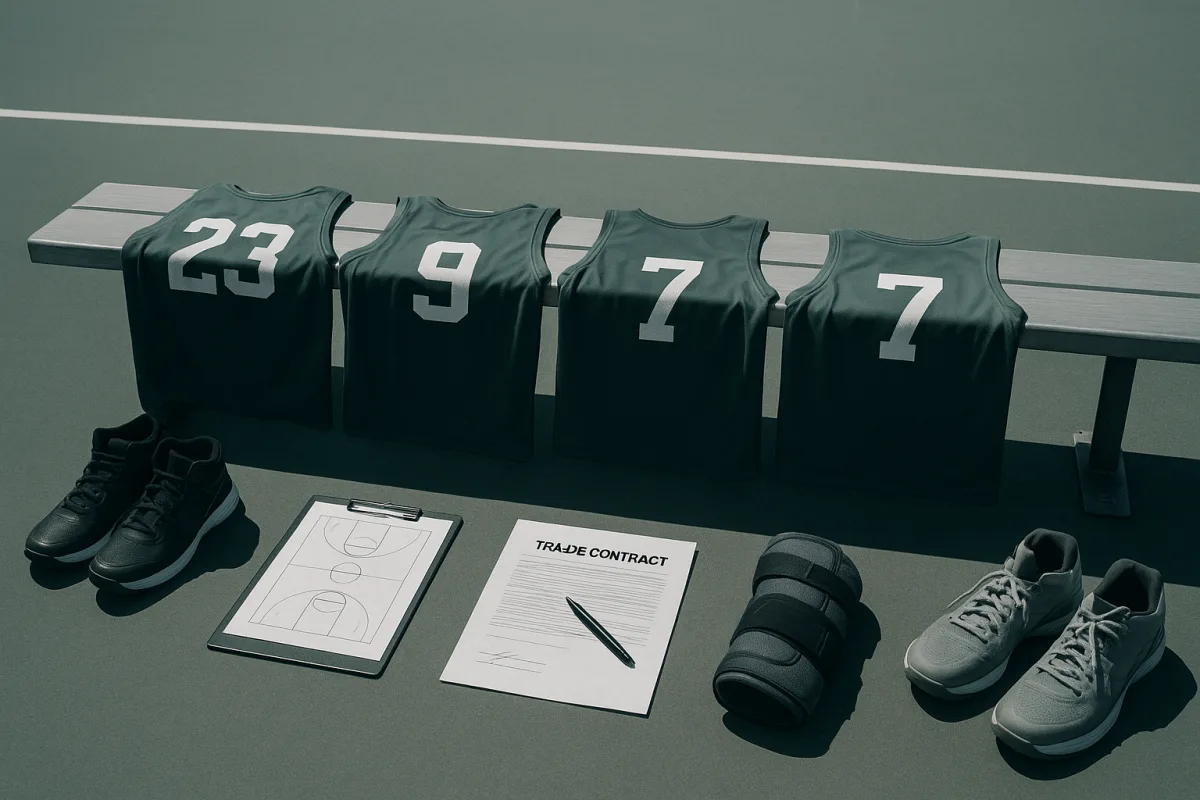
The Sixers have changed eras, not merely added names
The Philadelphia 76ers are no longer building patiently around Joel Embiid and Tyrese Maxey. They are operating as a short-window contender, willing to convert draft capital, developmental depth and future flexibility into immediate playoff answers.
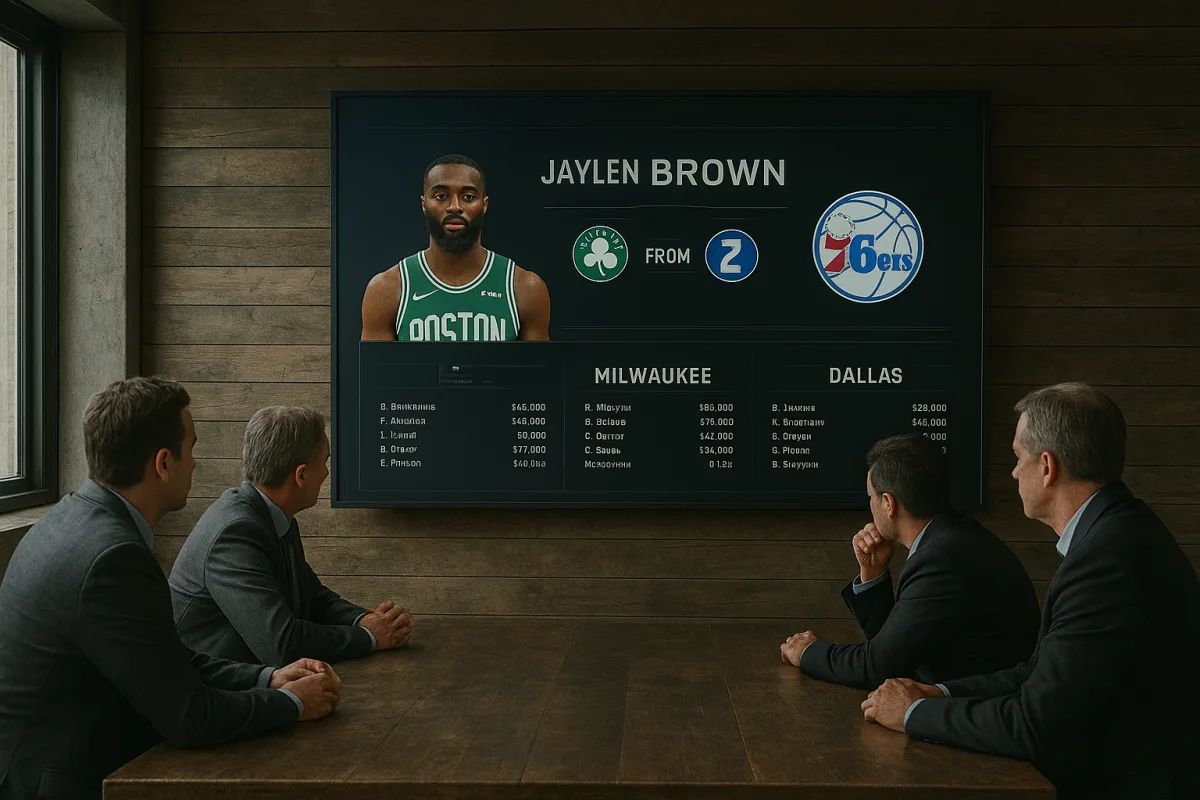
That conclusion is clearer when the transactions are placed in sequence. Philadelphia acquired Jaylen Brown from Boston for Paul George, two first-round picks and two second-round selections on July 7, then signed LeBron James on July 26. [2]
Two days later, the Sixers dealt 2025 second-round pick Johni Broome and the 2027 second-most favorable second-round pick to the Los Angeles Clippers for cash considerations. [1] That final deal is modest, but it fits the same organizational logic.
The franchise is pruning the edges of the roster after making its central bet. Brown and James are not developmental pieces. They are high-minute, high-leverage players expected to solve specific postseason possession problems before the roster’s age and salary constraints become prohibitive.
NBA.com’s season preview and ESPN’s associated forecasting both place Philadelphia among the East’s legitimate contenders, projecting a 52-30 record while ranking the club sixth in Basketball Power Index. [3] That is not a championship guarantee, but it confirms league-facing evaluators see the shift.
Independent signals point to the same strategy
The trade market, cap sheet and public messaging all point in one direction: Philadelphia is accepting fragility in exchange for top-end lineup quality. Those are separate signals, and they matter more than any single rumor-cycle assertion.
The Brown deal is the cleanest evidence. Moving George plus four picks for a two-way wing is an expensive way to improve, and it only makes sense if the team believes the current two or three seasons matter more than preserving optionality. [2]
Signing James reinforces that read. At 41, James is not a long-range asset whose value can be patiently developed. His value lies in solving the half-court possessions that decide playoff series, especially when defenses take away the first action.
The Broome transaction completes the picture from the opposite end of the roster. Broome was the 35th selection in the 2025 draft and had produced 21.8 points, 8.3 rebounds, 3.2 assists and 1.5 blocks per game with the Delaware Blue Coats. [1]
That production did not prove he was ready for a playoff rotation. Still, moving a young center prospect and a future pick for cash says Philadelphia is not treating internal development as its primary route to roster improvement.
The A.M. Hoops channel framed Dwyane Wade’s guarded public comments on James choosing Philadelphia as a hint that more movement could follow. That is worth treating as speculation, not reporting, because no confirmed subsequent star trade has emerged.
The confirmed information is narrower. Basketball-Reference’s transaction log and CBS Philadelphia’s reporting establish the Brown acquisition, James signing and Broome trade, but they do not establish a pending deal involving Embiid, Anthony Davis, Jarrett Allen or any other rumored target. [1][2]
What the lineup changes on the floor
The attractive version of this group is not five stars taking turns. It is a team that can change its initiator, matchup target and shot profile without substituting, which is the kind of flexibility playoff defenses make valuable.
Last season, Philadelphia ranked 29th in assists at 24.6 per game, according to the Hoop Dungeon channel’s cited statistical framing. Assists are not a complete measure of offense, but that number can indicate how often possessions finish through direct creation rather than connected advantages.
James offers a plausible corrective. He can initiate pick-and-rolls, direct transition and make the second pass when help rotates. The key benefit is not that Maxey never handles the ball, it is that Maxey need not begin every difficult possession against a set defense.
Maxey’s speed is most damaging when the defense is already tilted. NBA.com’s preview identifies the need for Philadelphia’s players to adjust their styles and create cleaner shots together, which should include more off-ball releases, early offense and attacks against rotating defenders. [3]
Brown changes a different set of possessions. He gives Philadelphia a physical wing option against bigger scoring forwards, while also providing a downhill driver when James draws help and Embiid occupies the center defender near the nail or low block.
That does not automatically make the five-man group seamless. Brown, Maxey, James and Embiid have each been accustomed to substantial offensive responsibility. A lineup can have several talented creators and still lose possessions through delayed decisions, duplicated spacing and unclear late-clock hierarchy.
The Hoop Dungeon channel’s central basketball concern is therefore sound even where its broader presentation leans heavily on star power. The issue is not whether these players can score. The issue is which player bends the defense first, and which players react quickly enough afterward.
Embiid is still the possession that decides the project
Philadelphia’s new era remains contingent on Embiid’s availability and mobility. That is not an argument that he must carry the same regular-season volume as before. In fact, the roster’s redesign suggests the opposite approach.
James and Brown theoretically allow Philadelphia to lower the number of possessions in which Embiid must generate offense from a stationary post-up or high pick-and-roll. That could matter in March as much as it does in a May matchup.
But the defensive question is harder to route around. Embiid’s rim protection and rebounding are structural parts of the team’s ceiling, particularly against offenses that force the center to make repeated decisions in space.
The A.M. Hoops channel speculated about a future Embiid-for-Anthony Davis discussion. There is no confirmed reporting in the supplied research that such talks exist, and the basketball logic would be far less tidy than salary matching suggests.
Swapping one injury-affected star center for another would not solve the core roster-construction problem by itself. It would merely change the type of coverage stress Philadelphia faces, with Davis offering more range defensively but not necessarily more certainty in availability.
The more relevant question is how Nick Nurse deploys the group when Embiid rests. Philadelphia cannot expect its stars to erase every bench weakness by force, because playoff opponents will target the least stable defensive link and make the stars guard multiple actions.
The Broome move exposes the cost of consolidation
The center depth is where Philadelphia’s aggressive strategy looks most vulnerable. Broome is gone, and Bona suffered a left foot sprain confirmed by MRI on September 18, with re-evaluation scheduled for September 29. [1]
There is no verified 2026-27 depth chart beyond Embiid in the research provided. That gap matters, because it would be irresponsible to declare the Sixers set at backup center based on old lineups or rumor-driven roster pages.
Andre Drummond and Dominick Barlow played backup-center minutes in 2025-26, averaging 6.4 points and 8.4 rebounds, and 7.7 points and 4.8 rebounds, respectively. Those figures describe prior production, not a confirmation that either fills the same role this season.
The tape-level concern is straightforward. A second unit without a credible rim deterrent changes every perimeter assignment, because guards cannot pressure the ball as aggressively and wings must collapse earlier to protect the paint.
That is why a future frontcourt addition would make more basketball sense than another ball-dominant scorer. Philadelphia already has several players capable of producing a difficult shot. It needs lineups that can survive the minutes when Embiid is unavailable.
The financial clock is part of the basketball story
Philadelphia’s projected 2026-27 payroll is $214 million, reportedly just $1.8 million below the first apron. [9] That number matters because it limits the club’s ability to treat fit problems as easily repairable later.
A roster near that threshold has less room for a midseason correction. It cannot casually take on money, absorb a useful contract or retain every role player whose market rises after a productive season.
This is why the Sixers’ approach is a compressed-window strategy rather than simply an ambitious one. The front office has chosen a roster that may be more dangerous in a seven-game series, while reducing the number of low-cost solutions available if it is not.
The Jared McCain trade to Oklahoma City in February had already shown fans the emotional cost of that choice, producing documented backlash. [7] That reaction did not stop Philadelphia from moving more youth-oriented value once its front office pursued the James-Brown path.
At the same time, the James signing produced a rapid local merchandise response, with Philadelphia Business Journal reporting jerseys selling out at area retailers and an August arena merchandise event drawing large crowds. [8] The commercial energy is real, though no source provided comprehensive revenue totals.
That distinction is important. Retail interest and packed events show attention, not basketball validation. A team’s success will be determined by whether its best five can defend without overhelping, generate quality shots without monopolizing the ball, and stay healthy enough to play together.
What other team-builders should take from Philadelphia
For another front office, Philadelphia is a useful case study in identifying the specific problem that star accumulation is supposed to solve. “Add talent” is not a plan. The plan must describe who initiates, who screens, who spaces and who covers for mistakes.
The Sixers have a coherent answer on offense. James can organize possessions, Maxey can attack advantage, Brown can punish smaller defenders, and Embiid can still warp coverage when he is on the floor and physically ready.
Their unresolved question is whether that offensive flexibility produces defensive continuity. Teams with multiple stars often communicate less cleanly early in the season because everybody is adjusting to new help responsibilities, transition matchups and foul-management demands.
That risk should not be overstated as an existing failure. The research identifies defensive cohesion and chemistry as analyst concerns, not demonstrated problems. [3][4] Philadelphia has not played enough meaningful possessions with this version of the roster to prove or disprove either concern.
The practical lesson is to distinguish between a roster’s ceiling and its redundancy. Philadelphia’s stars give it a higher ceiling because each can solve a different matchup. The roster becomes redundant only if every possession turns into an isolation before the defense has been moved.
For the Sixers, the next meaningful trend line is not another vague trade hint. It is the early evidence of role definition: Maxey’s off-ball usage, Brown’s defensive assignments, James’ possession load, Embiid’s availability and the backup center minutes Philadelphia can trust.
Frequently Asked Questions
What trades have the Sixers made in 2026?
In 2026, the Philadelphia 76ers made several significant moves: they acquired Jaylen Brown from the Boston Celtics in exchange for Paul George and four draft picks, signed LeBron James to a multi-year contract, and traded rookie center Johni Broome along with a 2027 second-round pick to the Los Angeles Clippers for cash considerations. These transactions reflect a shift toward a star-heavy, win-now roster.
How does the Sixers' new roster impact their championship chances?
The new roster positions Philadelphia as a strong contender in the Eastern Conference, with projections like ESPN’s giving the team an A-minus grade and a predicted 52-30 record. The additions of Brown and James aim to address specific playoff challenges by reducing the creation burden on Tyrese Maxey and improving defensive versatility. However, the roster’s high payroll and reliance on aging stars introduce risks related to depth and durability.
What is the Sixers' strategy with Jaylen Brown and LeBron James acquisitions?
Philadelphia’s strategy is to compress its championship window by adding proven star talent who can immediately impact high-leverage playoff possessions. Brown is expected to defend larger wings effectively, while James provides playmaking that reduces pressure on Maxey and improves half-court offense. This approach prioritizes top-end lineup quality over long-term development or draft capital.
Why did the Sixers trade Johni Broome in 2026?
The Sixers traded Johni Broome and a future second-round pick for cash considerations as part of a broader strategy to prioritize immediate roster needs over internal development. Despite Broome’s strong rookie season in the G League, the team concluded he was not yet ready for a playoff rotation, and the trade reflects a willingness to prune depth in favor of proven stars.
How will Joel Embiid's role change with the new Sixers lineup?
Joel Embiid’s role is expected to be managed more carefully toward the postseason, supported by the new additions. With LeBron James and Jaylen Brown on the roster, Embiid can focus more on high-impact moments while the team reduces the creation and defensive burdens on him during the regular season. This management aims to preserve his effectiveness and health for critical playoff stretches.
How we researched this
This article was assembled from 2 video sources across 2 channels, 9 cited references.
Nothing here is based on hands-on testing. Where a figure or finding appears, it belongs to the source cited beside it, and the writing says so rather than implying otherwise. Every source is listed below so you can check it.
Sources
The Sixers Are Making Another Trade — A.M. Hoops
What NBA Legends ACTUALLY Think About The 76ers New Era — Hoop Dungeon
2026-27 Philadelphia 76ers Transactions | Basketball-Reference.com
76ers Roster & Starting Lineup Updated Amid Sixers' Post-LeBron Moves
76ers Fans React in Outrage to Philadelphia Trading Away Jared McCain
LeBron James signing sparks 'monumental' boost for 76ers merchandise - Philadelphia Business Journal
Watch Sixers New Era and Trade Activity on Youtube
Also from the sources
Related Articles
NBA Trade and Contract Updates for Stars and Teams 2026
Get the latest NBA trade and contract updates for 2026, including key player moves, team roster changes, and salary cap impacts.
NBA 2026 Offseason Team Moves and Surprises Explained
Explore key NBA 2026 offseason team moves and surprises, analyzing trades, strategies, and impacts on team depth and championship chances.
NBA 2026 Offseason Analysis: Key Moves and Team Strategies
Explore the NBA 2026 offseason analysis with insights on major trades, signings, and team-building strategies shaping the upcoming season.

LaMelo Ball Trade and Its Impact on Hornets Roster Changes
Explore how the LaMelo Ball trade reshaped the Hornets roster and offense, including Kon Knueppel's role and Naz Reid's impact.