
NBA Ownership Changes: Analyzing Recent Franchise Sales
Explore NBA ownership changes, including the Lakers and Timberwolves, and their impact on team valuations and future strategies.
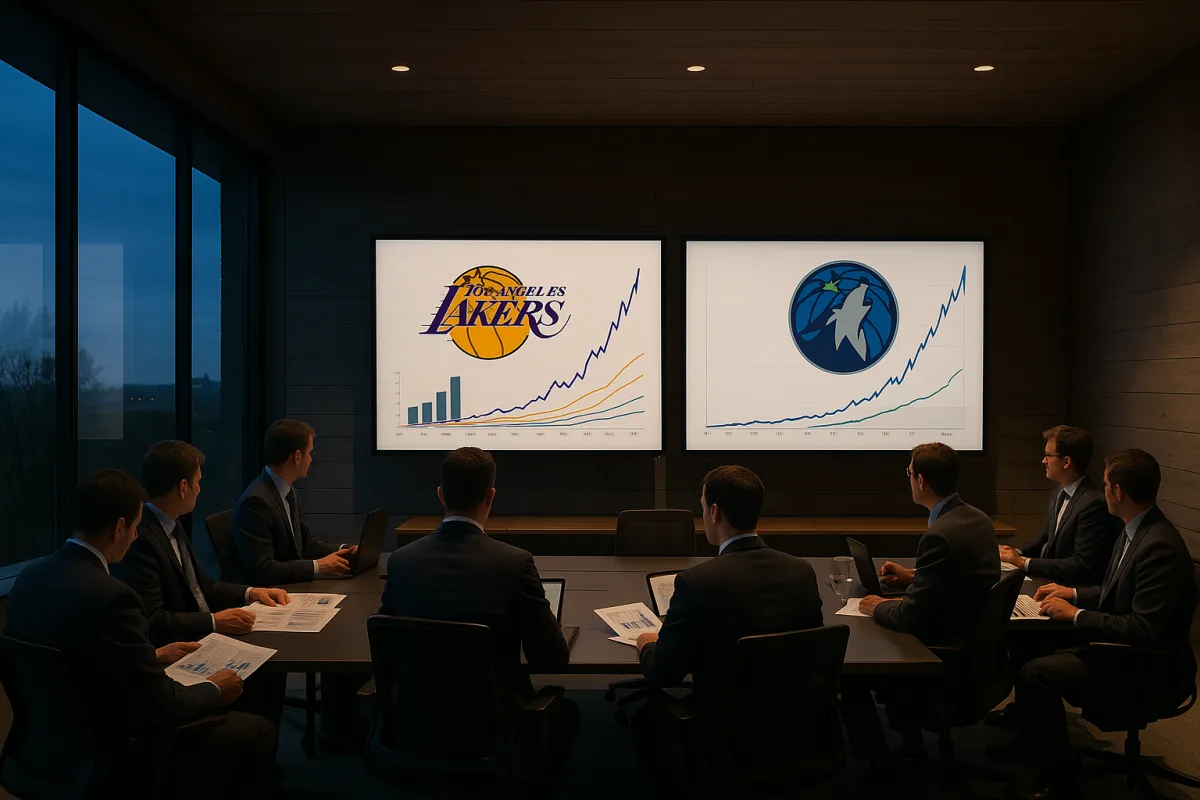
NBA Ownership Changes: A Comparative Analysis of Recent Sales
As we dive into the recent ownership transitions in the NBA, the stakes have never been higher. With the sale of the Los Angeles Lakers and the Minnesota Timberwolves' ownership transition, we see a reflection of the wider financial shifts in the league. This analysis aims to evaluate these developments against the evolving landscape of NBA team valuations, operational complexities, and the implications for both teams and their new owners.
The Lakers' Landmark Sale
The Los Angeles Lakers were sold for a staggering $12.5 billion on August 12, 2026, to Joshua Kushner and Bob Iger. This price marked a 25% increase from the $10 billion that Mark Walter paid for a controlling stake in 2025. The sale underscores the Lakers' status as one of the most valuable franchises in sports, driven by their storied history, global fanbase, and lucrative media rights deals.
However, it’s essential to note that the sale is still pending approval from the NBA's Board of Governors, which introduces an element of uncertainty regarding its finalization. The implications of this sale extend beyond just the Lakers; it has raised the average NBA team valuation to approximately $6.68 billion, a 21% increase from previous assessments. This valuation spike reflects a growing interest from investors, with 11 change-of-control sales totaling $54.1 billion since 2020.
The Timberwolves' Ownership Transition
In contrast, the Minnesota Timberwolves are navigating a different trajectory. While specific sale figures may not be available, the Timberwolves' ownership transition is indicative of the broader shifts occurring within the league. Tim Connelly, the team's president of basketball operations, has been instrumental in transforming the franchise into a competitive force, reaching the playoffs in recent seasons. However, the franchise's valuation, while rising, remains considerably lower than the Lakers, reflecting regional market factors and the Timberwolves' historical performance.
With the Timberwolves, the ownership transition is less about eye-popping numbers and more about strategic positioning. As the market for NBA teams heats up, the Timberwolves are well-poised to leverage their on-court success into greater financial returns.
Comparative Dimensions: Price, Size, and Layout
Price
The Lakers’ sale price of $12.5 billion dwarfs the Timberwolves' valuation, which is believed to be in the ballpark of $2 billion. This stark difference highlights the disparity in marketability and financial clout between franchises. The Lakers benefit from a larger market in Los Angeles, a storied legacy, and consistent playoff appearances, while the Timberwolves struggle with market limitations and a less illustrious history.
Size
In terms of size, the Lakers boast a global brand that resonates well beyond the borders of the United States. Their television deals and merchandise sales reflect a franchise that is not only a sports team but also a cultural icon. Conversely, the Timberwolves operate in a smaller market in Minnesota, which limits their revenue-generating capabilities. This difference in size translates to the financial health and operational strategies of each franchise.
Layout
The layout of operations is another critical aspect. The Lakers' ownership structure is marked by a complex family dynamic with the Buss family, which has led to ongoing disputes regarding minority ownership stakes. This complexity can affect decision-making and operational efficiency. On the other hand, the Timberwolves, under new ownership, are looking to streamline their operations and capitalize on recent successes to foster a winning culture.
Trade-offs and Challenges
While the financial prospects for NBA teams are improving, new owners face unique challenges. The Lakers, despite their immense value, could encounter operational hurdles, including legal disputes similar to those faced by minority owners of the Phoenix Suns, who have sued for mismanagement. Such challenges can affect team performance and marketability, making it crucial for the new owners to navigate these waters carefully.
For the Timberwolves, the challenge lies in sustaining their competitive momentum. With a relatively lower valuation, the pressure is on to deliver results on the court to elevate their market standing. This means that new ownership must make astute decisions, both in terms of player development and financial strategies.
The Future of NBA Ownership
The broader implications of these ownership changes signal a shift in how NBA teams are valued and operated. Recent regulatory changes have allowed private equity funds to purchase minority stakes in teams, which could lead to more diversified ownership structures. This trend is exemplified by the sale of both majority and minority stakes in high-profile franchises like the Lakers and the Boston Celtics.
As the market evolves, new ownership models may emerge, allowing for greater financial flexibility and innovative approaches to team management. The ability of franchises to adapt to these changing dynamics will be crucial in maintaining their competitive edge.
Who Each Option Suits
The sale of the Lakers appeals to high-profile investors looking for a flagship franchise with robust revenue potential and global visibility. The financial backing of individuals like Joshua Kushner and Bob Iger reflects a desire to capitalize on the Lakers' rich history and future growth opportunities.
In contrast, the Timberwolves represent a different type of investment. For prospective owners, acquiring the Timberwolves means taking on a project with room to grow. The franchise's recent playoff appearances and the potential for further development under smart management make it an attractive option for those willing to invest in a long-term vision.
Conclusion
The recent sales of the Los Angeles Lakers and the Minnesota Timberwolves illustrate a broader trend of financial shifts within the NBA. The stark contrast in valuations, operational challenges, and market dynamics underscores the complexities of owning a franchise in today’s landscape. As both teams navigate these transitions, the outcomes will likely shape the future direction of the league, influencing how teams are valued and managed in an ever-evolving sports economy.
In the end, the NBA continues to be a lucrative investment for those who understand the nuances of this vibrant and competitive market.
Frequently Asked Questions
What are the recent NBA ownership changes?
The recent ownership changes in the NBA include the sale of the Los Angeles Lakers for $12.5 billion to Joshua Kushner and Bob Iger, which is pending approval from the NBA's Board of Governors. Additionally, the Minnesota Timberwolves are undergoing an ownership transition, although specific sale figures are not available.
How do NBA ownership changes affect team valuations?
Ownership changes in the NBA have a significant impact on team valuations. The sale of the Lakers has raised the average NBA team valuation to approximately $6.68 billion, reflecting a 21% increase from previous assessments. This trend indicates heightened investor interest and a growing market for NBA franchises.
What are the implications of the Lakers' sale?
The sale of the Lakers not only underscores their status as one of the most valuable franchises in sports but also highlights the disparity in valuations among NBA teams. The sale has raised the average team valuation and reflects the growing interest from investors in high-profile franchises.
Sources
Ranking the NBA's 12 best duos: Three new-look pairs make the list, but familiar names are at the top, CBS Sports NBA
Basketball Hall of Fame predictions: Projecting HOF fates for six NBA veterans on the bubble, CBS Sports NBA
Vin Baker to join Giannis in Miami, SB Nation
Basketball-Iger, Kushner purchasing Lakers for record $12.5 billion By Reuters
A blockbuster $12.5B deal as Josh Kushner and Bob Iger agree to buy the Lakers, AP source says
Josh Kushner and Bob Iger buying the LA Lakers for $12.5 billion
Lakers' $12.5B sale lifts average NBA team value to $6.68B | News Minimalist
Lakers' $12.5B sale lifts NBA franchise valuations, what it means for the Utah Jazz, WE NEWS
Madison Square Garden Q4 Earnings Call Highlights - Defense World
NBA owners' current financial turmoil portends future payroll problems - ESPN
Phoenix Suns' minority owners sue Mat Ishbia, alleging mismanagement and lack of transparency
Mark Cuban accuses Mavericks owners of freezing him out in proposed arena move, newspaper reports
NBA Board of Governors approves sale of majority interest in Lakers to Mark Walter | NBA.com
Chisholm group takes over ownership control of Celtics | NBA.com
Forbes: Knicks worth $3 billion, NBA revenues at record high
Lakers' record-breaking sale pushes 2026 sports M&A to all-time high | S&P Global
Golden State Warriors on the Forbes NBA Team Valuations List
Three NBA teams now valued at $10B+ as average franchise worth hits $5.52B | Dealroom.co
Related Articles

Las Vegas NBA Expansion Ownership Bids and Finalists
Explore the finalist ownership bids for the Las Vegas NBA expansion team and what the NBA is considering for the franchise.
NBA 2026 Offseason Analysis: Key Moves and Team Strategies
Explore the NBA 2026 offseason analysis with insights on major trades, signings, and team-building strategies shaping the upcoming season.
NBA Trade and Contract Updates for Stars and Teams 2026
Get the latest NBA trade and contract updates for 2026, including key player moves, team roster changes, and salary cap impacts.

NBA 2026 Offseason Team Moves and Surprises Explained
Explore key NBA 2026 offseason team moves and surprises, analyzing trades, strategies, and impacts on team depth and championship chances.