
NBA Trade and Contract Updates for Stars and Teams 2026
Get the latest NBA trade and contract updates for 2026, including key player moves, team roster changes, and salary cap impacts.
The quick list
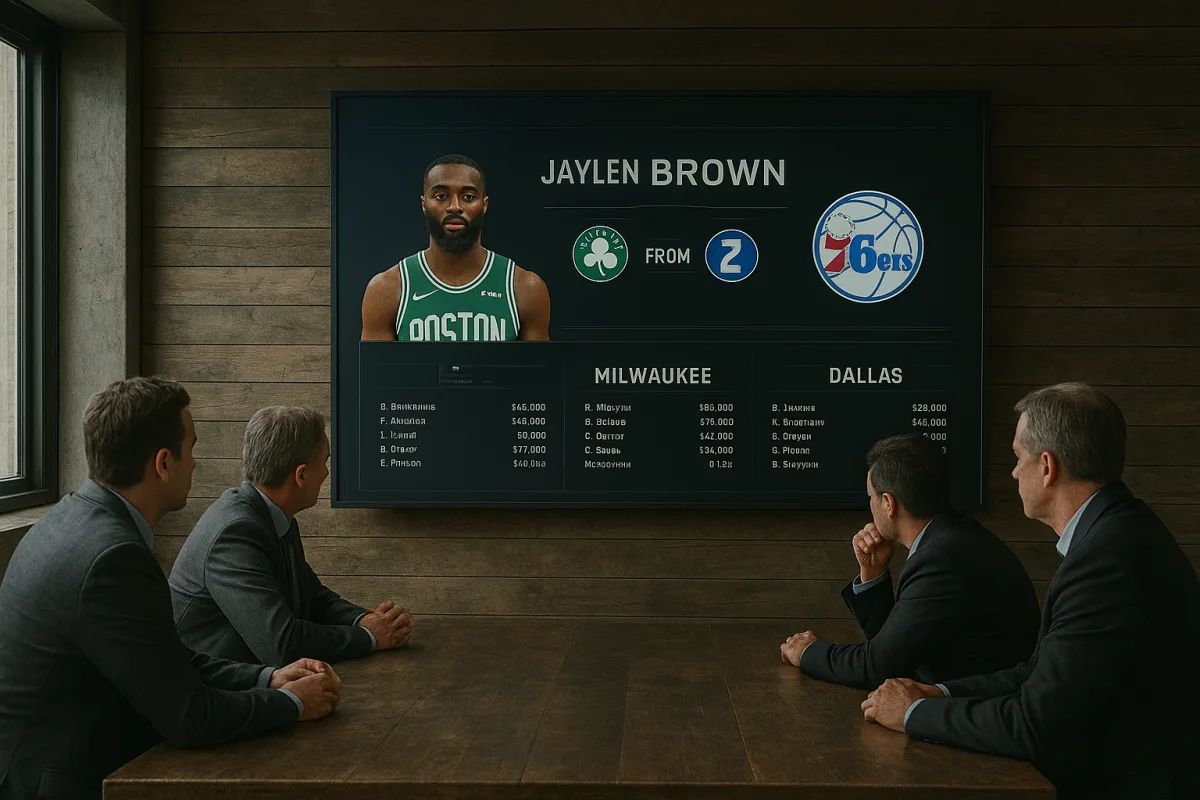
Best overall: Philadelphia 76ers’ Jaylen Brown acquisition, for a contender that needs a two-way wing without redesigning every possession around a new lead guard.
Best value: Dallas Mavericks’ post-Anthony Davis reset, for a team that benefits more from clearer cap and roster sequencing than another expensive veteran gamble.
Best for roster flexibility: Miami Heat’s wait-and-evaluate approach, for a club that should not turn unverified star chatter into an irreversible multi-asset trade.
Best for a top-heavy contender: Milwaukee Bucks’ center pursuit, for a team willing to accept severe tax and apron consequences in exchange for one more premium frontcourt talent.
Best for preserving optionality: Golden State Warriors’ patience, for a veteran team that cannot afford to confuse a recognizable name with a lineup solution.
The reader’s decision is not which rumor sounds biggest. It is which team is actually changing its playoff possessions, at what acquisition price, and with what downstream cap cost. That separates Philadelphia’s completed Brown deal from Milwaukee’s costly hypothetical and from the Heat and Warriors chatter that still lacks a usable transaction framework.
Comparison table
| Option | Status | Known price | Roster layout change | Main basketball upside | Main trade-off |
|---|---|---|---|---|---|
| Philadelphia 76ers acquire Jaylen Brown | Completed July 1, 2026 | Paul George, 2028 first-round pick, unprotected 2031 first-round pick, 2028 second-round pick and 2030 second-round pick [1][[2]](https://www.nba.com/news/reports-sixers-to-acquire-jaylen-brown-from-celtics?utm_source=openai "Sixers pick up All-Star Jaylen Brown from Celtics | NBA.com") | Adds a large two-way wing next to Philadelphia’s existing star creation | More wing defense and a reliable second-side scorer |
| Dallas Mavericks move Anthony Davis | Completed, Davis sent to Washington on Feb. 5, 2026 [[5]](https://www.silverscreenandroll.com/lakers-analysis/108400/lakers-2026-27-cap-space-nba-free-agency-offseason-luka-doncic-austin-reaves-lebron-james?utm_source=openai "The Lakers’ 2026-27 salary-cap outlook after the NBA trade deadline | Silver Screen and Roll") | Terms not supplied in the available reporting brief | Removes an elite big from Dallas’s prior frontcourt construction | Opportunity to rebalance age, cost and lineup roles |
| Milwaukee Bucks pursue an All-NBA center | Reported concept, not a completed signing | Proposed five years, $200 million, about $40 million annually [3][4] | Would place another star-sized salary in the frontcourt | Higher-end half-court finishing and playoff matchup insurance | Tax exposure and apron restrictions that can hollow out depth |
| Miami Heat trade positioning | No verified terms supplied | No confirmed price | No confirmed layout change | Retains ability to address shooting, size or creation later | Standing still can leave matchup weaknesses unresolved |
| Golden State Warriors trade positioning | No verified terms supplied | No confirmed price | No confirmed layout change | Preserves picks and movable contracts until a real fit emerges | Veteran core has limited time for a slow build |
| Indiana Pacers retain Pascal Siakam | Completed extension, August 2024 | Four years, $189.5 million [[8]](https://api-hub-dev.nba.com/news/pascal-siakam-max-deal-pacers?utm_source=openai "Pascal Siakam signs reported $189.5M max deal with Pacers | NBA.com") | Keeps a proven forward as a central connector | Continuity in transition, secondary creation and switchable size |
Philadelphia’s Brown deal is the actual win-now benchmark
The Philadelphia 76ers acquired Jaylen Brown from the Boston Celtics on July 1, 2026, sending Paul George and four draft picks to Boston: a 2028 first-round pick, an unprotected 2031 first, a 2028 second-rounder and a 2030 second-rounder. [1][2] That is a major price, but it is a defined price.
The draft package matters because the 2031 first is unprotected. That is the kind of asset that survives a contender’s current window and becomes expensive precisely if the present core ages poorly. Philadelphia did not merely exchange one veteran wing for another.
On tape, though, Brown changes a playoff possession more cleanly than most star additions. He can start an action, but he does not need to monopolize it. Philadelphia can use him as the weak-side spacer who attacks a hard closeout, as the second-side pick-and-roll handler, or as the primary wing defender.
That versatility is the point. A lineup with Brown does not require Tyrese Maxey to be the only guard bending the first line of defense, nor does it ask Joel Embiid to solve every late-clock possession from the elbow or nail.
The A.M. Hoops video framed the Brown transaction amid speculation about another Philadelphia move and possible big-man alternatives. That is useful only as a map of fan and media speculation, not as evidence of an imminent second transaction. No verified terms establish an Embiid-for-Anthony Davis framework.
The Anthony Davis angle also needs updating. Davis was traded from the Mavericks to the Wizards on February 5, 2026, according to Silver Screen and Roll’s Lakers cap analysis. [5] A hypothetical Davis move cannot be treated as though Dallas still controls him.
Philadelphia’s trade-off is not basketball fit. Brown’s ability to defend bigger wings while attacking tilted defenses is an intuitive complement to Maxey and Embiid. The trade-off is that a team already built to contend has used more of its future insulation to improve its present rotation.
Dallas is now a reset case, not an Anthony Davis destination
The Mavericks’ relevant update is the completed departure of Davis, not a rumor about whether he might fit beside another star. Davis’s move to Washington changes the categories Dallas must solve: rim protection, defensive rebounding, frontcourt scoring and the ability to close games against jumbo lineups. [5]
A Davis-led defense could cover mistakes differently. A big can play at the level, retreat to the rim, switch selectively, then erase the final pass with length. Removing that player does not automatically make a team worse, but it does force more precision from the remaining perimeter defenders.
That is why Dallas should be compared with Philadelphia carefully. Philadelphia paid a major asset price for a wing who can play within an existing offensive hierarchy. Dallas, after moving Davis, faces a broader structural question about the balance between its stars, bigs and role-player depth.
The available research does not provide return details, salary figures or a confirmed replacement plan for Dallas. That limits any responsible “grade.” Calling the Mavericks improved or diminished without knowing the incoming assets would be box-score thinking without the possessions that explain it.
Still, the team’s best value may be flexibility. If the move creates cleaner future sequencing, Dallas can seek a center whose job is narrower and less expensive: screen, protect the rim, finish the roll, and avoid forcing every lineup into a max-salary frontcourt equation.
Milwaukee’s $200 million question is really an apron question
Yahoo Sports’ short excerpt says Milwaukee is eyeing an All-NBA center with a $200 million offer in a post-Giannis rebuild. That excerpt does not identify the player, establish negotiations, or confirm a deal. It should be read as a rumor pointer, not a report of a completed signing.
The cap math is more concrete. Milwaukee’s projected 2026-27 committed salary is $193.8 million, with the luxury-tax line at $200.428 million, the first apron at $209.015 million and the second apron at $221.686 million. [3][4]
Add a hypothetical five-year, $200 million center contract, approximately $40 million per season, and that payroll reaches about $233.8 million. That would place Milwaukee roughly $33.8 million above the tax line and over both aprons. [3][4]
The basketball case is straightforward. An All-NBA center can lift the floor of a half-court offense by creating a larger roll target, punishing switches, finishing short-roll passes, or anchoring the back line when perimeter defenders are beaten at the point of attack.
But the roster-layout cost is severe. Apron teams do not just pay more. The collective-bargaining restrictions reduce the ways they can aggregate salary, use exceptions, replace departing players and correct a weak bench later. The exact restrictions depend on the team’s final cap position, but the strategic principle is plain.
A premium center can solve one matchup while making three smaller issues permanent. If Milwaukee must surrender multiple rotation players or lose the ability to replenish them, its playoff lineup may improve at the top while its non-star minutes become easier to target.
That is the distinction between price and value. The $200 million figure is not merely a contract number. It is a commitment to a more brittle team-building model.
Miami and Golden State should resist name-driven decisions
The topic places the Heat and Warriors among teams involved in significant talks, but the available sources provide no confirmed trade package, player target, contract amount or timeline for either club. That absence is not a detail to fill with inference.
For Miami, the prudent lens is lineup need. A Heat trade should answer a specific possession problem: can the team generate paint pressure without sacrificing its defensive rotations, can it add shooting that survives playoff switching, or can it find size without losing pace?
For Golden State, the same test applies in a different shape. A Warriors acquisition should either preserve the passing ecosystem around its veteran core or provide enough self-creation to survive possessions when opponents switch off-ball actions and force isolations.
Neither team should pay a star premium for a player who simply replicates an existing role. A second high-usage scorer sounds valuable until the ball stops moving, while another small defender can look playable until a postseason opponent repeatedly creates cross-matches near the rim.
The independent research brief identifies general 2026 concerns, including apron constraints, depth loss after star trades and fit problems. Those are not unique warnings for Miami or Golden State. They are the ordinary costs of a trade market where the best-known player is not always the best answer.
Siakam is the useful counterexample to rumor framing
The Yahoo Sports excerpt suggesting Pascal Siakam received a “harsh label” in a new NBA study has no supporting public evidence in the research brief. There is no identified study that negatively altered Siakam’s market or contract standing as of September 2026.
What is documented is more useful. Indiana acquired Siakam in January 2024, then signed him to a four-year, $189.5 million extension in August 2024. [8] That is not the profile of a player whose value was publicly cratered by an outside assessment.
Siakam’s value is easier to understand from lineup function than from a label. He can push after defensive rebounds, operate as a secondary creator, score against mismatches and defend across forward assignments. Those skills connect lineups rather than requiring every possession to be built around him.
That contract is expensive, but it purchases continuity in a role that scales. Indiana does not need Siakam to become a heliocentric scorer for the deal to work. It needs him to make the spaces between its guards, shooters and bigs more functional.
Who each option suits
Philadelphia’s Jaylen Brown trade suits a team already committed to a title window and willing to spend future picks for a wing who improves both point-of-attack defense and second-side offense. The deal makes most sense if Brown remains a connector rather than being asked to duplicate every Maxey or Embiid touch.
Dallas’s post-Davis position suits a team prepared to rebuild its frontcourt architecture rather than force an immediate star-for-star replacement. The key is finding a lineup identity before chasing another marquee name.
Milwaukee’s center pursuit suits an ownership group willing to absorb tax costs and roster restrictions for an elite frontcourt ceiling. It does not suit a team that still needs inexpensive depth, multiple trade pivots and flexibility to repair its bench.
Miami’s current position suits a front office that values optionality until a trade clearly solves shooting, size or late-clock creation. With no verified terms available, restraint is more defensible than pretending a vague rumor is a transaction.
Golden State’s current position suits a veteran contender that needs to protect its remaining lineup coherence. Any move should improve the Warriors’ actual possession flow, not merely add a famous résumé.
Indiana’s Pascal Siakam extension suits a team that values stable, scalable forward play and understands the difference between a costly contract and a bad one. The available evidence supports the former, not the latter.
Frequently Asked Questions
What are the latest NBA trade and contract updates for 2026?
The most significant confirmed trade in 2026 is the Philadelphia 76ers acquiring Jaylen Brown from the Boston Celtics on July 1, 2026. The 76ers sent Paul George and four draft picks to Boston in exchange. Meanwhile, the Dallas Mavericks traded Anthony Davis to Washington in February 2026. Milwaukee is reportedly pursuing a high-profile center on a five-year, $200 million deal, but this has not been finalized. Miami and Golden State remain in rumor stages with no completed trades or contract deals.
How did the Jaylen Brown trade impact the Philadelphia 76ers?
The 76ers added a Finals MVP-caliber two-way wing in Jaylen Brown without disrupting their primary ball-handling structure. This move is viewed as a clear win-now transaction that improves wing defense and scoring. However, it cost Philadelphia Paul George and multiple future draft picks, reducing their future draft inventory and increasing their veteran salary commitments.
What are the financial implications of recent NBA trades?
Milwaukee’s potential signing of a $200 million center would push its payroll well above the luxury tax and apron thresholds for 2026-27, triggering heavy tax penalties and limiting roster flexibility. Philadelphia’s Jaylen Brown trade involves acquiring a more expensive veteran core at the cost of future draft assets. Dallas’s trade of Anthony Davis rebalances their roster and salary structure but details on financial terms were not disclosed.
Which NBA teams made significant roster changes in 2026?
Philadelphia’s acquisition of Jaylen Brown and Dallas’s trade of Anthony Davis are the major confirmed roster changes in 2026. Milwaukee is pursuing a major frontcourt addition but has not completed a deal. Miami and Golden State have been linked to trade rumors but have not made confirmed roster moves.
What contracts have NBA stars signed in the 2026 offseason?
The only confirmed recent star contract is Pascal Siakam’s four-year, $189.5 million extension signed with the Indiana Pacers in August 2024. There are no confirmed new star contracts signed in the 2026 offseason reported in the available information.
How we researched this
This article was assembled from 2 video sources across 2 channels, 2 published articles, 8 cited references.
Nothing here is based on hands-on testing. Where a figure or finding appears, it belongs to the source cited beside it, and the writing says so rather than implying otherwise. Every source is listed below so you can check it.
Sources
The Sixers Are Making Another Trade — A.M. Hoops
NBA Studs Who Are ONE Trade Away From Exploding — Andy Hoops
Bucks Eye All-NBA Center With $200 Million Offer in Post-Giannis Rebuild — Yahoo Sports
Pacers’ Pascal Siakam Receives Harsh Label in New NBA Study — Yahoo Sports
Jaylen Brown trade grades: 76ers get 'A+' in utterly baffling move by Celtics - CBS Sports
The Lakers’ 2026-27 salary-cap outlook after the NBA trade deadline | Silver Screen and Roll
Pascal Siakam signs reported $189.5M max deal with Pacers | NBA.com
Watch Trade and Contract Updates for NBA Stars and Teams on Youtube
Also from the sources
Related Articles

NBA 2026 Offseason Analysis: Key Moves and Team Strategies
Explore the NBA 2026 offseason analysis with insights on major trades, signings, and team-building strategies shaping the upcoming season.
NBA Player Breakouts and Trade Rumors Shaping 2026 Season
Explore NBA player breakouts and trade rumors in 2026, analyzing how trades reshape roles and impact breakout opportunities.
NBA 2026 Offseason Team Moves and Surprises Explained
Explore key NBA 2026 offseason team moves and surprises, analyzing trades, strategies, and impacts on team depth and championship chances.
Minnesota Timberwolves Offseason Changes and Frontcourt
Explore Minnesota Timberwolves offseason changes and how the new frontcourt shapes their 2026 season outlook and team dynamics.