
Las Vegas NBA Expansion Ownership Bids and Finalists
Explore the finalist ownership bids for the Las Vegas NBA expansion team and what the NBA is considering for the franchise.
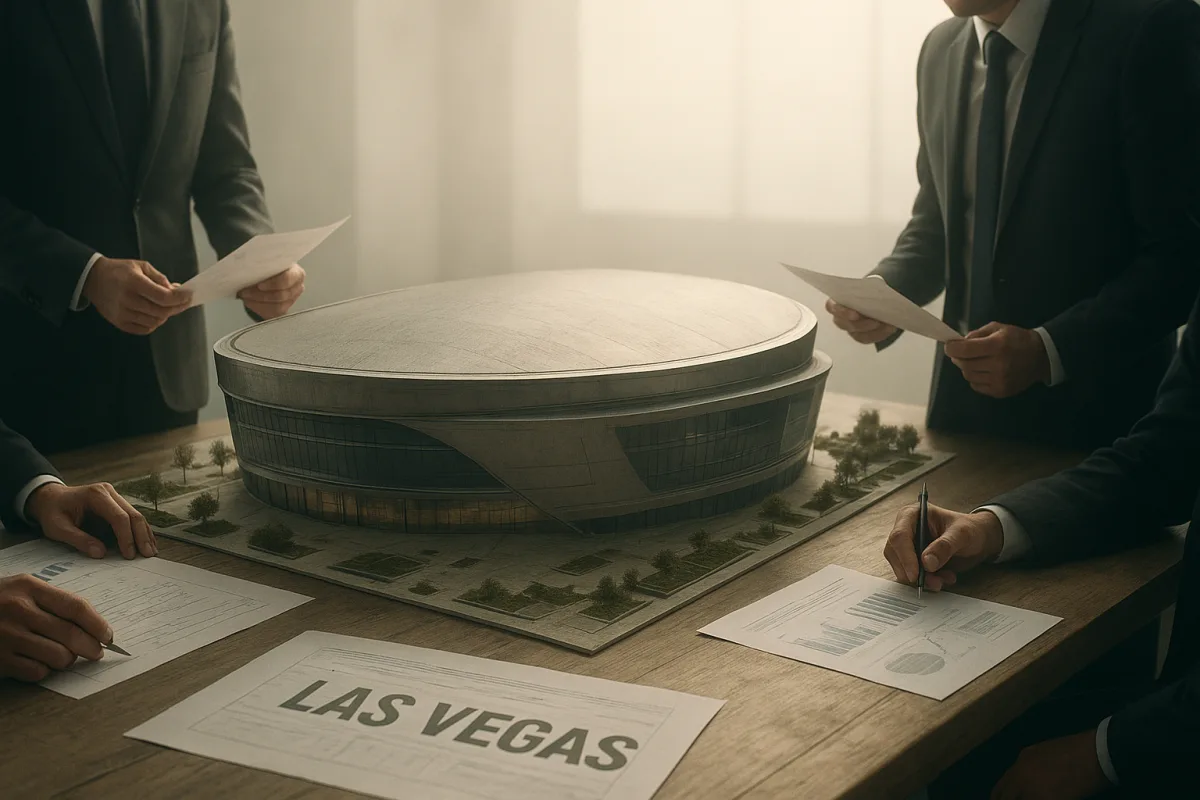
The shift is from expansion theory to bid selection
The NBA is no longer asking whether Las Vegas can support a team. It is sorting among three ownership groups for one. That is a meaningful change in the possession, from scouting the floor to choosing who gets the ball. [3][12]
Several independent outlets are now describing the same late-stage pattern. The Las Vegas Review-Journal reported that the league is nearing a choice among three finalist groups, while NBC Sports also characterized a selection as coming soon. [3][4]
That reporting follows the NBA Board of Governors’ March authorization to formally explore expansion in Las Vegas and Seattle. The league retained PJT Partners to assess ownership groups, arena options, markets and economic conditions, which established a formal evaluation process rather than a speculative bidding free-for-all. [8]
The Associated Press, Axios and ESPN each reported the Board’s authorization as a joint Las Vegas-Seattle exploration. [1][2][9] The new reporting does not mean Seattle has disappeared. It means Las Vegas has produced the more developed bidding competition.
That distinction matters. Expansion is often framed as a city-versus-city contest, but the league’s current work appears more granular: who controls the team, what venue they can deliver, how the transaction is structured, and whether the market can support the league’s long-term calendar. [8][9]
NBA commissioner Adam Silver has cautioned against treating any timeline as settled. Sports Business Journal reported in June that Silver would not guarantee a decision by the end of 2026, even as the league continued its expansion analysis. [10]
So the useful read is not that an announcement is inevitable tomorrow. It is that three groups have reached the final rotation, and the league has enough information to compare actual ownership-and-arena propositions rather than broad expressions of interest. [3][12]
The three finalist groups offer different kinds of certainty
The first finalist group is led by Nancy Walton Laurie and Bill Laurie. The Review-Journal identified Nancy Walton Laurie, a Walmart heir, as the principal financial figure and Bill Laurie as a former owner of the NHL’s St. Louis Blues. [3]
That bid’s obvious strength is balance-sheet capacity. The Review-Journal placed Nancy Walton Laurie’s net worth at $17.2 billion, a figure that puts her in a different ownership-capital tier than most individual sports buyers. [3]
But capital is not the entire coverage. An NBA expansion club needs a credible basketball operation, local business infrastructure and a venue arrangement that survives the first wave of opening-night excitement. Public reporting has not detailed how the Lauries would divide those responsibilities. [3]
The second finalist group pairs Canadian real-estate billionaire Steve Apostolopoulos with Marc Lasry, the former Milwaukee Bucks co-owner. The Review-Journal reported that Lasry sold his Bucks stake in 2023 in a transaction valuing the franchise at $3.5 billion. [3]
Lasry’s presence gives that group direct recent NBA ownership experience. That does not automatically make it the favorite, but it changes the evaluation: he has worked inside the league’s governance structure rather than merely pursuing entry into it. [3]
Apostolopoulos brings a different profile. The Review-Journal described him as a Canadian real-estate billionaire who previously pursued NFL and NHL ownership opportunities, adding a development-oriented background to a bid where arena questions remain central. [3]
The third group combines Bill Foley, majority owner of the NHL’s Vegas Golden Knights, with Jerry Colangelo, the former Phoenix Suns owner and former USA Basketball managing director. On local operating knowledge, it has the clearest existing Las Vegas sports footprint. [3]
Foley already knows the market’s event economy from the Golden Knights, while Colangelo brings extensive NBA experience. The Review-Journal also noted Foley’s ownership of English Premier League club AFC Bournemouth and Colangelo’s four NBA Executive of the Year awards. [3]
That group’s possible advantage is not simply familiarity. It is that an incumbent local sports operator may better understand ticketing, sponsorship, premium hospitality and the tourism-driven rhythm of Las Vegas, all of which matter more than a conventional metro-area comparison suggests.
Still, that is an analytical inference, not a reported league preference. No public reporting identifies a front-runner, reveals the finalists’ exact equity structures, or says which bid has offered the highest pure expansion fee. [3][12]
The $12 billion to $13 billion number needs a film-room read
The headline price is real enough to shape the conversation, but it is not clean enough to be treated like a finalized franchise valuation. The Review-Journal reported a projected cost of $12 billion to $13 billion for the Las Vegas franchise and arena. [3]
NBC Sports presented a different framing, saying the price tag could be $12 billion to $13 billion and describing reporting that the franchise fee itself might be at least $12 billion. [4] Those are not interchangeable claims.
The gap is important. If the figure includes a new building or a major renovation, it is a project total. If it is the expansion fee alone, it resets the NBA’s entry-price market before land, construction, financing and operating commitments are counted. [3][4]
Public reporting has not supplied an itemized split. That means readers should resist adding a presumed arena cost on top of $13 billion, but should also resist assuming a prospective owner can acquire a team and venue for that total. [3][4]
Earlier expansion reporting placed expected fees in a lower $7 billion to $10 billion range per club. [8] A $12 billion-plus Las Vegas package would therefore signal either an exceptional market premium, substantial venue value, or both.
It would also exceed the leading published franchise-value estimates. Yahoo Sports listed the Golden State Warriors at $10.8 billion, the New York Knicks at $10.1 billion and the Los Angeles Lakers at $10 billion in its 2026 valuation ranking. [13]
Those comparisons require care because valuation methods differ. Another outlet placed the Lakers at $12.5 billion, illustrating why a bid, a team valuation and a transaction price should not be treated as the same statistic. [11]
In basketball terms, this is the difference between points scored and points per possession. A $13 billion headline is not yet a clean measurement of what the league values the franchise at, because the underlying assets and obligations remain unclear.
Why Las Vegas, why now
Las Vegas has spent the past decade building a stronger case as a major-league market. It already hosts the NFL’s Raiders, NHL’s Golden Knights and WNBA’s Aces, while MLB’s Athletics are also headed to the market. [12]
The city also has longstanding NBA infrastructure in a looser sense. Las Vegas has hosted Summer League for years and staged the 2007 All-Star Game, giving the league repeated evidence of local and visitor demand around its product. [12]
But this expansion push is not solely a Las Vegas story. The NBA’s Board formally opened exploration in both Las Vegas and Seattle, and the league’s expansion analysis arrives after franchise values and media-rights expectations have climbed sharply. [8][13]
Seattle remains structurally relevant because it has an NBA-ready building in Climate Pledge Arena. Silver said the arena could host the league quickly with modifications, whereas Las Vegas still has a venue decision to resolve. [12]
That helps explain the apparent sequencing. Las Vegas may be closer to selecting an ownership winner because multiple groups are competing, but its path to a first tip is less settled because the home-arena possession is unfinished. [12]
The league could consider renovated T-Mobile Arena or a temporary venue while a new arena is built. Silver described interest in a renovated T-Mobile Arena, while also acknowledging that it would need significant improvements for NBA use. [12]
Foley’s group has reportedly proposed a $300 million T-Mobile Arena upgrade rather than a new arena. [6] That is the only publicly reported concrete venue-cost concept among the finalist groups, not proof that the league prefers renovation over new construction.
Reports have also linked Las Vegas expansion discussions to a possible Sphere-style arena concept. [6] Yet there is no public final site, financing package, design approval or construction schedule, so rendering-level ideas should not be mistaken for an executable arena plan.
What a prospective bidder or arena developer should take from this
The Las Vegas process shows that a successful sports project is not won by announcing the largest number. The NBA’s own framework puts market, ownership, arena and economics in the same evaluation bucket. [8]
For someone planning an ownership bid, that means separating three models before presenting them: the price paid to join the league, the capital required for the venue, and the operating capital needed before the club reaches steady-state revenue.
For someone planning an arena, it means avoiding the common mistake of treating a building as a detachable add-on. In Las Vegas, the uncertainty around the arena is central enough that it affects the timetable for the basketball team itself. [12]
The strongest publicly visible proposals will likely be those that reduce execution risk. A bid can have extraordinary wealth behind it, but the league also has to assess governance, local partnerships, venue control and whether the opening date is realistic.
There is not enough public information to judge debt levels, public subsidies, lease terms, projected operating losses or revenue-sharing assumptions for any finalist. Those omissions are material, not minor footnotes, because they determine how durable a bid really is.
The near-term decision, whenever it arrives, will establish more than Las Vegas’ first NBA owner. It will reveal what the league currently values most in expansion: maximum fee, arena certainty, local operating experience, or an ownership group that can supply all four.
Frequently Asked Questions
Who are the finalist ownership groups for the Las Vegas NBA expansion?
The three finalist ownership groups are: Nancy Walton Laurie and Bill Laurie; Steve Apostolopoulos and Marc Lasry; and Bill Foley with Jerry Colangelo. Each group has significant sports ownership experience and financial resources.
What is the estimated value of the Las Vegas NBA expansion bids?
The total projected cost for the franchise plus a new arena is reported between $12 billion and $13 billion. However, there is conflicting reporting on whether this figure includes arena costs or represents only the franchise expansion fee.
What factors is the NBA considering in selecting Las Vegas expansion owners?
The NBA is evaluating control ownership, venue readiness, market economics, and execution together. The league is focused on who controls the team, what venue they can deliver, how the transaction is structured, and whether the market can support the league’s long-term calendar.
When is the NBA expected to announce the Las Vegas expansion team owner?
No specific date has been confirmed. NBA commissioner Adam Silver has cautioned against treating any timeline as settled and has not guaranteed a decision by the end of 2026.
What are the differences between the three Las Vegas NBA expansion bids?
While all three groups bring strong ownership backgrounds, one notable difference is arena plans: Bill Foley’s group proposes a $300 million upgrade to the existing T-Mobile Arena rather than building a new arena. Other detailed differences in bids have not been publicly disclosed.
How we researched this
This article was assembled from 5 published articles, 13 cited references.
Nothing here is based on hands-on testing. Where a figure or finding appears, it belongs to the source cited beside it, and the writing says so rather than implying otherwise. Every source is listed below so you can check it.
Sources
Michael Jordan 'Last Dance' NBA Finals jersey sells for record $12.26 million — The Athletic NBA
NBA closing in on choosing ownership for new Las Vegas franchise: When could team debut? What about Seattle? — CBS Sports NBA
NBA nearing agreements with European soccer powers for new continental league: Sources — The Athletic NBA
NBA expansion to Las Vegas moves forward as 3 bidders emerge as finalists: Sources — The Athletic NBA
How Caitlin Clark and a 2024 Warriors-Hawks game became the subject of a Senate argument — The Athletic NBA
Vegas and Seattle a step closer to getting NBA teams. League's owners approve expansion exploration
‘Las Vegas Jacks’ group announces $8 billion bid for NBA expansion franchise
The $10 Billion Seat: Inside the Race to Own Las Vegas's NBA Franchise - Las Vegas Live
NBA Board of Governors approves exploration of expansion to Seattle, Las Vegas | NBA.com
NBA owners vote to explore Vegas, Seattle expansion bids - ESPN
NBA expansion: League narrows in on three bidders for new Las Vegas franchise - CBS Sports
2026 NBA franchise valuations: See where all 30 teams rank - Yahoo Sports
Related Articles
NBA Expansion Las Vegas and Seattle: Current Developments
Explore the latest NBA expansion developments in Las Vegas and Seattle, including ownership bids, arena plans, and league process updates.
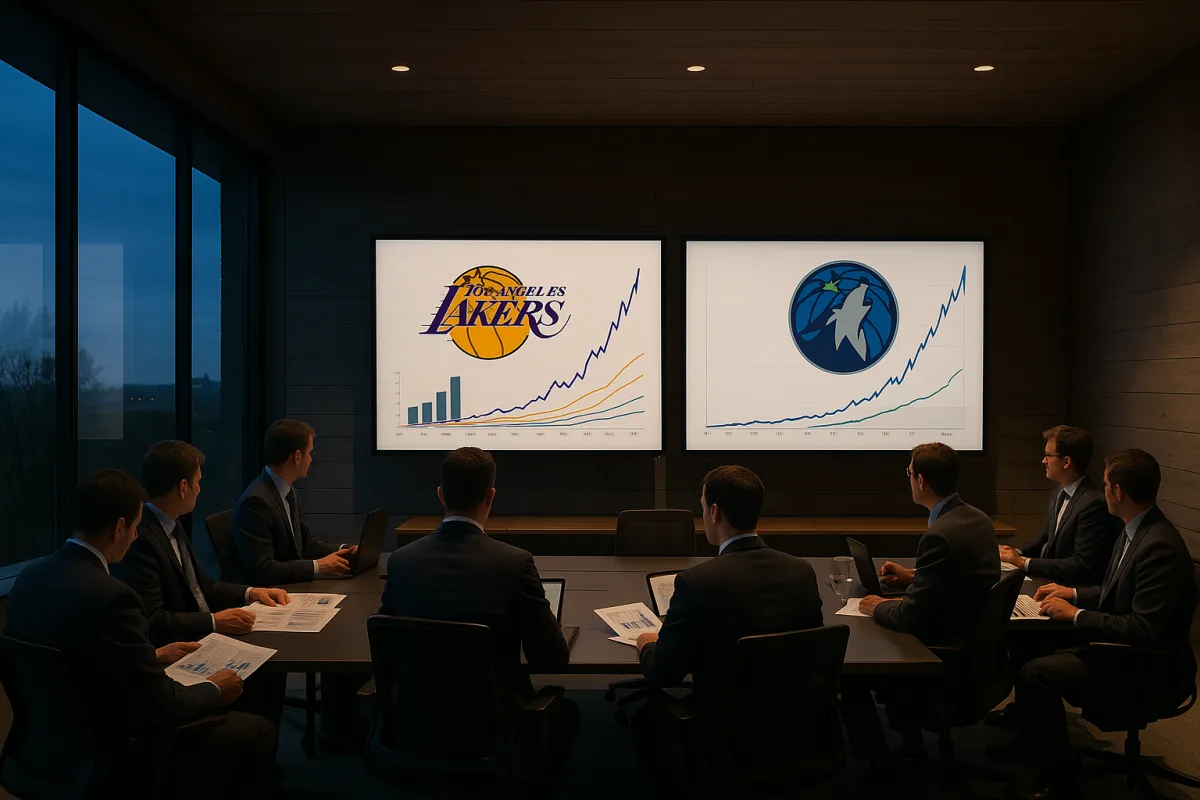
NBA Ownership Changes: Analyzing Recent Franchise Sales
Explore NBA ownership changes, including the Lakers and Timberwolves, and their impact on team valuations and future strategies.
NBA Expansion Fees: Understanding Their Role and League
Explore NBA expansion fees, their impact on owners, and how Seattle, Las Vegas, and Portland factor into the league's future expansion plans.

NBA Media Day Insights 2026: Top Players and Team Updates
Get key NBA Media Day insights from top players and teams, including Wembanyama, Leonard, Harper, and Bronny James for the 2026 season.