
NBA Preseason Player Performances and Game Highlights
Explore NBA preseason player performances and game highlights with analysis of rookies, rotations, and team strategies from 2026 games.
The quick list
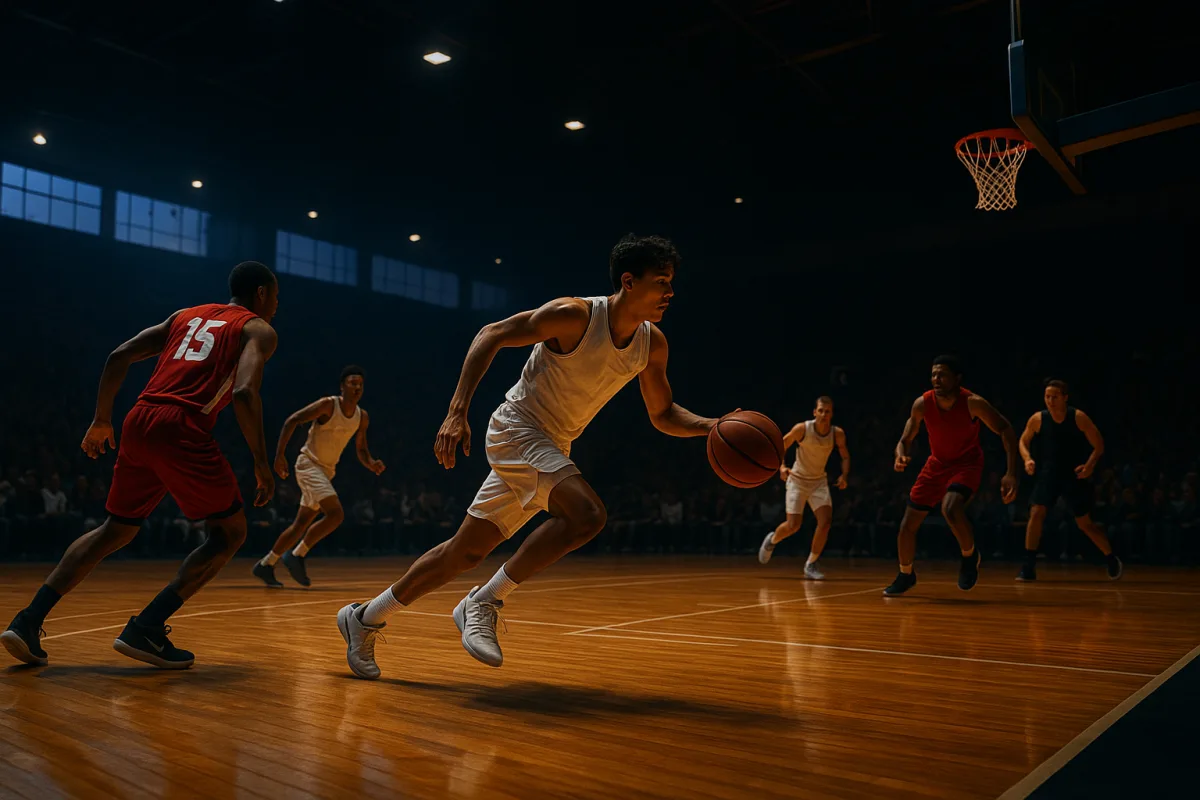
Best overall: Golden State Warriors vs. Sacramento Kings, for viewers deciding whether Yaxel Lendeborg can help a veteran contender immediately.
Best for transition basketball: Dallas Mavericks vs. Houston Rockets, for viewers who want to see how defensive rebounds and turnovers become early-offense possessions.
Best rookie guard tape: Los Angeles Lakers vs. Sacramento Kings, for viewers tracking Darius Acuff Jr.’s ability to create paint touches.
Best for lineup experimentation: Los Angeles Lakers vs. Golden State Warriors, for viewers evaluating Golden State’s frontcourt spacing and Warriors reserve competition.
Best competitive second unit watch: Philadelphia 76ers vs. Brooklyn Nets, for viewers interested in Brooklyn’s young frontcourt and its ability to withstand a star-heavy opening group.
Preseason highlights are not products, so there is no price, size or physical layout to compare. The useful substitutes are game context, rotation relevance, role difficulty, and whether the same action worked across multiple possessions rather than once in open floor.
Comparison table
| Game or performance | Primary decision it answers | Possession-level evidence | Main trade-off | Who it suits |
|---|---|---|---|---|
| Warriors vs. Kings | Can Yaxel Lendeborg play now? | Defensive rebounds, rim runs, short-roll reads, spot-up shooting | Sacramento’s coverage was not a regular-season scouting plan | Warriors rotation watchers |
| Mavericks vs. Rockets | Which preseason identity looked more repeatable? | Dallas transition off stops, Houston offensive-rebound pressure | Veteran minutes and late-game substitutions complicate team conclusions | Scheme-focused viewers |
| Lakers vs. Kings | Is Darius Acuff Jr.’s scoring functional? | Paint attacks, passing reads, repeated self-created attempts | His efficiency and role will face stronger regular-season scouting | Rookie guard evaluators |
| Lakers vs. Warriors | How does Golden State space its non-Curry units? | Bigs screening, rolling, popping and moving the ball | Lakers defense and personnel were incomplete | Warriors lineup watchers |
| 76ers vs. Nets | Can Brooklyn’s young group execute under pressure? | Clowney and Danny Wolf actions, transition defense, second-chance play | The Sixers’ unusual personnel context limits direct projection | Nets development watchers |
Golden State Warriors vs. Sacramento Kings: the strongest Lendeborg case
The reader’s real question from Golden State’s October 10 win over Sacramento is not whether Yaxel Lendeborg can pile up a preseason stat line. It is whether his possessions solve problems the Warriors actually had last season.
Lendeborg’s official output was substantial, 23 points, 10 rebounds, six assists, two steals and one block in 24 minutes, on 10-of-14 shooting. [2] The 23 points matter less than the distribution of the work.
On the FreeDawkins full-game highlight, Lendeborg repeatedly finished the possession he started. He secured defensive rebounds, pushed the ball himself, filled the lane hard when someone else handled, and made simple reads when Sacramento’s help rotated toward the rim.
That combination changes Golden State’s transition geometry. A conventional big rebounder often needs an outlet and trails the play. Lendeborg can either trigger the break or become the first big down the floor, which forces a cross-match before the defense is set.
The more encouraging sequence came in half court. With Draymond Green organizing from the top or elbow, Lendeborg worked as a screener, roller and outlet. That matters because it avoids asking Green to be both the offensive connector and the vertical finisher.
Lendeborg also hit perimeter shots, but the better read is not “stretch five confirmed.” The tape shows opponents still choosing between protecting the paint against his roll and closing to his catch-and-shoot opportunities. He benefited from the attention Curry and Green pull.
Against the Lakers on October 6, Lendeborg posted 17 points, nine rebounds and two assists on 7-of-11 shooting, including 2-of-3 from three. [1] The repeated rebounding and efficient finishing across both games is more useful than any single made jumper.
The trade-off is obvious. Sacramento did not deploy a regular-season-quality game plan designed specifically to deny Lendeborg’s preferred touches. Still, rebounding, sprinting, screening and making the next pass are portable skills, even when the opponent is not fully optimized.
Gui Santos also appeared in both Warriors contexts. RotoWire reported that Santos started against the Lakers, and he remains a Warrior, not a Laker despite some confusing preseason references. [8] His value on tape was direct: run the floor, attack closeouts and keep the ball moving.
Dallas Mavericks vs. Houston Rockets: two different paths to an advantage
The Dallas-Houston game was more revealing as a style comparison than as a scoreboard event. Dallas produced several of its best possessions by getting stops, clearing the defensive glass and putting Kyrie Irving, Cooper Flagg or Max Christie into early offense.
The cleanest Dallas sequence was often simple: a block or forced miss, one outlet, then a wing sprinting ahead of the retreating defense. When P.J. Washington and Daniel Gafford ran the floor, the Mavericks created rim pressure before Houston could establish its half-court shell.
Houston’s counter was not elegant, but it was coherent. The Rockets pursued misses, won loose-ball moments and used those extra possessions to generate threes and interior chances. An offensive rebound is not just another shot attempt, it forces a defense to scramble after it believed the play was over.
Marcus Smart’s on-ball work was useful because it showed the intended texture of Houston’s perimeter defense. He crowded handlers, navigated bodies and turned ordinary initiation into late-clock decisions, though preseason possessions cannot establish how sustainable that physicality will be.
Reed Sheppard’s shooting flashes were more interesting in context. His makes came when Houston’s initial pressure shifted the defense and created a catch with less time to load up. That is a better translation indicator than an isolated deep three over a relaxed closeout.
Flagg’s value showed up defensively as much as offensively. The FreeDawkins edit included a chase-down-style block and several runout opportunities after disruptive possessions. The important point is that Dallas did not need to call his number for him to affect the structure of a possession.
Dallas has been explicit elsewhere about scripted preseason availability, particularly in managing young players’ minutes. [6] That caveat belongs over every conclusion from this game. The actions are informative, but the minute allocations are not a depth-chart verdict.
Los Angeles Lakers vs. Sacramento Kings: Acuff’s pressure was the point
The Lakers-Kings game gave Sacramento rookie Darius Acuff Jr. the clearest individual audition among the guards in this roundup. His verified October 6 line was 19 points, four assists, one steal and one block in 27 minutes, on 8-of-17 shooting. [7]
The 8-of-17 figure should not be dressed up as elite efficiency. It does show volume, however, and volume has a specific meaning here: Acuff repeatedly got to possessions where he, rather than the offense, had to create an advantage.
On the FreeDawkins tape, Acuff attacked gaps early in the clock and got into the lane against a defense that was occasionally tilted toward the ball. He was not merely receiving swing passes after Sacramento’s veterans did the difficult work.
His passing is part of the evaluation. A young guard’s drive has limited value if the defense can load two bodies into the paint without consequence. Acuff found Sabonis on an early interior feed and showed enough willingness to move the ball after penetration.
The concern is the normal rookie guard concern. At 6-foot-2, as listed in the game broadcast, he must create separation and make fast decisions against larger defenders. The preseason average of 18.7 points across three games is encouraging, but it does not answer that question yet. [7]
For the Lakers, Quentin Grimes and Jake LaRavia supplied more immediately recognizable wing functions. Grimes attacked available space without much hesitation, while LaRavia’s cuts and transition movement helped punish Sacramento’s moments of weak-side inattention.
Los Angeles Lakers vs. Golden State Warriors: spacing was the headline
Golden State’s 124-98 preseason win over the Lakers was not notable simply because the margin reached 38. It was notable because the Warriors repeatedly got their bigs into decisions that exposed the Lakers’ screen navigation and rim protection.
Lendeborg’s 17 points and nine rebounds were part of that. [1] But Golden State also used Sandro Mamukelashvili as a mobile scoring big, mixing rolls, short dives and perimeter positioning to prevent the defense from sitting comfortably in one coverage.
A screen changes the possession only if it creates a real choice. Golden State’s better sequences forced Lakers defenders to decide whether to stay attached to Curry, contain the ball, tag the roller or recover to a shooter. No defense gets all four.
The Warriors’ reserve guards also played faster than the Lakers could consistently organize against. Brandon Williams’ speed mattered most when he turned a small advantage into a paint touch before the defense could switch or load help.
The scheduling context needs correction. The October 6 game was the only confirmed Lakers-Warriors preseason meeting, and the teams have three regular-season matchups, not the broader preseason and regular-season slate suggested by the broadcast. [3][4]
Philadelphia 76ers vs. Brooklyn Nets: Brooklyn’s young frontcourt held up
The Sixers-Nets game is the least cleanly projectable of the five, but it remains worthwhile for Brooklyn’s competitive response. The FreeDawkins highlight showed the Nets absorbing early pressure, then finding ways to create through Noah Clowney, Danny Wolf and their secondary actions.
Clowney’s impact was not limited to a made corner three or an isolated move. He showed up around the rim defensively, including a prominent rejection, and then made use of the ball when Philadelphia’s coverage left a direct driving or shooting lane.
Wolf’s minutes were useful because they displayed a different kind of frontcourt option. Brooklyn could use him as a finisher around the rim, a recipient on interior actions, and a perimeter player capable of stretching a possession past the first defensive rotation.
That frontcourt versatility has a trade-off. Young bigs who can handle, shoot and pass are valuable only if the lineup around them can protect the ball and defend in space. Brooklyn’s better possessions came when it avoided stagnant, late-clock isolation.
Who each option suits
The Warriors-Kings game suits viewers deciding whether Lendeborg deserves a real opening-night role. His production was impressive, but the stronger evidence is his ability to rebound, run, screen, pass and finish without demanding a high-usage offensive role. [2]
The Mavericks-Rockets game suits viewers who prefer scheme over celebrity. Dallas showed how quickly a stop can become a runout, while Houston showed why offensive rebounding and perimeter pressure can compensate for a less polished half-court possession.
The Lakers-Kings game suits anyone tracking rookie guard development. Acuff’s scoring average is worth noting, but his repeated paint pressure, passing decisions and ability to function against size are the possessions that should determine the next evaluation. [7]
The Lakers-Warriors game suits Golden State viewers studying the margins around Curry and Green. Lendeborg, Mamukelashvili, Santos and Williams each offered a different answer to the same question: can the Warriors maintain pace and spacing beyond their stars?
The 76ers-Nets game suits readers more interested in development than preseason results. Brooklyn’s young bigs showed enough on both ends to make the tape useful, even if the game’s mixed personnel makes any broad team-level projection premature.
Frequently Asked Questions
Which NBA rookies had standout performances in the 2026 preseason?
Golden State rookie Yaxel Lendeborg had notable performances, including a 23-point, 10-rebound, six-assist game against Sacramento and 17 points with nine rebounds versus the Lakers. Sacramento rookie Darius Acuff Jr. also impressed by averaging 18.7 points per game over his first three preseason appearances.
How do NBA preseason performances translate to regular season roles?
Preseason stats should be treated as usage samples rather than forecasts because rotations are managed, minutes are often scripted, and teams prioritize injury management. Thus, strong preseason numbers do not guarantee a significant regular season role, but they can indicate potential fit and readiness.
What are the best NBA preseason games to watch for lineup insights?
The Golden State Warriors vs. Sacramento Kings game is recommended for evaluating Yaxel Lendeborg’s fit and the Warriors’ spacing and transition play. The Dallas Mavericks vs. Houston Rockets game highlights contrasting team identities in transition and defense. Lakers vs. Kings offers insight into rookie guard Darius Acuff Jr.’s scoring, while Lakers vs. Warriors shows Warriors frontcourt spacing and reserve competition.
How did Yaxel Lendeborg perform in the 2026 NBA preseason?
Lendeborg posted strong back-to-back games: 17 points, nine rebounds, and two assists on 7-of-11 shooting against the Lakers, and 23 points, 10 rebounds, six assists, two steals, and one block on 10-of-14 shooting in 24 minutes against the Kings. His play combined defensive rebounds, transition triggering, and effective half-court roles, suggesting readiness to contribute immediately.
What styles of play were evident in the 2026 NBA preseason games?
Different games showcased distinct styles: the Warriors-Kings game featured transition, short-roll passing, and five-out spacing; the Mavericks-Rockets game contrasted Dallas’s defensive stops leading to fast breaks with Houston’s physical defense and offensive rebounding; and the Lakers-Kings game highlighted aggressive guard play and paint attacks.
How we researched this
This article was assembled from 5 video sources, 6 published articles, 9 cited references.
Nothing here is based on hands-on testing. Where a figure or finding appears, it belongs to the source cited beside it, and the writing says so rather than implying otherwise. Every source is listed below so you can check it.
Sources
Golden State Warriors vs Sacramento Kings Full Game Highlights | Oct 10, 2026 | FreeDawkins — FreeDawkins
Los Angeles Lakers vs Golden State Warriors Full Game Highlights | Oct 6, 2026 | FreeDawkins — FreeDawkins
Dallas Mavericks vs Houston Rockets Full Game Highlights | Oct 11, 2026 | FreeDawkins — FreeDawkins
Philadelphia 76ers vs Brooklyn Nets Full Game Highlights | Oct 8, 2026 | FreeDawkins — FreeDawkins
Los Angeles Lakers vs Sacramento Kings Full Game Highlights | Oct 5, 2026 | FreeDawkins — FreeDawkins
Aaron Gordon and Caleb Wilson having a dunk off in Denver — NBA.com
New NBA Rumors on Brandon Miller, Cason Wallace Contract Extensions After Brandin Podziemski's Deal — Bleacher Report
Top plays from Nikola Jokić's preseason matchup vs. the Bulls — NBA.com
Donovan Mitchell threads the baseball bounce dime to Mario Hezonja — NBA.com
Game Recap: Cavaliers 119, Magic 105 — NBA.com
Nikola Jokić balls out in first half preseason against Bulls — NBA.com
Bronny James, Yaxel Lendeborg's Final Box Score Stats, Highlights from Lakers vs. Warriors Preseason
Yaxel Lendeborg Posts 23-Point Double-Double Against Kings - NBA News | Fantasy Basketball
2026-27 Golden State Warriors Schedule | Basketball-Reference.com
Have we seen the last of LaMelo Ball in the Hornets' preseason?
Watch NBA Preseason Game Highlights and Player Performances on Youtube
Also from the sources
Related Articles
NBA Preseason Game Highlights and Player Performances
Explore NBA preseason game highlights and player performances, including team strategies and standout rookies from recent matchups.
Philadelphia 76ers Preseason Struggles and Player Dynamics
Analyze Philadelphia 76ers preseason struggles, key player performances, and evolving roster dynamics including Embiid, James, and Brown.
NBA Player Trade Analysis
In-depth NBA player trade analysis comparing Kyrie Irving and Kawhi Leonard with insights on availability, fit, and playoff impact.
Minnesota Timberwolves Offseason Changes and Frontcourt
Explore Minnesota Timberwolves offseason changes and how the new frontcourt shapes their 2026 season outlook and team dynamics.