
NBA Rookies 2026-27 Impact and Rising Stars Analysis
Explore the NBA rookies' impact and rising stars in the 2026-27 season with detailed role and performance analysis.
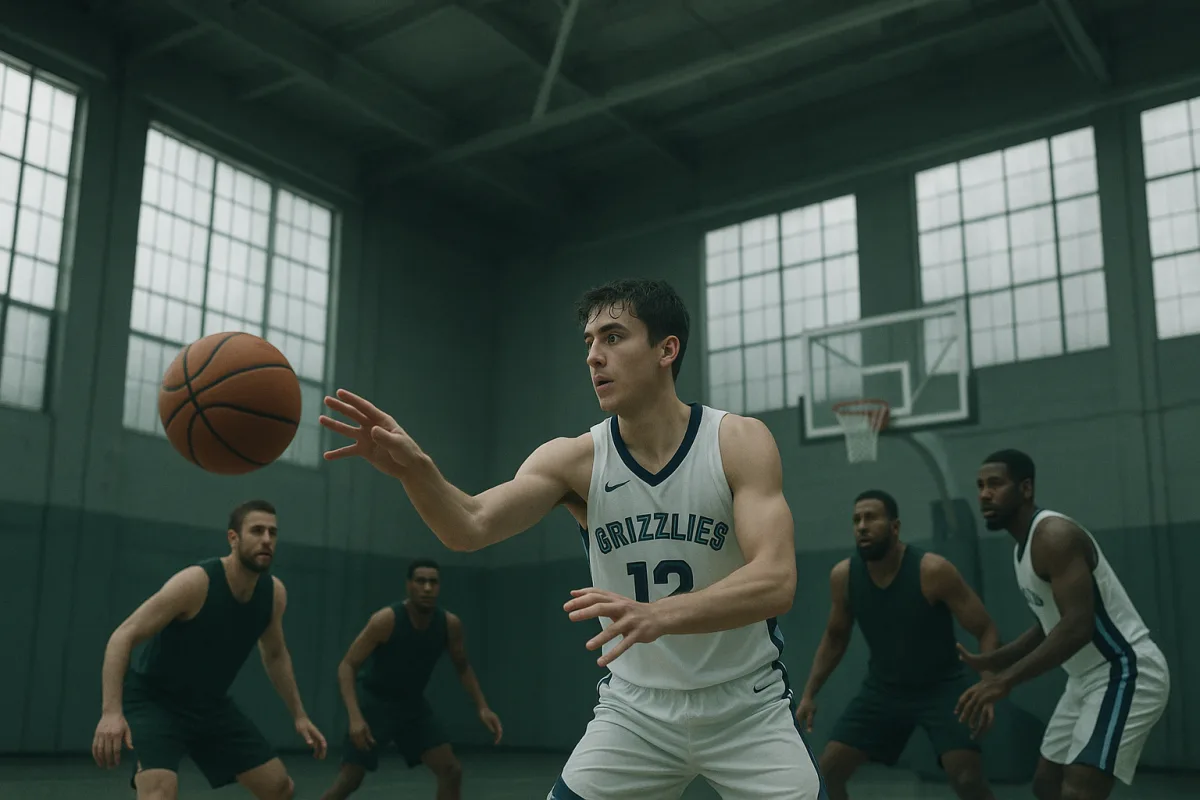
Start with the question that matters: where are the possessions?
A rookie can be talented and still be irrelevant to this season’s nightly rotation. The practical question is not, “Who has the highest ceiling?” It is, “Which player already has a usable job when the game plan becomes specific?”
That means identifying the possessions a rookie can finish, initiate or defend without creating a structural problem. A low-usage big who screens, rotates and makes the extra pass can stay on the court. A gifted scorer who cannot survive a targeted pick-and-roll may not.
CBS Sports’ preseason impact list is useful because it emphasizes roles rather than draft position alone. Still, the order should be read as a guide to immediate utility, not a declaration of future career value.
The betting market agrees that the top tier is crowded. Cameron Boozer is the Rookie of the Year favorite at +300, followed by Darryn Peterson at +340, Caleb Wilson at +360 and AJ Dybantsa at +400 as of October 13. [2]
Those odds measure market expectation, not a player’s actual value or future outcome. They are most useful as a check against the easy narrative that Peterson or Dybantsa has already separated from the group.
1. Cameron Boozer, Memphis Grizzlies: the safest possession-to-possession rookie
Boozer is the best immediate-impact bet because his college package translates across lineup types. CBS Sports highlighted his rebounding, passing and feel, along with the physicality to draw fouls around the rim.
The important detail is that he does not need the ball to be involved. If Memphis runs a side pick-and-roll, Boozer can screen, short-roll into a passing read, crash behind the action or operate as the weak-side outlet.
That is a much cleaner transition than asking a rookie guard to identify every coverage on the fly. Boozer’s projected production will draw attention, but the film-room appeal is his ability to keep possessions functional even when he is not scoring.
Watch whether Memphis uses him as a connector at the elbows and in short-roll actions. If defenses begin tagging him early on rolls, his passing should create the next advantage rather than merely ending the possession.
2. Darryn Peterson, Utah Jazz: shooting gives him a usable floor
Peterson’s immediate role should begin off the ball, even if he eventually takes on more lead-guard responsibility. CBS Sports noted that his college usage at Kansas did not mirror the heavy on-ball burden he carried earlier in his career.
That matters because Utah does not need to force him into difficult initiator reps from day one. A rookie who can relocate, attack a tilted defense and make a contested shot late in the clock has a pathway to minutes.
Utah has also placed veteran bigs around the roster, including Jusuf Nurkić, Mo Bamba and Jaxson Hayes, creating experienced screening and interior support for a young perimeter player. Peterson’s 2026-27 salary is listed at $13.2 million, with $59.9 million guaranteed through 2029-30, which underlines the organization’s investment. [6]
The first test will be whether Peterson can punish switches and closeouts without overdribbling. If the Jazz can use him as a second-side scorer rather than their sole source of creation, his efficiency should travel better.
3. AJ Dybantsa, Washington Wizards: the driving game is real, the spacing context decides the ceiling
Dybantsa’s most immediate NBA skill is getting downhill. CBS Sports noted that he led Division I in free-throw attempts despite playing fewer games than Boozer, a marker of both rim pressure and the ability to create contact.
That does not automatically make him a finished half-court engine. NBA defenses can load bodies at the nail, switch length onto a rookie wing and force the ball out before the drive reaches the restricted area.
Washington’s veteran additions, including Trae Young, Anthony Davis and Deandre Ayton, should reduce the need for Dybantsa to solve every possession himself. The Wizards selected him first overall, but their roster construction suggests a development plan built around support rather than immediate heliocentric usage. [7][1]
Watch his three-point volume more than his percentage in the first month. If opponents have to close out hard, his first step and mid-range touch become far more damaging. If they go under or stunt freely, the driving lanes will shrink.
4. Caleb Wilson: bet on the defensive role before the jumper
Wilson’s ranking depends on a simple question: can his activity create a place in the rotation before his perimeter shot becomes dependable? CBS Sports identified 3-point shooting as the swing skill after he attempted only 27 threes at North Carolina.
The encouraging preseason indicator is willingness, not proof. Taking more threes is different from converting them against game-planned closeouts, after long travel, against defenders who already know the scouting report.
His early minutes should be judged through assignments. If a coaching staff trusts Wilson to switch, tag rollers, cut from the dunker spot and run the floor, he can contribute without becoming a high-volume shooter.
5. Darius Acuff Jr., Sacramento Kings: opportunity is enormous, but so is the defensive burden
Acuff may lead this class in raw offensive opportunity. CBS Sports expects Sacramento to put the offense in his hands, and his connection with Domantas Sabonis is easy to see: hard screens can give a quick guard a head start against a retreating defense.
The concern is that a starting point guard cannot be evaluated only by what happens when his first move works. Acuff’s college numbers were excellent, including 23.5 points and 6.4 assists per game, 48.4 percent shooting overall and 44.0 percent from three. [5]
His Summer League shooting was much rougher, at 32 percent from the field and 29 percent from three, while the independent scouting brief also flags defensive lapses. [5] His preseason performance against the Lakers improved overall field-goal efficiency, but the 25 percent three-point mark remains a warning against declaring the shooting settled. [5]
The tape question is whether Sacramento can protect him in the point-of-attack matchup. If teams repeatedly pull Sabonis into high pick-and-roll and isolate Acuff after the switch or re-screen, the Kings may need to change lineups around him.
6. Yaxel Lendeborg, Golden State Warriors: the clearest frontcourt opening
Lendeborg’s case is driven by role availability as much as skill. CBS Sports identified him as one of the most NBA-ready rookies and noted his experience playing in multi-big lineups at Michigan.
Golden State’s situation makes that versatility more important. Porziņģis signed a two-year, $40 million Warriors contract with a player option in the second year, but his status has remained uncertain after missing training camp and media day without a disclosed update. [3][8]
Kerr’s public assessment that Lendeborg will “play a ton” is stronger evidence than generic preseason excitement. [9] A rookie who can rebound, pass and defend across frontcourt alignments has a route to minutes whether the Warriors play large or small.
Monitor his defensive responsibilities. If he is merely surviving at center against bench units, that is useful. If Golden State trusts him to switch actions, close games or make decisions from the short roll, his impact projection changes materially.
7. Mikel Brown Jr.: shooting can earn minutes before full point-guard command
Brown’s immediate argument rests on range and fit. CBS Sports noted that his 34.4 percent college three-point figure on 7.6 attempts understated the difficulty of his shots, and that his backcourt fit with Brooklyn’s Egor Dëmin could be complementary.
The caution is availability and physical development. Brown missed 14 games at Louisville with a back issue and entered preseason dealing with an ankle injury, so the first task is establishing a stable run of games.
If Brooklyn can use him off movement or as a secondary ball-handler, it can limit the number of possessions in which he must read the entire defense. That is the kind of role that lets shooting translate while the rest develops.
8. Aday Mara: a specialist can still swing a playoff matchup
Mara may not receive starter minutes, but that does not make his impact minor. CBS Sports noted his 2.6 blocks per game, 66.8 percent college field-goal rate and unusual passing ability for a player his size.
The relevant question is matchup utility. Against teams that attack the rim without pulling the center away from the basket, Mara’s size can change shot selection and protect a second unit.
His limitation is also clear on tape before the season begins: contenders will test whether he can defend in space. If he can hold the paint without forcing four teammates into permanent help positions, he can provide meaningful bench value.
9. Keaton Wagler: second-unit offense is the practical opening
The Clippers’ fifth overall pick is not being asked to recreate a veteran star immediately. CBS Sports projects Wagler to come off the bench initially and run portions of the second unit, where his shooting and size can add structure.
That role is more valuable than it sounds. Bench groups often need someone who can turn a stalled possession into a credible pick-and-roll, make the simple pass after a trap and avoid turnovers that trigger transition.
The early measure is not points per game. Look for whether Wagler gets closing minutes when the Clippers need offense, and whether opponents can force him away from his preferred shooting pockets.
10. Kingston Flemings: downhill scoring needs a defensive answer
Flemings enters with a translatable change-of-pace skill. CBS Sports praised his ability to get downhill, vary speeds and reach mid-range scoring areas, while projecting significant bench minutes to begin the year.
For a reserve guard, that can be enough to affect regular-season games. Second units frequently lack rim pressure, and a rookie who turns a dead possession into paint contact has immediate utility.
The defensive end will determine whether those minutes expand. If Flemings can navigate screens, stay attached through actions and avoid becoming the automatic target, his speed can become a lineup advantage rather than a tradeoff.
How to revise the rankings once games count
Do not overreact to a 20-point debut or a cold shooting week. Rookie impact is more reliably measured by role stability: minutes against starters, defensive assignments, closing-lineup appearances and whether the player’s job remains intact after injuries heal.
The NBA adjustment is not only physical. CBS Sports has documented the mental and logistical strain of moving from college schedules to an 82-game season, including travel, tougher opponents and the need to learn established veteran dynamics. [4]
For Boozer, Peterson and Dybantsa, track how often they create an advantage without needing to dominate the ball. For Acuff, track whether Sacramento protects or exposes him defensively. For Lendeborg, track whether Porziņģis’ availability changes the frontcourt hierarchy.
That approach will catch real rookie impact earlier than box-score scanning. The useful rookie is the player a coach can leave on the floor when the opponent starts targeting weaknesses, not merely the one who produces the loudest preseason stat line.
Frequently Asked Questions
Which NBA rookies are expected to have the biggest impact in the 2026-27 season?
Cameron Boozer is the favorite for immediate impact and Rookie of the Year, with +300 odds as of October 13, 2026. Other top rookies include Darryn Peterson, Caleb Wilson, and AJ Dybantsa, who also have strong market expectations but slightly lower odds. Yaxel Lendeborg is expected to have a significant role for the Warriors, especially if Kristaps Porziņģis remains unavailable.
How do Cameron Boozer and other top rookies compare in their rookie year roles?
Boozer is valued for his ability to contribute without heavy ball usage, excelling in passing, rebounding, and interior decision-making. Darryn Peterson is expected to start off-ball, benefiting from veteran teammates and focusing on shooting and secondary scoring. AJ Dybantsa’s strength lies in attacking the rim, but his role is supported by established veterans to avoid overburdening him as the primary creator.
What factors influence rookie playing time and effectiveness in the 2026-27 NBA season?
Playing time and effectiveness depend on how well a rookie fits into specific roles that maintain possession flow, such as screening, passing, or defending without disrupting team structure. Coaches’ trust in rookies during critical lineup moments and their defensive assignments are key early indicators. Additionally, rookies face challenges like adjusting to an 82-game schedule, increased travel, stronger scouting, and the jump in competition level compared to college.
How do coaches utilize rookies differently in the 2026-27 NBA season?
Coaches tend to assign rookies roles that minimize structural disruption, such as low-usage big men who can screen and pass or perimeter players who can attack off the ball rather than initiate offense fully. For example, Memphis uses Boozer in pick-and-roll actions without requiring him to be a primary creator, while Utah surrounds Peterson with veterans to ease his transition. The Warriors plan to give Lendeborg significant minutes due to Porziņģis’s uncertain availability.
What challenges do NBA rookies face during their first full season in 2026-27?
Rookies must adapt to the physical and mental demands of an 82-game NBA season, which is more grueling than the roughly 35-40 college games they played. They also face faster pace, higher skill levels, more travel, and stronger scouting from opponents. These factors often lead to a winter adjustment period where rookie effectiveness may decline after an encouraging start. Injury risk and integrating into established team dynamics add to these challenges.
How we researched this
This article was assembled from 1 video source, 2 published articles, 10 cited references.
Nothing here is based on hands-on testing. Where a figure or finding appears, it belongs to the source cited beside it, and the writing says so rather than implying otherwise. Every source is listed below so you can check it.
Sources
5 NBA Players On The Verge Of BUSTING In 2027 — Hoops Reference
NBA rookie impact rankings: 10 first-year players who will make presence felt immediately — CBS Sports NBA
NBA rookie impact rankings: 10 first-year players who will make presence felt immediately — CBS Sports
NBA Rookie of the Year Odds: Cameron Boozer Is the Favorite at +300
Kristaps Porziņģis opts to remain with Warriors on 2-year contract | NBA.com
How NBA rookies get past mental, physical obstacles blocking their path to stardom - CBS Sports
Darius Acuff Jr. Scouting Report (2026 NBA Draft) | HoopBrief
Darryn Peterson Contract & Salary 2026-27 - Utah Jazz | JJNBA
Washington Wizards select AJ Dybantsa No. 1 overall in the 2026 NBA Draft - CBS News
Warriors' Yaxel Lendeborg: Eyes sizable role in 2026-27 - CBS Sports
Watch NBA Rookie Impact and Rising Stars in the 2026-27 Season on Youtube
Related Articles
NBA Rookie Contract Value Comparison: Wembanyama vs Flagg
Compare NBA rookie contract values and performance of Victor Wembanyama and Cooper Flagg to see who offers better team impact in 2026.
NBA Rising Stars Contract Extensions and Salary Cap Impacts
Explore contract extension updates for NBA rising stars and how the 2026-27 salary cap shapes team decisions and player negotiations.
Toronto Raptors Underrated Contenders in the 2026 NBA Season
Explore why the Toronto Raptors are underrated contenders, focusing on defense, Kawhi Leonard's impact, and roster changes in 2026.

NBA 2026 Season Highlights and Unforgettable Moments
Explore NBA 2026 season highlights, including Knicks' title and Wembanyama's record blocks, plus key moments and verified analysis.