Stephen A. Smith Lakers Controversy and NBA Reactions
Explore Stephen A. Smith's Lakers controversy, the actual lineup, and NBA reactions to his racial comments on championship chances.
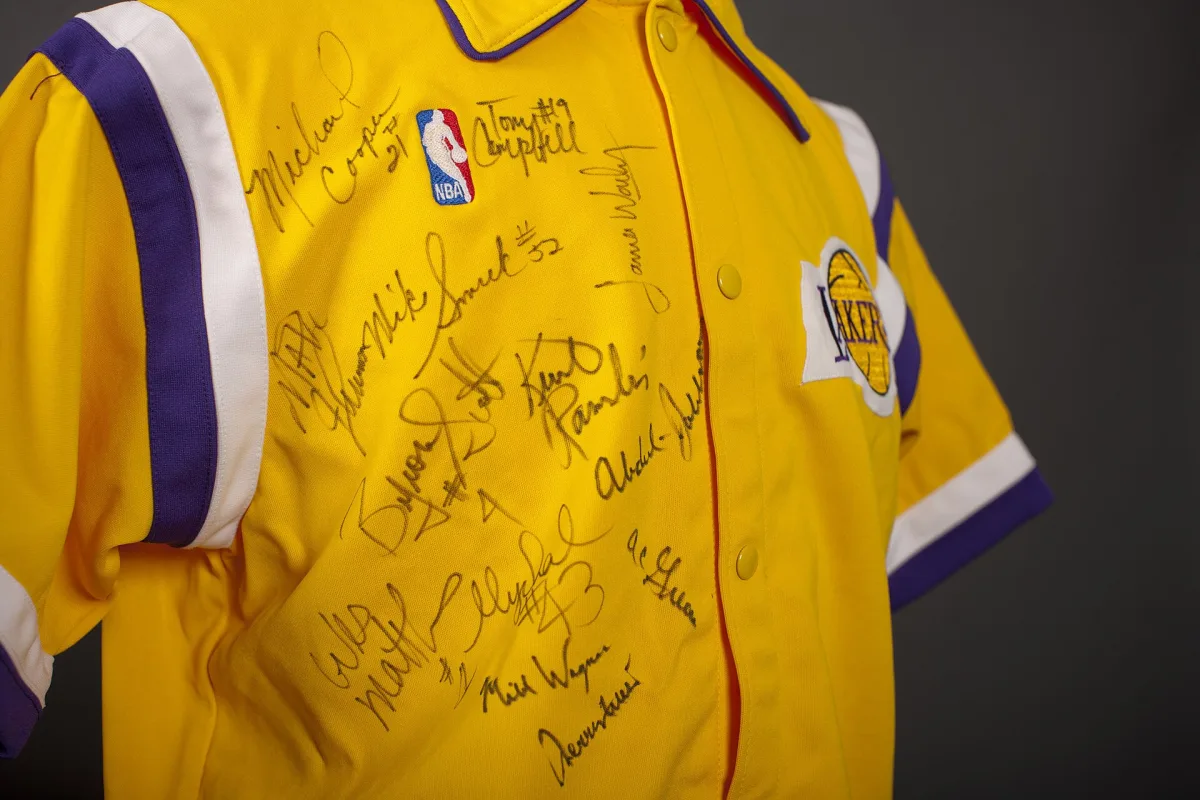
Photo: President (1981-1989 : Reagan). White House Gift Unit. 1/20/, Public domain, via Wikimedia Commons
The comment came on November 18
On November 18, Stephen A. Smith said on ESPN’s First Take that the Lakers’ white players could win a championship, then asked whether Black NBA players would “let them win.”[9][12] The line quickly traveled because it invited fans to evaluate a contender through race.
Smith’s larger argument appeared to be competitive theater. He cast the Lakers as a team whose white stars would face a special, race-driven response from the rest of the league, turning a championship race into a symbolic confrontation.
That framing has a problem before it reaches the moral argument. It does not accurately describe the Lakers’ actual five-man group, and it does not describe how opposing players decide possessions in April, May, and June.
The Lakers’ late-November starting lineup includes Luka Dončić, Austin Reaves, Matisse Thybulle, Ziaire Williams, and Walker Kessler. Dončić is the lone white player in that group, while the other four starters are Black.[12]
Smith’s references to a predominantly white Lakers lineup therefore overstated the premise. That does not erase the broader conversation about race in basketball, media, or fandom, but it does leave this specific claim built on an unstable roster description.
A lineup is a five-man system, not a visual category
The basketball concept underneath this story is the five-man lineup. A lineup is the group sharing the floor, and its quality comes from how each player’s responsibilities connect possession by possession.
On offense, teams need somebody to initiate, somebody who can score after receiving an advantage, enough shooting to keep help defenders attached, and interior pressure that forces rotations. On defense, they need compatible matchups, communication, rim protection, and enough rebounding to finish stops.
A player’s race tells you none of that. You cannot identify a team’s pick-and-roll coverage, transition defense, or late-clock options from a roster photo. Those answers are in skill sets, roles, health, coaching choices, and the opponents across from them.
For the Lakers, Dončić’s value begins with creation. He bends defenses by forcing an extra defender toward the ball, then finds the open teammate created by that help. The resulting shot is often a product of the defense’s rotation, not an individual player “wanting it” more.
Reaves offers another source of ballhandling and scoring feel, which can reduce the burden on Dončić across a long game. Thybulle’s defensive role, Williams’ wing responsibilities, and Kessler’s work around the rim give the unit a different set of functions to balance.
The details can change nightly. A center may sit deeper in drop coverage against a downhill guard, then show higher against a pull-up shooter. A wing may top-lock a movement shooter, denying the route to a handoff and forcing a less comfortable action.
Those choices decide postseason possessions. They also create the costs that good teams try to exploit: a high hedge can open the roll man, drop coverage can concede pull-up jumpers, switching can create a size mismatch, and aggressive help can expose a corner shooter.
This is why the “will they let them win?” framing fails as basketball analysis. NBA players are not assigned to guard an idea. They are assigned to contain a specific action, close a driving lane, navigate a screen, and make the opponent take a lower-value shot.
What decides whether the Lakers can win
A championship case for this Lakers group starts with the questions a playoff opponent can force. Can Dončić create an efficient look when the defense switches? Can the Lakers punish help at the rim? Can the group recover when the first defensive coverage breaks?
Those are lineup questions. If an opponent puts a smaller defender on Kessler after a switch, Los Angeles has to recognize the mismatch and deliver the ball before help arrives. If the pass comes late, the defense can scram-switch or collapse around him.
If opponents trap Dončić, the Lakers’ next decision matters. The release valve must catch cleanly, make a quick read, and either attack a rotating defense or move the ball before the coverage resets. One hesitation can waste the initial advantage.
Defensively, Kessler’s rim protection can change the geometry of the floor. Guards may settle for floaters or pull-ups if they expect a shot blocker at the basket, but that protection also asks perimeter defenders to stay connected to shooters after penetration.
Thybulle’s role points toward another postseason variable: disruption. A high-level perimeter defender can take away a first option, blow up a handoff, or create a deflection that starts transition. But any defense that overhelps can surrender the weak-side pass.
That is the trade every contender lives with. Take away the star’s preferred shot, and another capable player may receive the ball in space. Stay home on shooters, and the star gets more room. The best defenses choose which cost they can survive.
Smith’s comments replaced those decisions with a generalized racial prediction. That may create a loud segment, but it gives you no method for judging whether the Lakers can beat a switching defense, withstand physicality, or execute against a loaded paint.
The player-response claim remains unverified
Smith later said Black NBA players had thanked him for the comments, a claim reported by the New York Post and other outlets.[3] He has not publicly identified those players, and no current player has publicly confirmed providing that support.
That absence does not establish what private conversations may have happened. It does mean fans should not convert Smith’s unnamed account into a leaguewide player position, especially when public reaction from active players has not materialized.
The public figures who did weigh in offered sharply different readings. ESPN analyst and former NBA player Jay Williams criticized Smith’s framing as regressive and racially divisive.[2] Former NBA guard Gilbert Arenas expressed support for Smith’s broader perspective on racial dynamics and competition.[4]
Those responses reveal the actual argument. Williams objected to reviving racial categories as a way to explain basketball competition. Arenas was more open to the idea that race can shape how players, fans, and media understand high-profile contests.
The NBA has long operated within a culture where race cannot be treated as irrelevant. The league issued a 2025 memo directing teams to address racist and unruly fan behavior proactively, an acknowledgment that the arena environment can carry harms beyond the game itself.[1]
Research has also examined racial bias in NBA commentary and the relationship between race and fan behavior. Those studies address patterns in language and perception, not a formula that predicts whether one group of players will permit another to win games.[5][11]
That difference is important for readers who want both honesty and precision. Race can shape the coverage around basketball, who gets stereotyped, and how athletes are received. It does not replace film study of a possession or explain an entire playoff series.
Why the roster claim drew so much backlash
Smith defended the comments and denied reports that he had been suspended by ESPN.[7][8] As of November 25, neither ESPN nor the NBA had issued a public disciplinary statement connected to the remarks.
The criticism was not only about offense. It was about the mechanism Smith proposed. He suggested that Black players across competing teams might share a racial incentive strong enough to affect championship competition against the Lakers.
That theory asks fans to overlook the incentives that actually organize NBA competition. Players pursue wins, contracts, playoff advancement, legacy, team goals, and the immediate pride of beating an opponent. Coaches build game plans around the opponent in front of them.
A Lakers opponent does not reach a defensive timeout and decide how to guard “white brothers.” The staff decides whether to blitz Dončić, switch Reaves actions, tag Kessler on rolls, or force a particular shooter to make a contested decision.
Smith’s wording also carried an obvious risk for the players he invoked. It turned Black NBA players into a bloc with a presumed collective motive, while turning white Lakers players into symbols before treating them as players with separate strengths and limitations.
Coach JJ Redick had said as late as September 24 that two Lakers starting spots remained open, another reminder that lineups are moving basketball objects rather than permanent identity statements.[10] Injuries, matchups, trades, and performance can alter the five.
We would start with the possession whenever the Lakers come up. Watch where help comes from when Dončić drives, whether the Lakers can protect the rim without conceding open threes, and which player opposing offenses target in a screen.
That is the standard Smith’s remarks did not meet. The Lakers may win or lose because their five-man combinations solve, or fail to solve, the problems opponents put in front of them. Race is part of the league’s social context, but it is not a coverage.
Frequently Asked Questions
What did Stephen A. Smith say about the Lakers lineup?
On November 18, Stephen A. Smith said on ESPN’s First Take that the Lakers’ white players could win a championship and asked whether Black NBA players would “let them win.” He framed the Lakers as a team whose white stars would face a special, race-driven response from the rest of the league.
How did NBA players react to Stephen A. Smith's comments?
No current NBA player has publicly confirmed or responded to Smith’s claim that Black players privately thanked him for his remarks. While Smith asserted private support, this has not been independently verified or publicly corroborated by any named NBA players.
Why is Stephen A. Smith's Lakers comment controversial?
Smith’s comment is controversial because it framed the Lakers’ championship chances through a racial lens that does not match the team’s actual starting lineup and suggested race would influence whether players compete fully. This racial framing drew backlash for oversimplifying complex basketball competition and for implying race-based motivations in professional play.
Does race affect NBA championship competition?
According to basketball analysis, race does not determine how players compete for a championship. Winning depends on skill sets, roles, coaching, and in-game decisions rather than the racial identity of players. The quality of a lineup is based on possession roles, spacing, defense, and rebounding, not racial composition.
What is the actual Lakers starting lineup in 2026?
As of late November 2026, the Lakers’ confirmed starting lineup includes Luka Dončić (white, Slovenian), Austin Reaves, Matisse Thybulle, Ziaire Williams, and Walker Kessler (all African American). This lineup is majority Black, contrary to Smith’s description of a predominantly white group.
How we researched this
This article was assembled from 1 video source, 3 published articles, 12 cited references.
Nothing here is based on hands-on testing. Where a figure or finding appears, it belongs to the source cited beside it, and the writing says so rather than implying otherwise. Every source is listed below so you can check it.
Sources
Stephen A Smith IS A DISGRACE TO THE NBA, Uncut Hoops
Isaiah Joe, Pistons hand Magic their first NBA Cup loss, CBS Sports
Stephen A. Smith says Black NBA players have thanked him over white Lakers comments, NY Post Sports
Stephen A. Smith says Black NBA players have thanked him over white Lakers comments, NY Post Sports
NBA memo targets fan behavior, reminding teams to address unruly acts proactively
Jay Williams blasts Stephen A. Smith's racially charged Lakers take - Basketball Network
Stephen A. Smith Says NBA Stars Thanked Him For Lakers ‘Too White’ Comments
Stephen A. Smith's Lakers Challenge Sparks Debate | Wisevoter
Inside the NBA Bubble: how Black players performed better without fans
'I Meant It' - Stephen A. Smith Stands By Controversial 'White' Lakers Comment - The Spun
Media firebrand asks if Black players will let Lakers’ ‘white brothers’ win it all - Yahoo Sports
JJ Redick Reveals Lakers Starting Spots Are Open, Makes 'White Guys’ Comment Ahead Of 2026-27 Season
Are NBA Fans Becoming Indifferent to Race? Evidence From the 1990s
Watch Stephen A. Smith's Controversial Comments and NBA Reactions on Youtube
Related Articles
Luka Doncic MVP Season and Media Perception Analysis
Explore Luka Doncic's MVP-caliber 2026-27 season and how media outlets perceive his MVP candidacy and team context.
Giannis Antetokounmpo Doc Rivers Controversy Explained
Explore the Giannis Antetokounmpo and Doc Rivers controversy, including criticisms, responses, and impact on Miami Heat's team dynamics.

LeBron James Playing Style and Legacy Debates Explained
Explore LeBron James' playing style, his role as center for the 76ers, and the ongoing debates about his NBA legacy.
Victor Wembanyama vs Luka Doncic MVP Debate: Key Comparisons
Explore the Victor Wembanyama vs Luka Doncic MVP debate with key stats, team impact, and analysis of their 2026-27 NBA MVP cases.