
NBA Expansion Fees: Understanding Their Role and League
Explore NBA expansion fees, their impact on owners, and how Seattle, Las Vegas, and Portland factor into the league's future expansion plans.
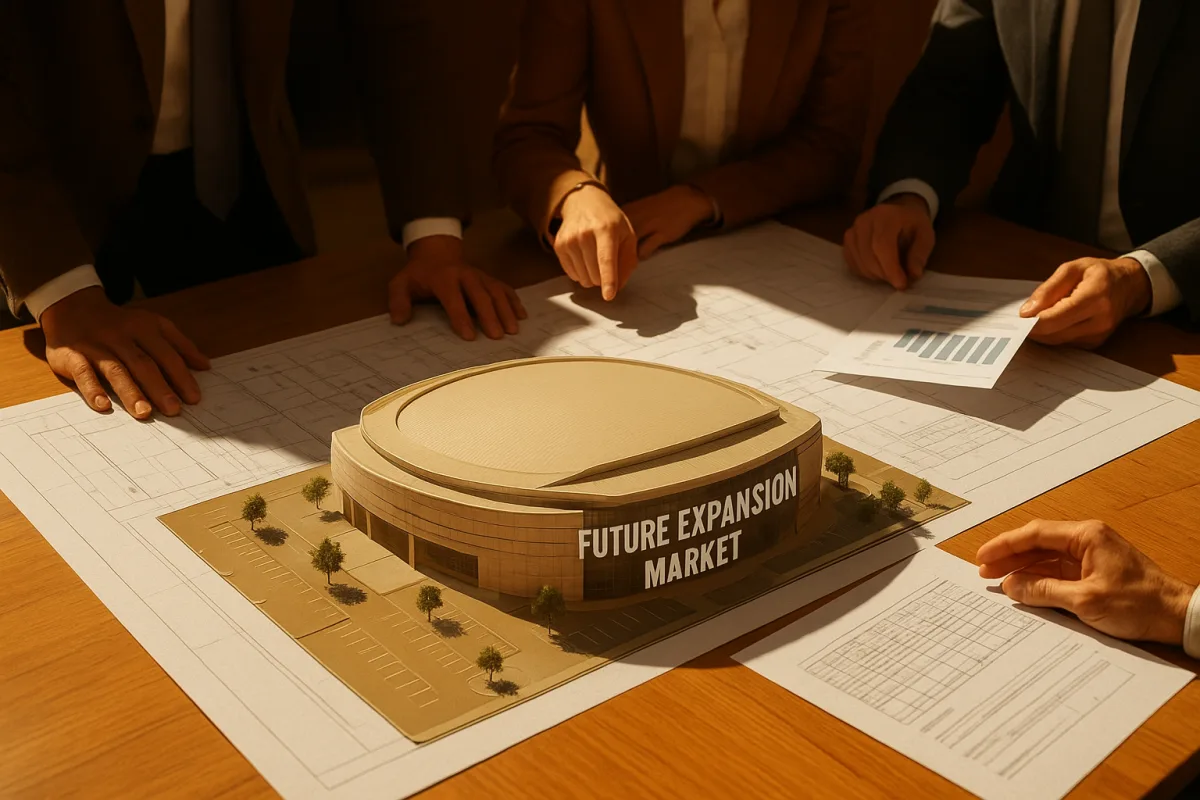
Expansion fees are the NBA’s real leverage point, not just a price tag
The scarce asset is not the team, it is the NBA slot
The number attached to Las Vegas and Seattle is easy to misread. Reports of bids above $8 billion for a Las Vegas franchise, with some estimates near $9 billion, are not forecasts of annual basketball revenue. They are proposed entry prices for a seat at the NBA ownership table. [4][10]
That distinction changes the whole expansion conversation. An NBA club has players, an arena lease, local media relationships and a basketball operation. An expansion fee buys the right to build those things inside a closed league with national television inventory and shared commercial infrastructure.
The Associated Press reported that NBA owners approved exploration of expansion, specifically around Las Vegas and Seattle. [1] That was not a promise that either city would receive a team. It was the league deciding that the rights to two potential franchises were valuable enough to study formally.
The process is closer to selling scarce inventory than staging a normal market entry. A prospective owner cannot simply purchase a building, sign players and join the standings. The existing owners control admission, market selection and the eventual approval of a new ownership group.
Sports Business Journal reported that owners have weighed expansion fees against the dilution created by adding clubs. [4] That is the possession-level tension in this debate. Owners are balancing a large one-time cash payment against a smaller percentage share of future leaguewide revenue.
Why $15 billion is not the same as $15 billion of league revenue
If Seattle and Las Vegas together command an estimated $15 billion to $18 billion, that does not mean the NBA suddenly generates that sum through tickets, media rights or sponsorship. It means incoming ownership groups would pay existing owners for access to the league. [4][10]
TheFlightMike’s video framed the basic math clearly: if two expansion fees were split among the current 30 teams, each incumbent owner would receive a substantial one-time distribution. The channel cited estimates of roughly $7 billion to $10 billion per club, though those numbers remain unconfirmed estimates.
No official NBA document has publicly established a final fee for either market. Las Vegas is widely described as the more expensive opportunity, while Seattle’s expected fee is less clear in public reporting. Treating either number as settled would overstate where the process stands. [10]
Still, the mechanism is straightforward. Before expansion, there are 30 owners sharing league opportunities. Two new buyers pay to enter. The 30 existing owners receive the expansion proceeds, while the two incoming owners do not share in that initial payment.
That is why expansion can appeal even to owners worried about dilution. The league’s recurring revenue, including future national media distributions, may eventually be divided among 32 clubs rather than 30. The entry fee is the immediate compensation for accepting that long-term split.
A useful basketball comparison is an offense trading a future first-round pick for a proven rotation player. The choice is not whether the pick has value. It is whether the immediate asset outweighs what is surrendered later. Expansion gives owners cash now and more mouths to feed later.
Why Portland and Seattle are connected
This is where the Portland Trail Blazers situation becomes more than a local arena story. Seattle is among the leading expansion markets because it has a large basketball history, a modern arena and prospective ownership interest. A relocation would change that inventory.
If an existing franchise moved to Seattle, the NBA could no longer sell Seattle as a clean expansion opportunity. The league might still collect a relocation fee, but it would lose the chance to create and sell an additional Seattle franchise slot.
That does not mean Portland’s owner can simply threaten a move and force public funding. A relocation would require league approval, would involve substantial operating disruption and could carry a major fee. Dan Martinez Construction’s sports-business explainer cited reports that a Trail Blazers move could involve a fee approaching $1 billion. [3]
A relocation fee is fundamentally different from an expansion fee. The relocation fee is a cost imposed on an existing team seeking permission to change markets. The expansion fee is the price paid by a new ownership group for a newly created franchise.
TheFlightMike argued that this difference gives the league a financial reason to keep Portland in Portland while selling Seattle separately. That is a defensible reading of the incentives, although the channel’s suggested price range remains reporting-based rather than an announced NBA valuation.
The NBA commissioner’s public statement that losing Portland would be a “failure” also fits that incentive structure. Portland remaining viable protects the league from a relocation fight and preserves Seattle as separate expansion inventory. Axios and NBC Sports both reported that arena funding uncertainty has kept Portland’s future in focus. [2][5]
The Moda Center dispute is about downside protection
The Trail Blazers’ request for Moda Center upgrades is often discussed as though the key question is whether a 1990s arena needs renovation. It almost certainly does. The more consequential question is who bears the cost, and what binding commitment Portland receives in return.
According to Axios, the funding discussion has centered on roughly $600 million in arena improvements and a new 20-year lease. [2] Public contributions from Oregon, Portland and Multnomah County have been central to the negotiations, but no final agreement has been confirmed.
NBC Sports reported that conflict has emerged over the city’s lease terms and the team’s obligations concerning the arena’s condition. [5] That is not procedural clutter. A lease clause can determine whether the city has legal protection if a team leaves after receiving public support.
TheFlightMike described a proposed Portland term sheet containing city funding, labor provisions and a payment from the club tied to foregone property taxes. The channel also reported that the team objected to a “first-class condition” standard that could matter in future litigation.
Independent reporting has not produced a final, universally agreed accounting of Portland’s municipal contribution. TheFlightMike cited $120 million from the city, while the research record behind current reporting describes a city offer closer to $185 million alongside state and county support. [2][5]
That disagreement is exactly why the final lease matters more than a headline total. A public package can include direct capital spending, tax treatment, labor requirements, lease length and enforceable non-relocation protections. Two plans with the same dollar figure can leave the city with very different risk.
From the league’s perspective, a stable Portland deal has value beyond the Rose City. It removes one possible relocation claimant from the board while the NBA gauges bids in Las Vegas and Seattle. That keeps the expansion auction cleaner and potentially more lucrative.
Las Vegas and Seattle are not automatically equal bids
It is tempting to treat the two markets as a package because they are often named together. The NBA may ultimately expand by two clubs to preserve conference balance, but the economics of each market are not necessarily identical.
RealGM reported that expansion work has advanced around Las Vegas and Seattle, while public reporting has placed Las Vegas toward the top of the projected fee range. [10] Las Vegas offers event infrastructure, tourism and a rapidly growing major-league sports presence, all of which can support a premium bid.
Seattle has a different case. It brings established NBA demand after the SuperSonics’ 2008 departure, an arena capable of hosting NBA games and a ready-made emotional connection to the league. Those assets may make Seattle highly valuable even if no public fee estimate has been confirmed.
TheFlightMike noted that Seattle’s Climate Pledge Arena could support an NBA return quickly. That operational readiness matters, but it does not itself establish a franchise price. The NBA is selling more than an arena date sheet. It is selling a long-term share of league governance and revenue.
The eventual outcome will depend on bid quality, ownership capital, arena arrangements, media assumptions and the willingness of incumbent owners to accept future dilution. A city’s enthusiasm is useful, but it is not the decisive possession in this sequence.
Europe is the same ownership question in a different system
The NBA’s European discussions can look like a separate storyline, but the same question sits underneath them: who owns the valuable competition rights, and who controls the terms of entry?
The Athletic reported that EuroLeague CEO Chus Bueno said EuroLeague had not received a formal NBA offer describing a partnership or collaboration. TalkBasket similarly reported that the talks remain preliminary rather than a completed merger or binding joint venture. [6]
RealGM’s account of the discussions described an NBA vision for a 16-team European competition, with 12 permanent places and four merit-based entrants. But the current research record places a prospective NBA Europe launch in 2027-28, not next season, and no final structure has been announced. [10]
Permanent places are the European analogue to NBA scarcity. They are not identical to a North American expansion franchise, because European basketball has promotion traditions, domestic leagues and different club ownership structures. But they still determine who gets predictable access to premium competition.
Eurohoops reported that EuroLeague’s board has advanced its own franchise-oriented structure and EuroCup expansion. [7] That means EuroLeague is not simply waiting for the NBA to decide its future. It is building a parallel route to more permanent club rights.
Front Office Sports reported that governance has been a major obstacle because the NBA wants operational control over any league it joins. [9] Control is the whole possession. A revenue split can be renegotiated, but authority over scheduling, commercial rights, club admission and league rules defines the asset.
Reports of a proposed 52-48 revenue split have been denied by the NBA, according to the research record. That denial matters because it shows how little of the financial architecture is settled. There is no basis yet to calculate a final European ownership payout.
AS reported that the proposed NBA European model carries substantial risks, including high entry costs and pressure on clubs already operating at losses. [12] Those are not merely European versions of NBA expansion fees. They are risks tied to a more fragmented market with entrenched clubs and overlapping competitions.
The immediate lesson is restraint. Las Vegas and Seattle are potential new NBA franchises whose fees would reward current NBA owners. NBA Europe is a possible new competitive structure where the underlying ownership, control and licensing terms remain unresolved.
That difference is why the domestic expansion conversation is further along financially than the European one. In North America, the NBA already owns the league structure it is selling. In Europe, it is still negotiating over what, exactly, it would control.
Frequently Asked Questions
What are NBA expansion fees and how do they work?
NBA expansion fees are one-time payments made by new ownership groups to the existing 30 NBA owners. These fees grant the new owners the right to create and operate a new franchise within the league, which is a closed system controlled by current owners. The fees represent payment for a scarce NBA slot rather than ongoing basketball revenue, effectively buying entry to the league's shared commercial infrastructure and national media inventory.
How do NBA expansion fees affect existing team owners?
Existing owners receive the expansion fees as a lump sum payment, compensating them immediately for the dilution of leaguewide revenue that comes with adding new teams. While future league revenue will be divided among more clubs, the upfront expansion fees provide a significant financial incentive to approve new franchises despite the smaller long-term share of revenue.
What is the difference between NBA expansion fees and relocation fees?
Expansion fees are payments for a newly created franchise slot in the NBA, while relocation fees are charges associated with moving an existing franchise to a different city. For example, the Trail Blazers face a relocation fee related to their potential move, which is distinct from the expansion fees paid by new teams entering the league.
Why are Seattle and Las Vegas considered for NBA expansion?
Seattle and Las Vegas are under formal exploration by NBA owners as potential new markets for expansion teams. These cities have attracted high bids for franchise rights, with Las Vegas bids reportedly exceeding $8 billion. The league views these markets as valuable opportunities to grow the NBA's footprint and ownership base.
How does NBA expansion impact league revenue and ownership?
Expansion introduces more teams that share leaguewide revenue, which dilutes the percentage each existing owner receives over time. However, the large one-time expansion fees paid by new owners provide immediate financial compensation to current owners. This trade-off between upfront cash and long-term revenue share is central to owners' decisions about approving expansion.
How we researched this
This article was assembled from 1 video source, 3 published articles, 12 cited references.
Nothing here is based on hands-on testing. Where a figure or finding appears, it belongs to the source cited beside it, and the writing says so rather than implying otherwise. Every source is listed below so you can check it.
Sources
The NBA Is About To Lose A Team — TheFlightMike
NBA, EuroLeague continue to negotiate, but no formal offer has been made — The Athletic NBA
EuroLeague Says NBA Has Not Made Formal Merger Offer — RealGM
NBA Expansion Enters Critical Stretch As Las Vegas And Seattle Await Next Decision — Yahoo Sports
Vegas and Seattle a step closer to getting NBA teams. League's owners approve expansion exploration
NBA Relocation Fee: Trail Blazers' $1 Billion Move? | Sports Business Explained (2026)
EuroLeague awaits formal NBA partnership proposal - TalkBasket.net
ECA Board advances EuroLeague structure and approves major EuroCup expansion - Eurohoops
The EuroLeague decides its future: NBA or own franchises | Blogdebasket
EuroLeague Defends Its Turf As NBA Pitches League to Investors
NBA Expansion Process Advances For Las Vegas Seattle Franchises - RealGM Wiretap
Watch NBA Expansion and League Future Discussions on Youtube
Related Articles
NBA Expansion Las Vegas and Seattle: Current Developments
Explore the latest NBA expansion developments in Las Vegas and Seattle, including ownership bids, arena plans, and league process updates.
Kawhi Leonard Trade Impact and Clippers' Draft Pick
Explore the Kawhi Leonard trade impact, Clippers' lost draft picks, and NBA salary cap penalties shaping the teams' futures.

Steph Curry Warriors Contract Future and Over-38 Rule
Explore Steph Curry's contract future with the Warriors and how the Over-38 Rule shapes his extension options and team roster decisions.

Klay Thompson's Shooting Gravity and Role with Miami Heat
Explore Klay Thompson's shooting gravity and how it shapes Miami Heat's offense and spacing in the 2026 season.