
NBA Expansion Las Vegas and Seattle: Current Developments
Explore the latest NBA expansion developments in Las Vegas and Seattle, including ownership bids, arena plans, and league process updates.
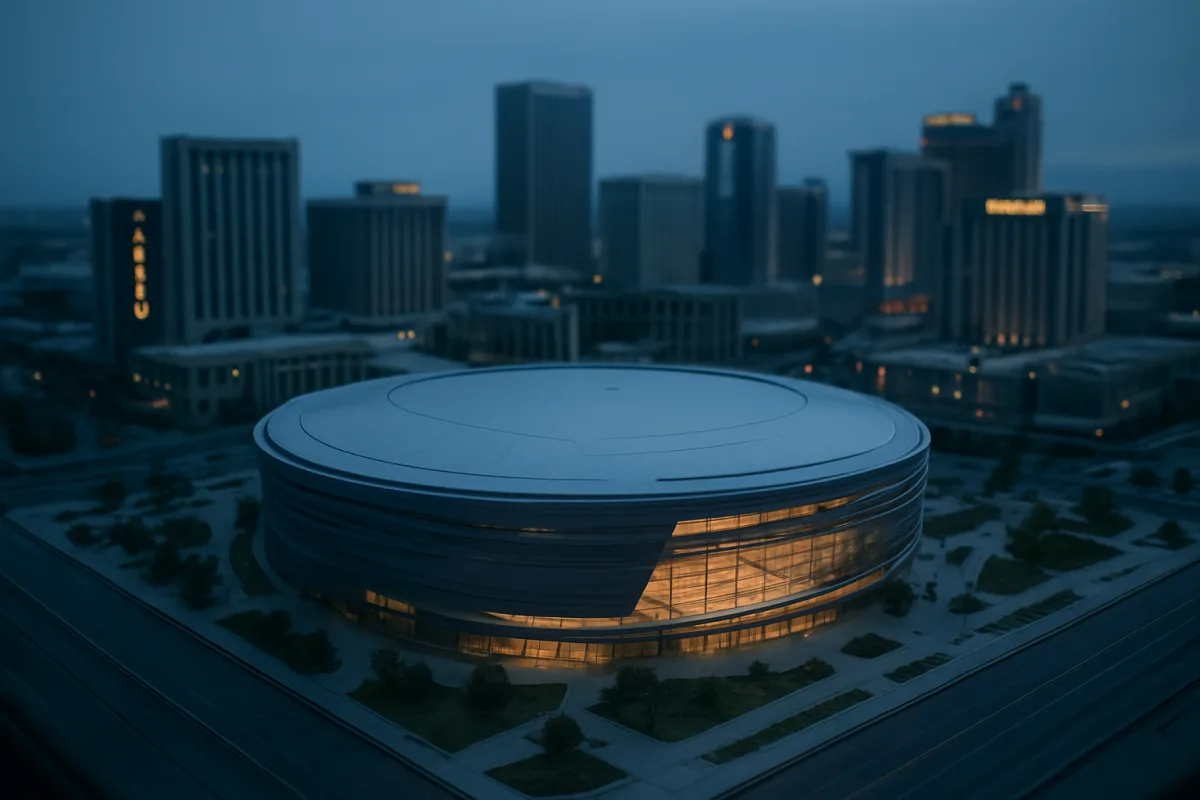
The shift is procedural, not merely rhetorical
The NBA’s expansion conversation has changed shape. Las Vegas and Seattle are no longer cities that get mentioned whenever the league visits Summer League or when nostalgia for the SuperSonics resurfaces.
The important evidence is the league’s process. NBA owners unanimously approved formal exploration of expansion into Las Vegas and Seattle in March 2026, according to the NBA’s own announcement and contemporaneous reporting from the Associated Press and ESPN. [2][5][6]
That vote did not create two teams. It authorized the league to run the next possessions, evaluate markets, ownership capital, arena control and the price bidders will actually put on paper.
The Athletic’s reporting adds the clearest indication that the process has progressed beyond broad market research. The league and financial adviser PJT Partners reportedly requested cap-table outlines, investor information and proposed franchise prices from interested groups.
RealGM’s short report points to the same basic movement, though it relies on The Athletic’s reporting and should not be treated as separate confirmation of unnamed bidders. The independent signal is the public league action, then the reported financial screening that followed.
That distinction matters. Expansion is not a free-agent rumor cycle where a prominent name equals a completed transaction. The league is working through an ownership and infrastructure evaluation, and commissioner Adam Silver has not committed to adding either team.
Silver has said he hopes for a decision by the end of 2026, but the NBA can still end its exploration without expansion. [10][11] That is the baseline readers should use when parsing every $9 billion headline or arena rendering.
Las Vegas has more visible momentum
Las Vegas is generating the more crowded public marketplace. The city has a decade of evidence that major-league teams can establish themselves there, beginning with Bill Foley’s NHL Golden Knights and continuing with the NFL’s Raiders.
That does not automatically translate to NBA readiness. It does explain why Las Vegas has a deeper visible field of ownership and venue ideas than Seattle at this stage, which is usually what creates urgency in a league-led sale process.
The Athletic reported that groups pursuing Las Vegas faced another, more detailed submission stage in September. It also reported a league preference to resolve a Las Vegas ownership decision before turning fully toward Seattle.
The league has not publicly confirmed that sequence. Still, Las Vegas has the look of the first live ball-screen action: more than one credible option is forcing the defense, in this case the NBA, to decide what it values most.
One public contender is the Las Vegas Jacks ownership group, led by longtime NBA executive Jerry Colangelo alongside former NBA player and coach Vinny Del Negro, media executive David Levy and other investors. The group announced an $8 billion expansion bid. [3][14]
An $8 billion bid is not the same as an $8 billion completed capitalization plan. It also does not establish whether the figure covers only an expansion fee or incorporates arena construction, operating reserves and other commitments.
Foley, the Golden Knights owner, has also launched a Las Vegas NBA bid. Reporting from Casino.com says his proposal includes a pledge of $300 million in upgrades to T-Mobile Arena if his group secures the franchise. [15]
That pledge identifies the central Las Vegas question: venue control. A team can sell premium seating, sponsorship inventory and local broadcasting only if its arena arrangement gives the ownership group enough control over those revenue streams.
An arena is not simply a building on the scouting report
T-Mobile Arena offers an existing downtown-adjacent option, but reports have raised questions about whether it is the long-term fit for an NBA expansion club. [9] That is not a cosmetic issue about locker-room finishes.
The operational question is whether the building can support NBA scheduling, premium inventory, practice needs, basketball sightlines and the commercial rights an expansion owner expects after paying an unprecedented entry fee.
A separate Las Vegas proposal involves Caesars Entertainment and VICI Properties, which announced plans for a potential new arena development on a 50-acre site behind major resort properties. Casino.org reported the concept in July. [13]
There is no announced construction timetable, final financing structure or NBA-approved arena plan. The site concept is therefore a lever in the bidding process, not evidence that Las Vegas has solved its venue question.
This is where expansion analysis becomes more useful than city-ranking talk. Las Vegas does not need another proof point that it can host major sports events. It needs a durable business model that can survive after the novelty period.
The Golden Knights’ success is relevant because Foley built a strong local identity and premium event product. But hockey’s local economics, schedule density and arena footprint do not automatically map onto an 82-game NBA calendar.
Las Vegas also already has the Golden Knights and Raiders competing for corporate dollars, hospitality budgets and fan attention. Market saturation is not a disqualifier, but it is a variable that a $7 billion-plus buyer must underwrite carefully.
Seattle has the better ready-made basketball environment
Seattle’s case looks different. The city has the historical pull of the SuperSonics, who left for Oklahoma City in 2008, plus a modern arena that opened in 2021 and was designed to host major basketball events. [11][12]
Climate Pledge Arena changes the possession. Instead of needing to sell the league on a future building, Seattle can present an operating venue with established event infrastructure and an NHL tenant in the Kraken.
That is a meaningful advantage, but it should not be overstated as a completed expansion bid. The independent research available as of August 2026 does not identify a formally disclosed Seattle ownership group.
The Athletic has identified Samantha Holloway, majority owner of the Seattle Kraken and an owner with control over Climate Pledge Arena through One Roof Sports and Entertainment, as the only publicly known interested party. She has openly supported an NBA return.
Yet interest is not a filed bid, and the league has not named Holloway or any other Seattle investor as an approved ownership partner. That is a cleaner public arena setup than Las Vegas, but a less transparent ownership field.
Silver has said the absence of publicly visible Seattle groups should not be read as an absence of interest. [10][11] That is plausible, but it is still league guidance rather than a disclosed cap table.
Seattle’s historical support also needs a modern reading. A returning franchise would inherit emotional equity from the SuperSonics, but nostalgia does not answer questions about premium-seat demand, local media economics or ownership capitalization.
The strongest Seattle argument is not simply that the city “deserves” a team. It is that an NBA club could enter a proven sports market with an NBA-ready building and a recognizable regional basketball identity.
The valuation range is a negotiating tool, not a scoreboard
Multiple reports place the prospective expansion fee between $7 billion and $10 billion per franchise. Las Vegas is widely expected to land toward the upper portion of that range, with $9 billion often cited as an estimate. [7][8][10]
No official league announcement has set a number for Las Vegas or Seattle. The $9 billion figure should be handled like a projected lineup combination, useful for framing the decision but not proof that it will be the lineup that closes.
The NBA’s incentive is clear. Expansion fees are shared among existing owners rather than being distributed through the basketball-related income system in the same way as ordinary team revenue, making a high price attractive to incumbent franchises.
But a high expansion fee creates pressure on the new operator. The ownership group still has to build ticket demand, partnerships, local media arrangements, basketball operations and a sustainable roster-development pipeline after paying the entry cost.
This is why the league’s cap-table review matters more than headline wealth. A bidder needs sufficient equity, stable partners and a coherent arena plan, not just a rich lead investor attached to an optimistic valuation.
The final approval mechanics are also less certain than many reports imply. Significant NBA decisions have historically required approval from three-fourths of the Board of Governors, or 23 of 30 teams, but the league has not publicly stated a final expansion threshold. [4][12]
The March exploratory vote was unanimous, which shows alignment on studying both markets. [2][5] It does not tell us whether unanimous support will remain once owners must choose buyers, fees, dilution terms and a launch timeline.
What this means for a project built around expansion
For a prospective arena developer, investor, sponsor or local operating partner, the actionable trend is that the NBA is rewarding integrated plans. The league is not evaluating a city in isolation from the people and buildings that would operate the club.
In Las Vegas, that means a project should show why its arena model improves year-round revenue beyond existing venues. A promise of event traffic is weaker than control of suites, adjacent development, sponsorship categories and non-game programming.
In Seattle, the project question is different. Climate Pledge Arena reduces the need to prove basic venue readiness, so an ownership group would need to demonstrate how basketball fits alongside the Kraken without diluting either club’s premium inventory.
For basketball operations, a potential 2028-29 launch remains a possibility rather than a declared target. [11][12] That distinction affects every downstream plan, from front-office hiring to G League alignment and local sponsorship sales.
The tape here is incomplete, but the trend is real. The NBA has authorized exploration, engaged a financial adviser, drawn visible Las Vegas bidders and continued to identify Seattle as one of only two active expansion markets.
What remains unproven is the finish. No ownership group has been selected, no expansion fee has been finalized, no arena construction schedule has been locked and no Board of Governors vote has added a 31st or 32nd team.
Frequently Asked Questions
What is the current status of NBA expansion in Las Vegas and Seattle?
As of mid-2026, the NBA Board of Governors has unanimously approved formal exploration of expansion into Las Vegas and Seattle, but no franchises have been awarded and no final expansion vote has been announced. The league is conducting a structured bidder-screening process, with Las Vegas currently leading in momentum and multiple ownership groups submitting detailed proposals. Commissioner Adam Silver hopes for a decision by the end of 2026, but expansion is not guaranteed.
Which ownership groups are bidding for NBA expansion teams in Las Vegas?
Several ownership groups are publicly known to be bidding for a Las Vegas NBA team. One prominent group is the Las Vegas Jacks, led by former NBA executive Jerry Colangelo, former player and coach Vinny Del Negro, and media executive David Levy, which announced an $8 billion expansion bid. Bill Foley, owner of the NHL Golden Knights, has also launched an official bid, pledging significant arena renovations if successful.
What arena options are available for NBA expansion teams in Las Vegas and Seattle?
In Las Vegas, the T-Mobile Arena is considered a possible temporary home, with plans for renovations and a proposed new arena development by Caesars Entertainment and VICI Properties on a 50-acre site near major resorts. In Seattle, Climate Pledge Arena, which opened in 2021, is a modern venue already suitable for NBA games, although public ownership and operational plans are less developed than in Las Vegas.
How is the NBA prioritizing Las Vegas over Seattle for expansion?
The NBA appears to be prioritizing Las Vegas first due to its more visible and crowded ownership marketplace, multiple competing arena concepts, and a reported second-round submission process for bidders. The league reportedly prefers to resolve the Las Vegas ownership decision before fully turning its attention toward Seattle, reflecting Las Vegas’s demonstrated capacity to support major-league teams and the urgency created by multiple credible bids.
What are the financial considerations for NBA expansion franchises in 2026?
Expansion fees are widely reported in the $7 billion to $10 billion range per team, with Las Vegas bids crossing the $7 billion threshold. These figures are asking ranges rather than settled valuations, and the NBA has not publicly confirmed any prices. Prospective owners must demonstrate proof of recurring revenue and venue control to support long-term profitability beyond the initial expansion fee, considering challenges like market saturation and arena financing.
How we researched this
This article was assembled from 2 published articles, 15 cited references.
Nothing here is based on hands-on testing. Where a figure or finding appears, it belongs to the source cited beside it, and the writing says so rather than implying otherwise. Every source is listed below so you can check it.
Sources
What I'm hearing on NBA expansion: One deadline has passed, while another looms — The Athletic NBA
NBA Expansion Process Advances For Las Vegas, Seattle Franchises — RealGM
NBA Owners Weigh Expansion to Las Vegas, Seattle for First Time in 20 Years - Bloomberg
Vegas and Seattle a step closer to getting NBA teams. League's owners approve expansion exploration
Who Owns the NBA? The 30 Team Owners and Board of Governors - LegalClarity
NBA Board of Governors approves exploration of expansion to Seattle, Las Vegas | NBA.com
NBA owners vote to explore Vegas, Seattle expansion bids - ESPN
The $10 Billion Seat: Inside the Race to Own Las Vegas's NBA Franchise - Las Vegas Live
NBA Franchise Values Shatter Records as Vegas Era Begins – USA Business Times
NBA unsure if T-Mobile Arena can house Las Vegas expansion team - Hoops Wire
NBA expansion: What to know about potential new teams in Las Vegas and Seattle - CBS Sports
Cozen O’Connor: Answering The Biggest Questions Around The NBA’s Seattle-Las Vegas Expansion
Caesars and VICI Join Race to Develop Vegas NBA Arena - Casino.org
‘Las Vegas Jacks’ group announces $8 billion bid for NBA expansion franchise
Related Articles
Las Vegas NBA Expansion Ownership Bids and Finalists
Explore the finalist ownership bids for the Las Vegas NBA expansion team and what the NBA is considering for the franchise.
NBA Expansion Fees: Understanding Their Role and League
Explore NBA expansion fees, their impact on owners, and how Seattle, Las Vegas, and Portland factor into the league's future expansion plans.

NBA Media Day Insights 2026: Top Players and Team Updates
Get key NBA Media Day insights from top players and teams, including Wembanyama, Leonard, Harper, and Bronny James for the 2026 season.
NBA Trade and Contract Updates for Stars and Teams 2026
Get the latest NBA trade and contract updates for 2026, including key player moves, team roster changes, and salary cap impacts.