
NBA Contenders and Pretenders for the 2026-27 Season
Explore the NBA contenders and pretenders for 2026-27, including a detailed Knicks vs. Pistons analysis and championship odds.
The decision
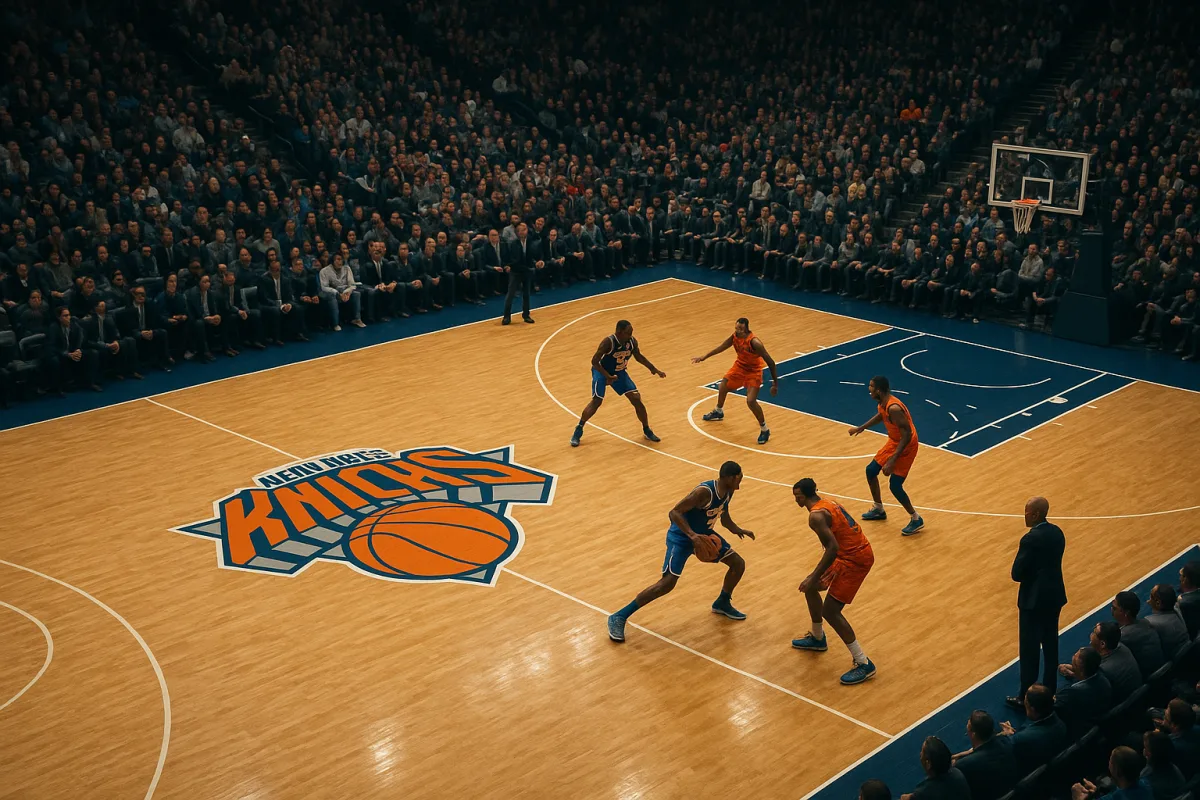
The head-to-head choice is New York over Detroit. That is not a claim that the Knicks are clearly better on every night of an 82-game season, or that Detroit cannot improve internally. It is a judgment about the harder question: which roster has the more repeatable championship possession?
That distinction matters because the 2026-27 regular season has not begun, it opens October 20. [8] Preseason contender labels are projections, so the useful evidence is roster architecture, prior playoff pressure points, and whether a team has credible answers when opponents alter coverage.
Hoops Reference placed New York in its contender tier and Detroit in its pretender tier, largely because New York’s established starting group gives Jalen Brunson more functional options late, while Detroit’s offense remains unusually dependent on Cade Cunningham creating the first advantage.
The Arizona Republic’s contender framing also places the Knicks among six teams with a credible title case, although the betting market is more restrained than the “defending champion” label suggests. New York and Philadelphia sit at +1000, well behind San Antonio and Oklahoma City. [4]
Knicks vs. Pistons, the same test
| Criterion | New York Knicks | Detroit Pistons | Edge |
|---|---|---|---|
| Primary creation | Brunson can initiate late-clock offense, while Karl-Anthony Towns gives him a screening and popping partner. | Cunningham is a high-level primary initiator, but the offense needs another player to consistently create a second advantage. | Knicks |
| Coverage answers | Brunson-Towns actions can punish drop, switch, or help, provided New York’s wings make prompt decisions. | Cunningham can beat first defenders, but playoff opponents can load the nail and dare lesser creators to finish possessions. | Knicks |
| Defensive lineup versatility | OG Anunoby, Mikal Bridges and Josh Hart provide multiple wing assignments around a more vulnerable center matchup. | Detroit has size and toughness, but its offense-defense tradeoffs become sharper when lineups need more shooting or creation. | Knicks, narrowly |
| Rotation resilience | New York’s core is proven, though expensive and not without depth questions. | Detroit lost veteran stabilizers and is counting on bigger roles from less established replacements. | Knicks |
| Best-case outcome | A real title run if Brunson’s late-game creation and the wing defense hold through four rounds. | A top East seed and a dangerous playoff team if Cunningham receives more reliable help. | Knicks |
| Main failure point | A compressed rotation, financial strain, and opponents targeting Towns in space. | One-dimensional late-game offense when Cunningham faces traps, switches, and loaded help. | Knicks |
1. Primary creation
New York wins the first criterion because its offense begins with Brunson but does not have to end there. The Knicks can run Brunson-Towns pick-and-roll, invert the matchup with a wing screener, or flow into a Towns post touch against a smaller switch.
That is not the same as possessing the league’s best individual closer. The independent research brief correctly identifies a meaningful limitation: Brunson is an elite clutch performer, including the 2025-26 Finals MVP, but New York does not have the undisputed top-five superstar margin that some contenders carry. Brunson is nevertheless listed as the early Clutch Player of the Year favorite at +700. [7]
Detroit’s case begins with Cunningham, whose 60-win Pistons earned enormous expectations after last season. Axios characterized that success as a new standard for the franchise, not a novelty act. [1] Cunningham’s size and pace allow Detroit to get organized shots without relying on transition chaos.
But championship offense is less about whether a lead guard can produce a good regular-season possession than whether the second and third reads survive postseason preparation. If Cunningham sees a hard hedge, a late switch, or two defenders at the level, Detroit needs another player to bend the defense before Cunningham receives the ball again.
Hoops Reference’s concern was that Detroit still lacks enough creation around Cunningham to trade late-game scores with elite offenses. That is a fair tape-based concern, not an indictment of Cunningham or center Jalen Duren. It is about the geometry after the first action is taken away.
2. Coverage answers
The Knicks have more ways to punish common playoff coverages. Against drop coverage, Brunson can get to his pull-up range while Towns pops behind the screen. Against a switch, New York can seek Towns against a smaller defender or let Brunson probe a slower big.
The wing personnel matters as much as the stars. Anunoby, Bridges and Hart do not need to dominate possessions to make this work. They need to make the next pass quickly, attack a tilted closeout, and keep the defense from resetting around Brunson’s first action.
Detroit can create a compelling defensive identity, but the offensive counter is less certain. A team can crowd Cunningham’s driving lanes by bringing help from the weak side if it does not fear the next connector making an immediate, damaging play.
Duren illustrates the issue. His vertical pressure can be valuable when Cunningham turns the corner, but it is most valuable when the defense cannot put an extra body in the lane. If opponents can tag the roller early and recover outward, Detroit must manufacture offense from the weak side.
That is why a player’s playoff scoring average, by itself, is not the point. A reduction can reflect tougher matchups, different usage, fewer transition possessions, or deliberate coverage choices. The relevant question is whether Detroit can still generate a clean look after its preferred action is denied.
3. Defensive lineup versatility
New York is not a perfect defensive group. Towns can be involved in space, especially when opponents empty a side and make him defend repeated ball screens. A contender does not need every player to be switchable, but it must have a plan for the matchup opponents will hunt.
The Knicks have more cover for that weakness than most teams. Anunoby and Bridges can take difficult perimeter assignments, Hart can rebound up a position, and Brunson competes despite physical limitations. Those pieces allow New York to change the point of attack before exposing its center.
Detroit’s defensive personnel can make the Knicks uncomfortable, particularly if it puts length on Brunson and crowds the middle. This is the closest category because Cunningham’s team can win physicality battles, control the glass, and turn an ordinary half-court possession into a late-clock shot.
Still, New York has the more tested answer to an offense targeting one matchup: shift assignments, change the screen defender, and preserve its central creators. Detroit’s defensive strengths are real, but its own offensive compromises can limit which defense-first lineups are playable late.
4. Rotation resilience and the money question
New York’s payroll is an important qualifier, not an automatic disqualification. The Knicks carry a reported $222,847,598 total payroll against a $164,961,000 salary cap. [2] That gap signals a costly roster and limited room to repair weaknesses cheaply during the season.
The number does not prove that New York will fail, and the research brief does not provide a complete tax calculation. What it does show is that every back-of-rotation decision has greater importance. The Knicks cannot casually assume an inexpensive midseason solution will appear if depth erodes.
New York’s listed core remains Brunson, Towns, Anunoby and Bridges under coach Mike Brown. [2] CBS Sports listed several key Knicks as game-time decisions for rest in October, rather than reporting a substantial injury absence. [3] That suggests load management, though it cannot guarantee postseason health.
Detroit’s concern is less about tax rigidity and more about lineup certainty. Hoops Reference noted the departures of Tobias Harris and Isaiah Stewart as losses of veteran stability, while questioning whether the replacements can preserve the same two-way balance in larger playoff roles.
A young team can absolutely solve that problem through development. The issue is timing. A championship contender needs the answer before the second round, not as a hopeful outcome of a long season. Detroit’s rotation may become more complete, but it has not yet earned that assumption.
5. The East path and the actual standard
The East is less forgiving than a simple Knicks-versus-Pistons standing comparison would suggest. Cleveland retained Donovan Mitchell and re-signed James Harden, according to the league’s Cavaliers preview. [5] Philadelphia also enters the season with the star power added around Joel Embiid. [8]
That wider environment matters for New York. The Knicks do not need to be the East’s best regular-season team to remain legitimate, but they must be able to win several different series: one against size, one against high-volume perimeter creation, and one against an elite defense.
Detroit’s 60 wins establish that it should not be dismissed as a novelty. [1] But title contention requires a higher threshold than winning games with a coherent identity. It requires a reliable late-game offense after opponents have spent a week identifying every comfortable first option.
New York clears that threshold today because Brunson has a credible late-clock role and because Towns, Anunoby, Bridges and Hart give the Knicks different avenues to finish a possession. Detroit is closer than the word “pretender” usually implies, but still has a specific structural gap.
Who each option suits
The Knicks suit readers looking for the more defensible title pick between these two teams. They have a championship-tested core, a versatile wing defense, and a late-game offensive foundation that can survive more than one type of playoff coverage. Their price is not talent alone, it is depth pressure and financial inflexibility.
The Pistons suit readers who value a strong regular-season profile, Cunningham’s ascent, and the possibility that internal development produces another high-level creator. They are not an unserious team or a doomed one. They are simply a step short of New York until that second late-game advantage is consistently available.
Frequently Asked Questions
Which NBA teams are contenders and pretenders for the 2026-27 season?
The New York Knicks are considered contenders, while the Detroit Pistons are viewed as pretenders. Other contenders with credible title cases include the San Antonio Spurs and Oklahoma City Thunder, who have shorter championship odds than the Knicks. The classification relies on roster architecture, playoff experience, and the ability to respond to defensive adjustments.
Why are the New York Knicks considered contenders for 2026-27?
The Knicks have a versatile late-game offensive structure led by Jalen Brunson and Karl-Anthony Towns that can adapt to playoff scouting. Their depth, defensive versatility, and multiple ways to punish common playoff coverages give them a repeatable championship possession. However, they are not favorites and face financial and depth challenges.
What are the weaknesses of the Detroit Pistons for the 2026-27 NBA season?
Detroit’s main weakness is an offense overly dependent on Cade Cunningham as the primary creator. When Cunningham faces traps, switches, or double teams, the Pistons lack a consistent secondary creator to maintain offensive quality. They also lost veteran stabilizers and rely on less proven players, which raises questions about their playoff resilience.
How do the Knicks and Pistons compare as 2026-27 NBA title bets?
The Knicks are favored over the Pistons because they have more functional options late in games and better answers to playoff defensive coverages. While Detroit had a strong 60-win season, their offense is more one-dimensional and less adaptable in postseason scenarios. The Knicks’ proven rotation and versatile wings give them a slight edge despite financial strains.
What factors determine NBA contenders and pretenders for 2026-27?
Contender and pretender labels are based on roster construction, prior playoff pressure points, and whether teams have credible answers to defensive adjustments like hedges, switches, and help defense. The ability to create quality shots beyond the primary ball-handler and maintain offensive and defensive versatility under playoff conditions is critical. Betting odds and expert analyses also inform these designations.
How we researched this
This article was assembled from 1 video source, 4 published articles, 9 cited references.
Nothing here is based on hands-on testing. Where a figure or finding appears, it belongs to the source cited beside it, and the writing says so rather than implying otherwise. Every source is listed below so you can check it.
Sources
Who Are The Biggest CONTENDERS And PRETENDERS This NBA Season? — Hoops Reference
ESPN Analyst Urges Anthony Edwards to Use “Jealousy and Envy” Over Ex-Teammate Karl-Anthony Towns’ Title as Championship Fuel — Yahoo Sports
NBA rankings, featuring our 6 championship contenders for this season — azcentral.com and The Arizona Republic
‘You hurt his feelings’: NBA fans react to Bronny James blocking Lakers content creator on Instagram — Yahoo Sports
Peter Sblendorio: NBA’s improved Eastern Conference makes Knicks and Nets’ goals more difficult in 2026-27 — Yahoo Sports
2026-27 New York Knicks Roster and Stats | Basketball-Reference.com
New York Knicks Injury Report and Status 2026-27 - CBS Sports
NBA Championship Odds & Predictions 2026-27 | NBA Finals Picks
Denver Nuggets SWOT Analysis [2026] - Strengths & Weaknesses | SWOTPal
¿Cuándo inicia la temporada regular de la NBA 2026? Equipos a seguir y principales fichajes
Tracking Every Knicks Move During Free Agency and 2026 Offseason (Signings, Losses, Trades, More)
Watch NBA Contenders and Pretenders for the 2026-27 Season on Youtube
Related Articles

NBA 2026 Season Highlights and Unforgettable Moments
Explore NBA 2026 season highlights, including Knicks' title and Wembanyama's record blocks, plus key moments and verified analysis.

NBA Eastern Conference Outlook and Knicks' Position
Explore the NBA Eastern Conference outlook and the New York Knicks' position as they defend their title in the 2026-27 season.
New York Knicks 2026-27 Roster Moves and Season Preview
Explore the New York Knicks 2026-27 roster moves, preseason analysis, and key player updates including Brunson’s MVP case and Towns’ contract.
Toronto Raptors Underrated Contenders in the 2026 NBA Season
Explore why the Toronto Raptors are underrated contenders, focusing on defense, Kawhi Leonard's impact, and roster changes in 2026.