
NBA Eastern Conference Outlook and Knicks' Position
Explore the NBA Eastern Conference outlook and the New York Knicks' position as they defend their title in the 2026-27 season.
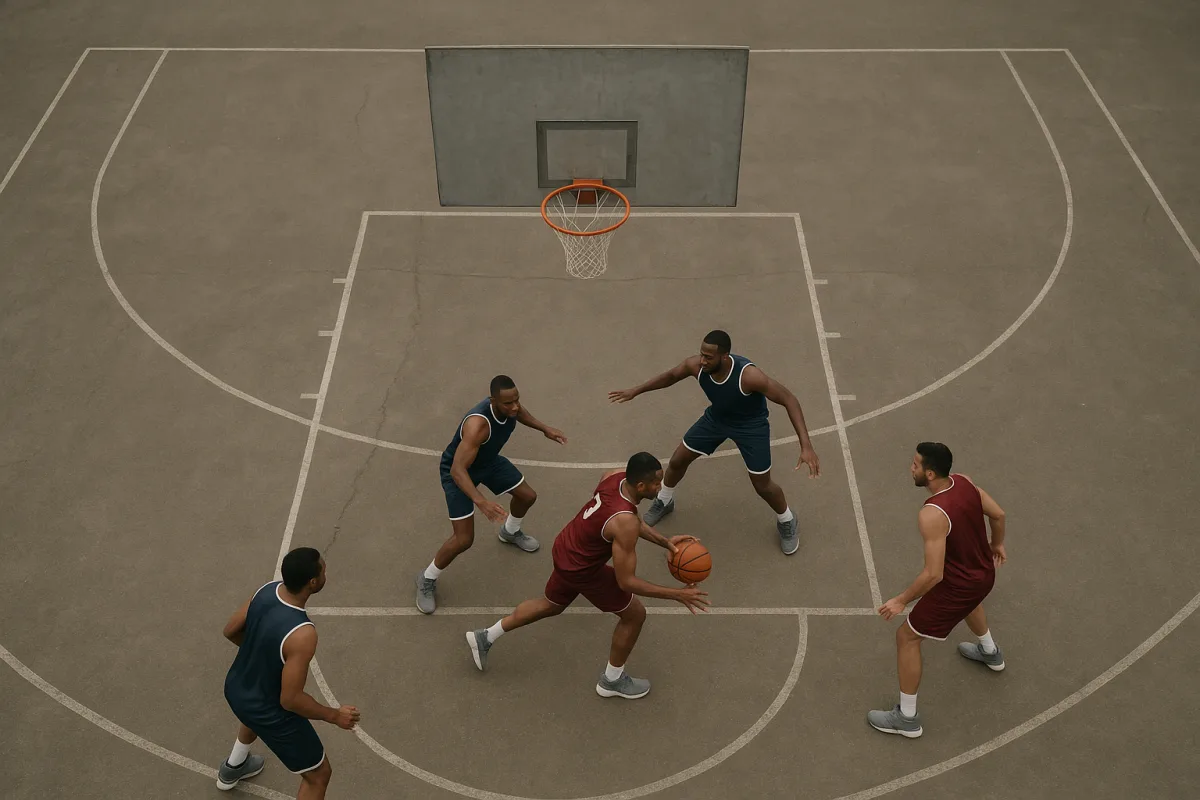
The shift is real, but it is not a Knicks coronation
The plain version is this: the East is no longer a conference where a strong regular season guarantees a manageable playoff route. New York remains the reigning champion and the leading internal favorite, but the gap beneath it has narrowed materially.
Several independent indicators are pointing in the same direction. The NBA’s annual general manager survey had 60 percent of respondents picking the Knicks to finish first in the East, yet those same executives made San Antonio the preferred championship choice. [6]
Sportsbooks offer a similar distinction. FanDuel listed New York at +1000 to repeat, tied with Philadelphia and behind both San Antonio and Oklahoma City. DraftKings and Bet365 were somewhat higher on the Knicks at +900, but still placed them behind the Spurs and Thunder. [2][3]
That is not a contradiction. It is a useful measure of the Knicks’ position. They can be the conference’s most trusted regular-season team while still lacking the league-wide margin for error that would make a repeat the default expectation.
CBS Sports placed New York alone at the top of its Eastern tier after its championship run, while also identifying a broad group of new and returning challengers below it. [9] The Athletic’s preseason framing reaches the same larger conclusion: the East has enough credible teams that even the Knicks and 76ers are not automatic top-four finishes.
The conference’s 2025-26 interconference record supports the perception shift. East teams went 609-621 against the West, a .495 mark, while placing 10 winning teams in the playoff field compared with nine from the West. That is near-parity, not proof of superiority.
Still, it matters. For years, the East’s best team could often spend its first two rounds exploiting obvious roster defects. A non-shooting wing, a backup center who could not survive space, or a second creator unable to handle pressure could end a series early.
The current East is built differently. The top group contains more teams that can alter the geometry of a series, whether through bigger switchable wings, multiple on-ball creators, or centers able to pull a conventional rim protector away from the basket.
Why New York starts first
The Knicks’ strongest argument is not simply that they won the title. It is that their core still fits the possession demands of playoff basketball: Jalen Brunson can create late-clock offense, Karl-Anthony Towns stretches the center, and Mikal Bridges and OG Anunoby give the group size on the wing.
Brunson, Bridges, Anunoby and Towns remain in place, preserving the basic structure that carried New York through last season. [4][6] That continuity matters because postseason execution is usually less about installing new plays than recognizing the same coverage quickly enough to make it fail.
With Towns screening, New York can force an opponent into a choice. Drop coverage lets Brunson access pull-up space and gives Towns a short-roll passing lane. Switching can create Brunson mismatches or ask a smaller defender to hold up against Towns inside.
The supporting moves suggest New York understands that a championship defense needs more than its first five. The Knicks signed Bruce Brown in September and re-signed Mohamed Diawara in June, adding another experienced perimeter option and retaining a developmental piece. [5][10]
Brown’s value, in theory, is not raw scoring volume. It is lineup elasticity. A guard-wing capable of defending across positions lets a coach preserve more favorable matchups after an opponent begins hunting a specific defender in pick-and-roll.
That is especially relevant for a team built around big wings. New York does not need every reserve to create 18 points. It needs enough players who can make the second and third rotation without forcing the defense to abandon its base coverage.
The center issue changes the calculation
The Knicks’ main roster question is more specific than generic concerns about depth. Mitchell Robinson’s departure removes a rim-protecting center who could absorb interior defensive possessions while Towns rested or operated in more offensively tilted lineups. [7][9]
Andre Drummond can still rebound and occupy space, but those are not identical skills. A team changes its pick-and-roll coverage when its reserve center cannot consistently contain the ball, recover to the roller and discourage passes at the rim.
Against New York, opponents will test that immediately. They can run empty-corner pick-and-roll, putting the weak-side help farther from the paint, or use five-out spacing to make a slower big choose between conceding a drive and surrendering a corner three.
That does not mean the Knicks are doomed defensively. It means their margins are narrower in non-Towns minutes. The difference between a good bench unit and a vulnerable one may be whether Brown, Anunoby or Bridges can shrink the floor before the ball reaches the restricted area.
The other caution is financial. New York’s established core is expensive, and the league’s apron rules make it harder for contenders to patch weaknesses with a midseason accumulation of veterans. The Knicks may need internal answers rather than a dramatic February correction. [8]
There is also no reason to treat health as a footnote. A title defense places more stress on a roster’s older, heavily used players, and Towns, Brunson and Anunoby are central to virtually every good Knicks lineup. Their continuity is an advantage only while available.
Philadelphia has the highest-variance answer
Philadelphia’s revised roster is the East’s most obvious challenge to New York’s wing-heavy template. CBS Sports projected a starting group featuring Tyrese Maxey, rookie VJ Edgecombe, Jaylen Brown, LeBron James and Joel Embiid, a concentration of talent few teams can match. [9]
The 76ers acquired Brown from Boston, while adding James to an already star-heavy structure. [6][9] On paper, that gives Philadelphia answers to the question that ends many playoff series: who creates a quality shot after the first action is defended?
But the tape question is different from the talent question. Maxey is most dangerous when he can turn the corner early in the clock. Embiid is most punishing when defenses cannot load two bodies toward him. James and Brown also need purposeful touches.
That requires role clarity. If the 76ers default to taking turns, New York can switch selected actions, keep help near Embiid and live with difficult isolation attempts. If Philadelphia sequences its creators, it can force defenders to navigate multiple decisions in one possession.
Health remains inseparable from the projection. CBS Sports noted Embiid had missed 150 games over the prior three seasons. [9] A roster with this much top-end talent can beat anyone, but only if its best lineups have enough repetition to develop defensive communication.
Miami and Cleveland can win different kinds of series
Miami’s Giannis Antetokounmpo acquisition gives the Heat a more direct route to stressing New York’s frontcourt. The likely issue is not whether Giannis can create paint pressure. It is whether Miami can place enough shooting and secondary creation around him. [9]
Adebayo and Antetokounmpo could create a severe defensive front line, particularly against teams with one-dimensional ballhandlers. Yet two-big configurations can also compress the offense if opponents help off non-shooters, crowd the lane and dare Miami’s ancillary players to decide games.
Cleveland presents a cleaner regular-season challenge. Donovan Mitchell, James Harden, Evan Mobley and Jarrett Allen give the Cavaliers elite shot creation plus size, and the addition of Peyton Watson increases their wing defensive options. [9]
The Cavaliers’ problem is bench stability. CBS Sports identified the losses of Dean Wade, Keon Ellis and Dennis Schröder as meaningful, leaving Cleveland more dependent on Jaylon Tyson and Sam Merrill minutes. [9] In a tight series, those minutes are where matchups get hunted.
For New York, Cleveland is less about surviving talent than controlling the point of attack. If Brunson is repeatedly dragged into Harden-Mitchell actions, the Knicks may need to pre-switch, top-lock off-ball routes or accept cross-matches rather than expose their smallest defender.
Boston, Toronto and Indiana complicate the bracket
Boston has more volatility than in recent seasons after sending Brown to Philadelphia for Paul George and draft capital. [9] George can still supply shooting and wing defense, but the Celtics’ identity changes when their best downhill wing scorer is removed.
Mitchell Robinson’s arrival gives Boston some of the rim protection New York lost, but availability is a legitimate variable. [9] The Celtics remain capable of defending elite wings, yet their offense may become more dependent on clean perimeter shooting and Derrick White’s recovery.
Toronto’s Kawhi Leonard addition raises a different concern. Pairing Leonard with Scottie Barnes gives the Raptors two large, disruptive defenders who can switch or shade toward the ball without immediately conceding size. The central issue is Leonard’s workload and availability. [9]
Indiana is the quieter threat. Tyrese Haliburton’s return, Ivica Zubac’s addition and Rick Carlisle’s coaching give the Pacers a plausible formula if their pace-and-space offense returns quickly. [9] Their ceiling depends on whether Haliburton can regain pre-injury burst and timing.
Atlanta and Orlando remain dangerous because neither needs to be better than New York over 82 games. They need one scheme, one matchup, or one shooting stretch that exposes a weak point over seven games. That is the defining feature of a deeper conference.
What this means for a team building now
For a front office planning its own East project, the lesson is not to imitate New York’s roster player for player. The lesson is to build a playoff rotation that survives a different question every round.
A contender needs at least two credible creators, enough shooting to punish help, and defenders who can remain on the floor after the opponent identifies the weakest link. That is more valuable than a nominally deep roster filled with specialists.
The Knicks have earned the East’s top line because their best group already knows how to execute under playoff pressure. The evidence does not support treating them as inevitable repeat champions, however. It supports treating them as the standard everyone else must solve.
Frequently Asked Questions
What is the NBA Eastern Conference outlook for the 2026-27 season?
The Eastern Conference has become more competitive and balanced, shifting from a one- or two-team race to a matchup-driven field. While the Knicks enter as the clearest favorite within the East, the gap between them and other contenders has narrowed, making playoff success less certain and emphasizing the importance of depth, ball security, and lineup versatility.
How do the New York Knicks rank in the Eastern Conference?
The Knicks are widely regarded as the top team in the Eastern Conference for the 2026-27 season. According to an NBA general manager survey, 60% of respondents picked the Knicks to finish first in the East, and CBS Sports placed them alone at the top of its Eastern tier after their championship run.
What challenges do the Knicks face defending their title?
Key challenges include the departure of Mitchell Robinson, which creates a center-defense vulnerability, and concerns about the aging core players. Financial constraints limit roster flexibility, and the increased competition from teams like the 76ers and Miami Heat, who have improved their lineups, complicate New York’s path to repeating as champions.
Which teams are the main contenders in the Eastern Conference?
Besides the Knicks, the Philadelphia 76ers, Miami Heat, Cleveland Cavaliers, and Boston Celtics are notable contenders. Each of these teams must address specific possession or structural issues to overcome New York, as simply adding star power is not enough in the current competitive landscape.
How does the Knicks' roster affect their playoff chances?
The Knicks benefit from an intact core featuring Jalen Brunson, Karl-Anthony Towns, Mikal Bridges, and OG Anunoby, which provides a dependable postseason baseline. However, the loss of Mitchell Robinson raises concerns about center defense, especially in second-unit minutes, and the team’s depth and financial limitations may impact their ability to sustain playoff success.
How we researched this
This article was assembled from 4 published articles, 11 cited references.
Nothing here is based on hands-on testing. Where a figure or finding appears, it belongs to the source cited beside it, and the writing says so rather than implying otherwise. Every source is listed below so you can check it.
Sources
NBA Eastern Conference tiers: Knicks on top, but new-look contenders emerge after eventful offseason — CBS Sports NBA
This Week in Sports Trivia: Oct. 15, 2026 — The Athletic NBA
Why the Knicks, 76ers won't finish in Eastern Conference's top 4: NBA predictions — The Athletic NBA
The Wizards have had over four decades of misery. Can No. 1 pick AJ Dybantsa save them? — The Athletic NBA
What to know about LeBron James' preseason debut against the Knicks
2026 NBA Finals Odds: Spurs, Thunder Favored; Knicks, 76ers Giving Chase | FOX Sports
New York Knicks 2026-27 Season Preview: Defending Champions, Free Agency & Fantasy Outlook
2026-27 New York Knicks Transactions | Basketball-Reference.com
Atlantic Division: Offseason recap and a look ahead to the 2026-27 season | NBA.com
New York Knicks SWOT Analysis [2026] - Strengths & Weaknesses | SWOTPal
NBA Eastern Conference tiers: Knicks on top, but new-look contenders emerge - CBS Sports
Tracking Every Knicks Move During Free Agency and 2026 Offseason (Signings, Losses, Trades, More)
Related Articles
Toronto Raptors Underrated Contenders in the 2026 NBA Season
Explore why the Toronto Raptors are underrated contenders, focusing on defense, Kawhi Leonard's impact, and roster changes in 2026.

NBA 2026 Season Highlights and Unforgettable Moments
Explore NBA 2026 season highlights, including Knicks' title and Wembanyama's record blocks, plus key moments and verified analysis.
NBA Eastern and Western Conference Dynamics Explained
Explore NBA Eastern and Western Conference dynamics, offensive strategies, and team challenges in the 2025-26 season.
NBA Training Camp Position Battles and Standouts in 2026
Explore key NBA training camp position battles and standouts shaping 2026 rosters and lineup decisions across multiple teams.