
NBA Cup 2026 Game Analysis
In-depth NBA Cup 2026 game analysis covering key matches, player performances, and tactical insights from the group stage.

NBA Cup 2026: Cavaliers, Celtics Set the Early Standard in Group Play
The quick list
Best overall: Cavaliers vs. 76ers, for you if you want the strongest defensive performance with immediate group-stage consequences.
Best value: Celtics vs. Hornets, for you if you want the clearest evidence of a contender overwhelming an opponent across all four quarters.
Best for small margins: Raptors vs. Bucks, for you if you care most about late-game execution and the variability that can decide a group.
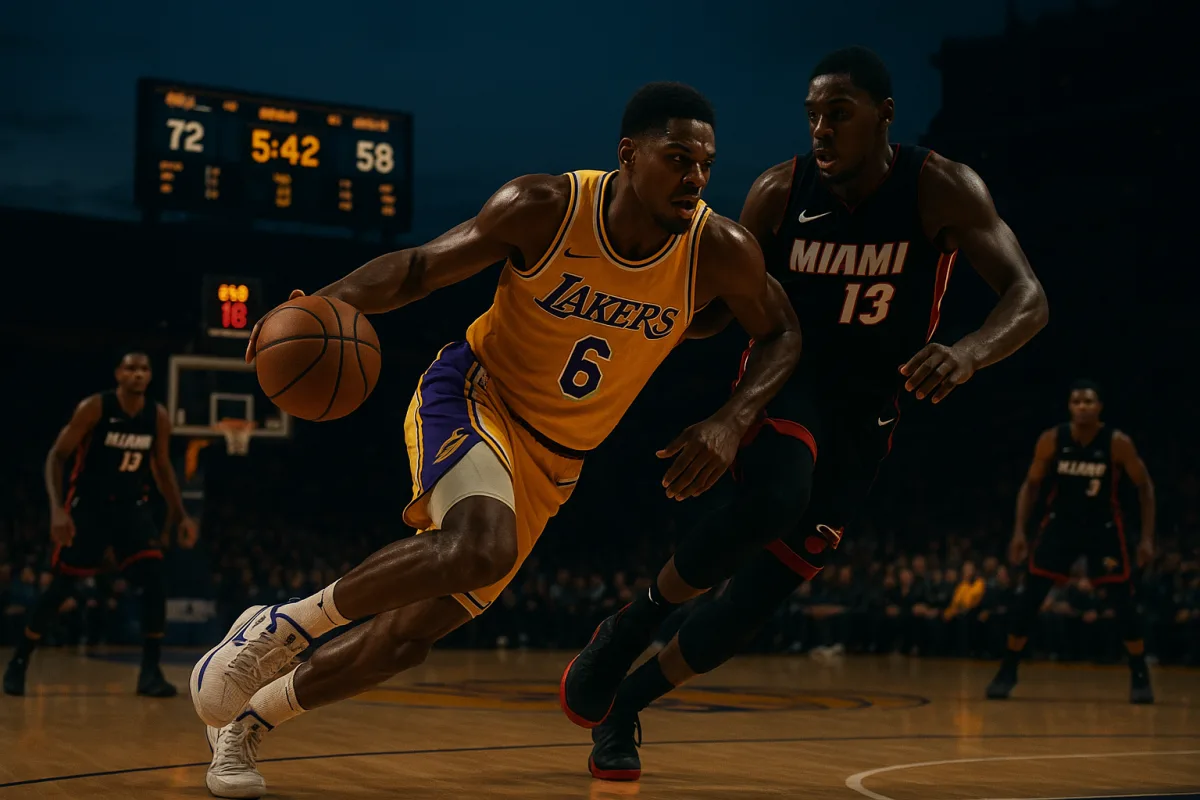
Best individual shot creation: Lakers vs. Heat highlights, for you if you are tracking Luka Doncic’s ability to manufacture efficient offense against loaded coverage.
You are deciding which early NBA Cup result deserves the most weight, not which one produced the loudest box score. Cleveland’s win tells you more about playoff-style resistance, Boston’s margin tells you more about ceiling, and Toronto’s comeback tells you why group play can punish one bad closing stretch.
The tournament structure sharpens those distinctions. Each team plays four designated group-stage games from October 30 through November 27, with six group winners and two wild cards advancing to single-elimination play.[2] A dominant win can help on tiebreakers, but a comeback win can still reshape the race.
| Option | Result or defining performance | Margin or swing | What it reveals | Trade-off |
|---|---|---|---|---|
| Cavaliers vs. 76ers | Cleveland 119, Philadelphia 95 | Cavaliers by 24 | Defensive pressure can erase elite names when primary scorers cannot convert | One game does not establish a season-long offensive problem |
| Celtics vs. Hornets | Boston rout led by Jayson Tatum | Celtics by 39 | Boston’s high-end two-way ceiling and ability to remove fourth-quarter drama | Blowout conditions reveal less about late-game decision-making |
| Raptors vs. Bucks | Toronto comeback win | Toronto overcame a deficit | Possession-by-possession resilience in a game that stayed live | Less proof of sustained control than a wire-to-wire rout |
| Lakers vs. Heat | Luka Doncic scoring and playmaking showcase | Doncic reached 40-plus points in the highlight package | Individual creation can bend a defense and generate open threes | Highlights do not provide the full defensive or lineup context |
| Warriors vs. Heat | Golden State defensive second half and bench lift | Game tied at halftime, Warriors pulled away | Bench units and defensive adjustment can decide Cup nights | The available game account offers limited full box-score context |
Cleveland’s win is the best early indicator
The Cavaliers’ 119-95 group-stage victory over Philadelphia is the result we would put first. Cleveland did not merely outshoot a cold opponent. It made Philadelphia’s two featured scorers operate through a night of missed looks, turnovers, and disrupted rhythm.[3]
Yahoo Sports reported that the victory snapped Philadelphia’s five-game winning streak.[3] That matters because the Sixers arrived with recent form behind them, not as a team stumbling into a scheduled loss. Cleveland took control against an opponent that had been playing well.
Embiid finished with six points on 0-for-9 shooting, plus seven rebounds, two blocks, and two turnovers.[3] The rebound and block totals show he still occupied the game physically, but the zero in the field-goal column is the number that shaped everything else.
LeBron James scored eight points on 3-for-12 shooting and went 0-for-4 from three, adding seven rebounds, five assists, and three steals.[3] His passing and defensive activity gave Philadelphia some secondary value, but Cleveland successfully prevented that all-around contribution from becoming efficient offense.
Together, Embiid and James scored 14 points on 3-for-21 shooting.[3] That is not the kind of performance you explain away by citing a few missed jumpers. Philadelphia’s lead creators did not generate enough successful possessions to keep pace with a team that reached 119.
Cleveland’s advantage was 24 points, which makes this different from a one-possession Cup game decided by late free throws or a disputed call. The Cavaliers created enough separation that their defensive work was visible in both the score and Philadelphia’s central shooting lines.[3]
Sports Illustrated highlighted offseason additions Mario Hezonja and Meleek Thomas as major contributors in Cleveland’s earlier win over Philadelphia.[5] Hezonja posted 15 points and 10 rebounds in 27 minutes, while Thomas had 12 points, three assists, and two steals.[5]
Those numbers provide a useful roster-building lens. Hezonja’s 10 rebounds gave Cleveland size and possession finishing, while Thomas combined perimeter shooting, passing, and steals. For a Cup contender, contributions from new rotation players can matter as much as another star’s 30-point night.
The limitation is clear. A bad Embiid shooting night and an off night from James are not permanent scouting reports. But in group play, Cleveland does not need to prove it can neutralize them every night. It needed the result, and it got a 24-point one.[3]
Boston supplied the biggest margin
The Celtics’ 39-point win over Charlotte is the strongest pure blowout in this set of results. The Boston Herald characterized it as a 39-point NBA Cup rout, with Jayson Tatum driving the outcome.[6] That is the tournament’s clearest early warning to the field.
A 39-point margin does not measure the same thing as Cleveland’s defensive squeeze. It measures how completely a game ceased to be competitive. Boston had enough command to turn the final period from a strategic contest into a minutes-management opportunity.
NBC Sports Boston also identified Tatum as the leader in Boston’s blowout victory in Charlotte.[8] For you, the key is not to reduce the game to a single-player showcase. A 39-point margin requires a team to win the minutes around its star, too.
MassLive reported that Boston’s dominance also delivered favorable NBA Cup news.[7] In a group format, that broader standing context matters. Teams are not only chasing wins, they are positioning themselves for group-winner status or a wild-card tiebreaker.[2]
Boston’s trade-off is that a rout gives you fewer answers about closing possessions. You do not learn much about the Celtics’ final-minute actions, timeout choices, or switching decisions when the outcome has been settled well before the final horn.
Still, we would not discount the margin for that reason. The ability to remove late-game variance is a skill. In Cup group play, the team that builds a 25-point lead does not need to prove it can win a coin-flip finish.
The Celtics also benefit from an organizational profile built for this setting. A star-led offense, dependable two-way personnel, and enough lineup flexibility to sustain runs are especially valuable in a four-game group stage, where one flat night can distort the standings.[2]
Toronto and Milwaukee show the other version of Cup pressure
Reuters reported that Toronto came back to beat Milwaukee in an NBA Cup game.[5] Compared with Boston’s rout and Cleveland’s steady separation, this is the game type that keeps every possession valuable through the closing stretch.
A comeback does not carry the same point-differential authority as a 39-point victory. It does reveal something else: the ability to keep generating workable possessions after the game script turns against you. That trait can decide a group where every team plays only four Cup games.[2]
Milwaukee’s loss also illustrates a central group-stage problem. You can play well enough to establish an early lead and still leave with a damaging result. There is no seven-game series to smooth over a bad final five minutes.
For Toronto, the value is in the response. A team that can recover from a deficit has a path through games where shooting variance, foul trouble, or a hot opposing scorer changes the expected script. That does not replace Boston’s ceiling, but it is a different kind of equity.
We would rank the Raptors-Bucks comeback below the Cleveland and Boston results for now. There is less evidence of sustained control. But if Toronto turns that recovery into another group win, this could become the result that reads differently by the end of November.
The standout creators: Doncic, Tatum and Cleveland’s support cast
The player-performance conversation begins with Tatum because Boston’s team result was so overwhelming. The reporting on the Charlotte game consistently places him at the center of a 39-point victory, the kind of night that lets a star define the game without needing a frantic finish.[6][8]
Doncic’s Lakers performance against Miami supplies the contrasting template. FreeDawkins’ highlight package shows the Lakers repeatedly leaning on his pull-up shooting, post creation, transition passing, and ability to draw extra defenders before finding teammates on the perimeter.
The available highlight call identifies Doncic reaching 40 points, after an earlier reference to a 45-point, six-assist, five-steal, eight-three performance.[1] Those are different game references within the broadcast audio, so the safest read is the visual one: Doncic was the Lakers’ offensive engine.
What stands out is the variety. He scored from deep, worked into midrange fallaways, attacked the lane, and created corner or slot opportunities after the defense collapsed. That is the sort of shot creation that can survive a Cup game when a set offense initially stalls.
The trade-off is defensive. A highlight edit can show you the finished shots and not every possession that preceded them. It cannot establish whether the Lakers’ lineup defended consistently enough, or whether Miami’s coverages changed as the game developed.
Golden State’s win over Miami offers a more team-oriented counterpoint. The highlight account describes a halftime tie followed by Warriors defensive control, bench contributions, and 20 points from Stephen Curry. FreeDawkins’ game presentation also emphasizes Miami’s cutting and multiple late ties.
That is a useful reminder for evaluating individual brilliance. Doncic’s shot-making can tilt a game, but a Cup run also requires second-unit minutes that do not bleed points. Golden State’s reported bench lift and second-half defense are the type of quieter advantages that survive tournament pressure.
Tournament layout raises the stakes without changing the regular season
The NBA Cup group stage is part of the regular season. These games count toward regular-season records, even as they also determine advancement toward the eight-team knockout field.[2] Cleveland’s victory was a group-stage win, not a Cup championship or knockout-round victory.
The quarterfinals and semifinals are single-elimination games hosted by the higher seed, while the final is scheduled for Hinkle Fieldhouse in Indianapolis on December 11.[2][6] The move gives group performance added value because higher placement can create home-court advantage before the final.
Hinkle Fieldhouse has a listed capacity of 9,100, a smaller final-stage setting than the tournament’s prior Las Vegas destination.[6] That will change the atmosphere, but it does not change what teams need now: wins first, then enough separation to survive any tiebreak math.
The NBA has not announced 2026 prize amounts. As a reference point, 2025 payments ranged from $53,093 per player for reaching the quarterfinals to $530,933 per player for winning the championship.[2] Those figures are historical reference, not confirmed 2026 compensation.
Who each option suits
Cavaliers vs. 76ers suits you if you want to identify the team with the best early defensive case. Cleveland limited two high-profile scorers, ended a five-game streak, and won by 24 points. We would choose this as the tournament’s most informative game so far.[3]
Celtics vs. Hornets suits you if you are looking for the largest statement of ceiling. Boston’s 39-point margin gives it the strongest dominant-win résumé, and Tatum’s central role confirms the Celtics did not need a close finish to validate their Cup ambitions.[6][8]
Raptors vs. Bucks suits you if you value resilience over control. Toronto’s comeback offers the clearest example of how a group-stage game can flip late, though it leaves more unanswered than Boston’s rout or Cleveland’s defensive dismantling.[5]
Lakers vs. Heat suits you if you are following individual offensive craftsmanship. Doncic’s scoring range, passing vision, and comfort against pressure make the performance compelling, but you should pair highlight evaluation with full-game possession data before drawing broader conclusions.
Warriors vs. Heat suits you if you are watching the margins around stars. Curry’s scoring matters, but Golden State’s reported second-half defense and bench production are the details that can turn a tied Cup game into a result with standings value.
Frequently Asked Questions
Which NBA Cup 2026 games had the biggest impact in group play?
The Cavaliers’ 119-95 win over the 76ers stands out as the most consequential early group-stage game, ending Philadelphia’s five-game winning streak and showcasing strong defensive pressure. Boston’s 39-point rout of Charlotte also made a clear statement about their contender status. Toronto’s comeback win against Milwaukee highlighted the volatility and importance of late-game execution in group play.
How did key players perform in the early NBA Cup 2026 matches?
Joel Embiid and LeBron James struggled offensively in the Cavaliers vs. 76ers game, combining for only 14 points on 3-for-21 shooting. Meanwhile, Jayson Tatum led Boston in a dominant win over Charlotte, and Luka Doncic showcased individual offensive creation with over 40 points against Miami. New additions like Mario Hezonja and Meleek Thomas contributed significantly to Cleveland’s early success.
What defensive strategies stood out in NBA Cup 2026 group games?
Cleveland’s defense against Philadelphia was notable for limiting elite scorers Embiid and James to inefficient shooting and disrupting their rhythm. Golden State’s second-half defensive adjustments and bench contributions also helped them pull away in their game. These defensive efforts illustrate how pressure and tactical changes can decide Cup nights.
How do early NBA Cup 2026 results affect team standings?
Each team plays four group-stage games from October 30 through November 27, with six group winners and two wild cards advancing to the knockout rounds. Early dominant wins can improve tiebreaker positioning, while comeback victories can reshape the race by demonstrating resilience. All Cup results also count toward regular-season standings.
What are the key takeaways from NBA Cup 2026 group stage games?
Early games reveal different team strengths: Cleveland’s win highlights playoff-style defensive resistance, Boston’s blowout shows a high ceiling, and Toronto’s comeback underscores the importance of late-game execution. The tournament format emphasizes both consistent performance and the ability to win close games, shaping which teams advance to the knockout stage.
How we researched this
This article was assembled from 2 video sources, 8 published articles, 8 cited references.
Nothing here is based on hands-on testing. Where a figure or finding appears, it belongs to the source cited beside it, and the writing says so rather than implying otherwise. Every source is listed below so you can check it.
Sources
Los Angeles Lakers vs Miami Heat Full Game Highlights | Nov 2, 2026 | FreeDawkins, FreeDawkins
Golden State Warriors vs Miami Heat Full Game Highlights | Nov 5, 2026 | FreeDawkins, FreeDawkins
NBA Cup 2026: Cavaliers snap Sixers' 5-game winning streak on rough night for Joel Embiid and LeBron James, Yahoo Sports
These 2 Offseason Additions Made a Massive Impact in Cavs’ Win in NBA Cup Matchup, Sports Illustrated
Jayson Tatum, Celtics scorch Hornets in 39-point NBA Cup rout, Boston Herald
4 takeaways as Celtics dominate Hornets, get good news for NBA Cup, MassLive
Celtics-Hornets recap: Tatum leads blowout NBA Cup win in Charlotte, NBC Sports Boston
Lamar Odom Earns 5-Figure Sum On OnlyFans In First Week, TMZ
Sam Merrill Exits Friday’s Win with Elbow Injury - NBA News | Fantasy Basketball, RotoBaller
Exclusive: Suns, Mercury owner Mat Ishbia says "building a sports empire" doesn't always work
Emirates NBA Cup 101: Rules, format and how it works | NBA.com
These 2 Offseason Additions Made a Massive Impact in Cavs’ Win in NBA Cup Matchup
NBA Cup 2026 Explained: New Rules, Format Changes and How the Tournament Works
Emirates NBA Cup 101: Rules, format and how it works | NBA.com
Watch NBA Cup 2026: Key Games and Player Performances on Youtube
Also from the sources
Related Articles
Lakers vs Heat Game Highlights and Key Matchups Analysis
Explore Lakers vs Heat game highlights and key matchups, including Luka Doncic's performance and Lakers' top offensive and defensive strategies.

NBA Preseason Player Performances and Game Highlights
Explore NBA preseason player performances and game highlights with analysis of rookies, rotations, and team strategies from 2026 games.

NBA Preseason Game Highlights and Player Performances
Explore NBA preseason game highlights and player performances, including team strategies and standout rookies from recent matchups.

Jayson Tatum Clutch Performances and Celtics Momentum
Explore Jayson Tatum's clutch performances and their impact on the Boston Celtics' momentum in the 2026-27 NBA season.