
NBA Player Breakouts and Trade Rumors Shaping 2026 Season
Explore NBA player breakouts and trade rumors in 2026, analyzing how trades reshape roles and impact breakout opportunities.
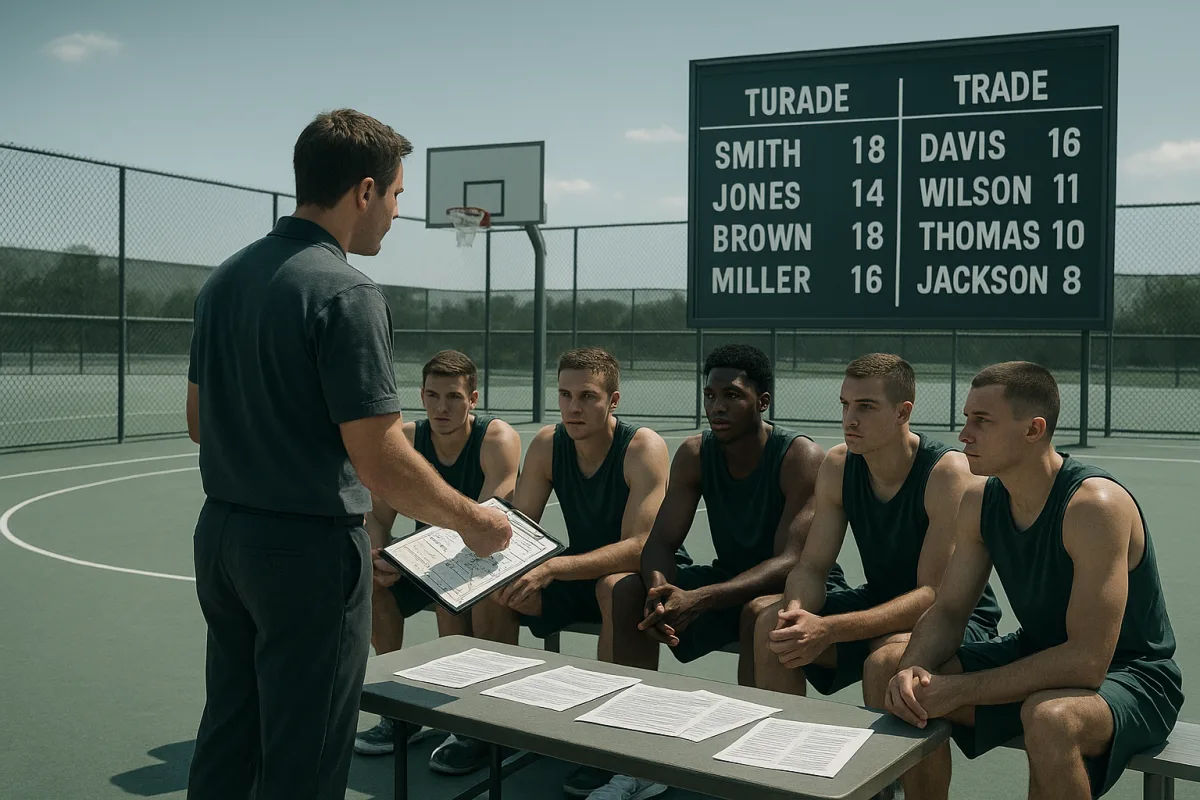
The shift is from prospect enthusiasm to possession economics
The plain shift is this: teams are increasingly evaluating young players through the possessions they can be trusted to handle, while trade rumors center on stars whose movement would redistribute those possessions. That is a more practical framework than simply asking who is “next.”
Multiple sources point in the same direction. NBA.com’s offseason tracker records substantial player movement across contenders, middle-tier teams and rebuilding rosters, while NBC Sports has reported active pursuit and discussion around Giannis Antetokounmpo, Trae Young and Jaylen Brown. [4][5]
Those are different kinds of transactions, but they produce the same basketball question. When a high-usage player arrives or leaves, who now runs second-side pick-and-rolls, attacks closeouts, handles late-clock possessions and covers the defensive assignment that used to belong elsewhere?
That is why breakout analysis and trade analysis belong together. A breakout rarely starts with a player waking up as a different athlete. More often, it starts when a roster change grants a player cleaner reads, a more stable lineup context or enough reps to make mistakes.
The tape-oriented version of this matters because box-score jumps can mislead. A scorer might gain four points per game simply because a departing veteran leaves behind shots. That says little about whether the scorer improved at processing the low man, reading the nail defender or manipulating help.
Start by separating projection from evidence
As of September 18, the 2026-27 season has not begun. There are no official game statistics from this season, no lineup samples and no on-court evidence that any preseason depth-chart forecast has translated to actual basketball.
That point sounds obvious, but preseason material often treats projected roles as achieved production. Fadeaway World’s ranking of second options and the NBA 2K27 ratings conversation are useful snapshots of league expectations, not evidence of present performance. [3][6]
A ranking can identify the players teams expect to carry a larger load. It cannot tell us whether those players can survive the consequences of that load, especially when postseason scouting removes the easy versions of their preferred actions.
For a guard, the relevant evidence is not merely assist average. It is whether the guard creates open shots after the defense tags the roller, whether those passes arrive on time and whether he can avoid surrendering the ball when opponents top-lock his preferred shooting action.
For wings, “more on-ball creation” needs similar scrutiny. The question is whether the wing can beat a tilted defense after the first advantage has already been created, rather than simply taking a larger share of low-difficulty transition attacks and mismatch isolations.
That is also why the strongest breakout candidates are often not the loudest scorers. A player who can defend up a position, make the extra pass, screen, cut and make a secondary pick-and-roll decision may earn closing minutes before his scoring total changes visibly.
Ajay Mitchell is a development case, not a rumor-market case
The Oklahoma City guard is one of the clearer examples of where the conversation needs correction. The player is Ajay Mitchell, not “AJ Mitchell,” and the available contract reporting lists a three-year, $8.7 million agreement through 2028, with $4.5 million guaranteed. [1]
That contract makes Mitchell interesting to Oklahoma City because it gives the team a low-cost developmental guard during a period when the roster is already built to win. It does not, by itself, make him a realistic centerpiece of major trade discussions.
FanVerdicts’ 2026-27 trade-value rankings do not identify Mitchell as a notable trade asset, and no reported public valuation establishes a market for him. [2] Calling him a heavily involved trade candidate would therefore go beyond the evidence.
The more defensible read is that Mitchell’s potential breakout is role-dependent. Oklahoma City’s established creators determine how often he sees primary pick-and-roll duty, but a low-cost guard can still grow through bench units, second-side drives and defensive matchup flexibility.
A trade would only be necessary if Mitchell’s best skill is primary creation and Oklahoma City cannot offer enough of it. There is not enough verified evidence yet to make that claim. The season must show whether he can scale his decisions without needing star-level usage.
This is where film should lead the analysis. Track whether Mitchell turns downhill after receiving a swing pass, whether he attacks the correct gap against loaded help and whether his defensive positioning keeps him playable beside smaller guards. Those possessions will matter more than a preseason ranking.
Dalton Knecht’s question is narrower than a breakout headline
Another correction is necessary around the Los Angeles Lakers wing. There is no NBA player named Dalton Connect. The player in question is Dalton Knecht, and the available projection models still place him below neutral impact despite expecting improvement.
Read The Game’s projection cited in the research brief estimates Knecht’s Net Impact improving from minus-5.9 to minus-3.2 in 2026-27. That is a projected improvement, not a declaration that he has become a positive rotation player.
Net Impact is not the same as scoring efficiency. It attempts to estimate total on-court value through inputs including usage, minutes, efficiency and age-related development. A less negative projection can indicate progress while still leaving a player vulnerable in high-leverage lineups.
For Knecht, the possession-level test is direct. Can he create enough shooting gravity to force a hard closeout, then make a useful next decision? If opponents can chase him off the line and reliably force a stalled drive, the offensive value shrinks quickly.
The defense matters just as much. A young wing need not become an All-Defense candidate, but he must navigate screens, close out under control and avoid becoming the automatic target whenever an opponent needs to generate a favorable switch.
That makes a change of scenery neither an automatic cure nor an empty possibility. A new team can provide different spacing and a longer developmental runway, but it also may expose a player to more difficult defensive assignments and fewer star-created open looks.
The rumor market is really about changing team identities
The largest rumors are not interesting because they create headlines. They matter because each one changes the tactical identity of the acquiring team. NBC Sports has reported that the Miami Heat and Portland Trail Blazers are pursuing Antetokounmpo, with Portland potentially involved as a third team. [4]
An Antetokounmpo move would change the geometry of every possession. His value is not just his individual scoring volume. He forces early help at the rim, creates corner-three decisions for defenders and demands lineups that can provide shooting without surrendering too much size.
For Miami, that would likely mean fewer possessions built around patience and perimeter probing, and more possessions where the defense has to collapse before the first pass. The remaining question would be whether the Heat could preserve enough movement shooting around him.
For Portland, the potential third-team role has a different implication. Facilitating a star transaction can bring back draft capital, young players or expiring contracts, each of which changes the developmental timeline. The precise details remain undisclosed, so projecting a final rotation would be premature. [4]
Trae Young’s situation is similarly about role allocation, not merely destination speculation. NBC Sports reported that Young is expected to decline a $49 million player option in favor of a longer extension at a lower annual value with Washington, while Miami could have interest if an Antetokounmpo trade fails. [4]
Young would alter a team’s possession map because he is a primary organizer. His addition increases high pick-and-roll volume, shifts big men into more screening and short-roll work, and tests whether off-ball teammates can cut and shoot quickly enough to capitalize.
That is not automatically a positive for every young scorer. A wing who needs repetitions as a ballhandler may lose development touches beside Young. A lob threat, movement shooter or decisive connector may gain cleaner opportunities because the defense is already bent.
Boston’s reported discussions involving Jaylen Brown pose another version of the same issue. [4] Brown is not merely a name to plug into a scoring column. A move involving him would affect transition pressure, wing defensive assignments and the hierarchy of late-clock self-created offense.
The useful question is not whether Boston would “win” a transaction in the abstract. It is whether the return would preserve the team’s ability to run switchable lineups, survive physical wing matchups and generate quality looks after the opponent takes away the first action.
Recent transactions show why context can create or block growth
NBA.com’s tracker already shows several moves that alter opportunities below the superstar tier. The Memphis Grizzlies acquired Jordan Hawkins and Micah Peavy from the New Orleans Pelicans, Utah acquired Josh Green from Minnesota, and Cleveland landed Peyton Watson and Cam Whitmore in a five-team deal. [5]
Hawkins is the kind of player whose breakout case depends on movement rather than raw usage. If Memphis runs him off pindowns, flare screens and empty-corner actions, defenders must chase. If he is reduced to stationary spot-up duty, the same shooting talent has less influence.
Peavy’s path is more likely to run through defensive utility. For a young wing, earning trust by executing a weak-side rotation or taking the toughest perimeter assignment can create minutes that later open space for offensive development.
Green’s move to Utah presents a different opportunity. A connective wing can matter on a developing team if he turns advantage into advantage, meaning he makes the immediate swing pass, cuts behind a helping defender or attacks an already-shifting closeout.
Whitmore’s Cleveland situation should not be treated as proof that he will become a star. The Cavaliers acquired him in a multi-team transaction, but the relevant evaluation begins with whether he can add passing and defensive reliability to his scoring tools. [5]
A player can score efficiently in isolated stretches and still fail to fit a good team’s closing group. Coaches tend to narrow rotations when possessions become more valuable, and the players who remain are usually those who do not break the chain on either side of the ball.
The Knicks illustrate a different kind of urgency
The New York Knicks are not currently a major player-rumor hub in the available reporting, but their offseason provides useful context. NBA.com recorded the team’s February acquisition of Jose Alvarado from New Orleans, with Dalen Terry, two second-round picks and cash sent out. [5]
That move is less about finding a future franchise centerpiece than reducing operational risk. A pressure guard can change bench possessions by picking up full court, fighting over screens and allowing primary scorers to start possessions from more comfortable spots.
NBA.com also recorded New York’s draft-night movement, including trades involving picks 24 and 31 that resulted in picks 39 and 47. [5] That pattern fits a roster operating on an immediate competitive timeline rather than preserving every path for rookie experimentation.
For someone planning a team-building project, that is the usable lesson. Do not ask only which young player has the highest theoretical ceiling. Identify the possessions your roster cannot currently execute, then acquire skills that solve those possessions without creating a new coverage problem.
A breakout is real when the player’s expanded role survives scouting. A trade is valuable when it improves the five-man unit’s decisions, spacing and defensive answers. Until games begin, those are hypotheses, but they are better hypotheses than a points-per-game forecast.
Frequently Asked Questions
How do NBA trade rumors affect player breakout opportunities?
Trade rumors involving high-usage stars like Giannis Antetokounmpo, Trae Young, and Jaylen Brown can significantly alter a team’s offensive hierarchy. When such players move, it redistributes possessions and changes who initiates key plays, creating new opportunities for other players to handle more responsibility and potentially break out. Breakouts often follow roster changes that grant players cleaner reads, more stable lineups, or increased reps.
What factors determine a true NBA player breakout beyond scoring?
A true breakout is measured by a player’s ability to create advantages against set defenses, survive targeted defensive actions, and maintain value in playoff rotations. It involves more than points per game, focusing on skills like processing the low man, reading defenders, making timely passes, defending multiple positions, and making smart secondary decisions. Simply increasing scoring volume without these skills does not constitute a genuine breakout.
How do roster changes influence possession and player roles in the NBA?
Roster changes, especially the arrival or departure of high-usage players, shift who handles critical possessions such as second-side pick-and-rolls, late-clock attacks, and defensive assignments. These changes affect possession economics by redistributing opportunities to initiate offense, which in turn impacts which players gain larger roles and chances to develop. Teams evaluate young players based on the possessions they can be trusted to manage.
Is Ajay Mitchell a likely trade candidate or a developmental player?
Ajay Mitchell of the Oklahoma City Thunder is considered a constrained breakout candidate and a developmental player rather than a major trade asset. He is under a three-year, $8.7 million contract through 2028 with $4.5 million guaranteed, making him a low-cost option for development on a roster built to win. No credible public trade-value rankings place him among notable trade candidates.
How we researched this
This article was assembled from 3 video sources across 2 channels, 2 published articles, 6 cited references.
Nothing here is based on hands-on testing. Where a figure or finding appears, it belongs to the source cited beside it, and the writing says so rather than implying otherwise. Every source is listed below so you can check it.
Sources
Ranking EVERY Second Option From All 30 NBA Teams — Hoops Reference
5 Young NBA Players It's OFFICIALLY Time To Give Up On — Hoops Reference
NBA Studs Who Are ONE Trade Away From Exploding — Andy Hoops
5 NBA Stars Who Could Dominate Trade Rumors This Season — Bleacher Report
New York Knicks offseason recap, early 2026-27 season preview — ESPN
NBA Trade Value Rankings 2026-27: Every Player | FanVerdicts
Ranking The 10 Best Second Options In The NBA Entering 2026-27 - Fadeaway World
De Gilgeous-Alexander a Stephen Curry: los jugadores mejor calificados para el NBA 2K27
Watch NBA Player Breakouts and Trade Rumors on Youtube
Also from the sources
Related Articles

NBA Legends Team Dynamics
Explore NBA legends team dynamics, from the 1992 Dream Team to modern players like OG Anunoby, and how role clarity drives success.

NBA 2026 Offseason Team Moves and Surprises Explained
Explore key NBA 2026 offseason team moves and surprises, analyzing trades, strategies, and impacts on team depth and championship chances.
Jalen Duren Contract Standoff and Trade Rumors Explained
Explore the latest on Jalen Duren's contract standoff, trade rumors, and what it means for the Detroit Pistons' future plans.

NBA 2026 Offseason Analysis: Key Moves and Team Strategies
Explore the NBA 2026 offseason analysis with insights on major trades, signings, and team-building strategies shaping the upcoming season.