
NBA Rookie Player Development Analysis
Explore NBA rookie player development analysis focusing on scoring, passing, and efficiency trends for rising young talent.

Photo: TruongDinhAnh via Pixabay
Start with the rookie scoring board
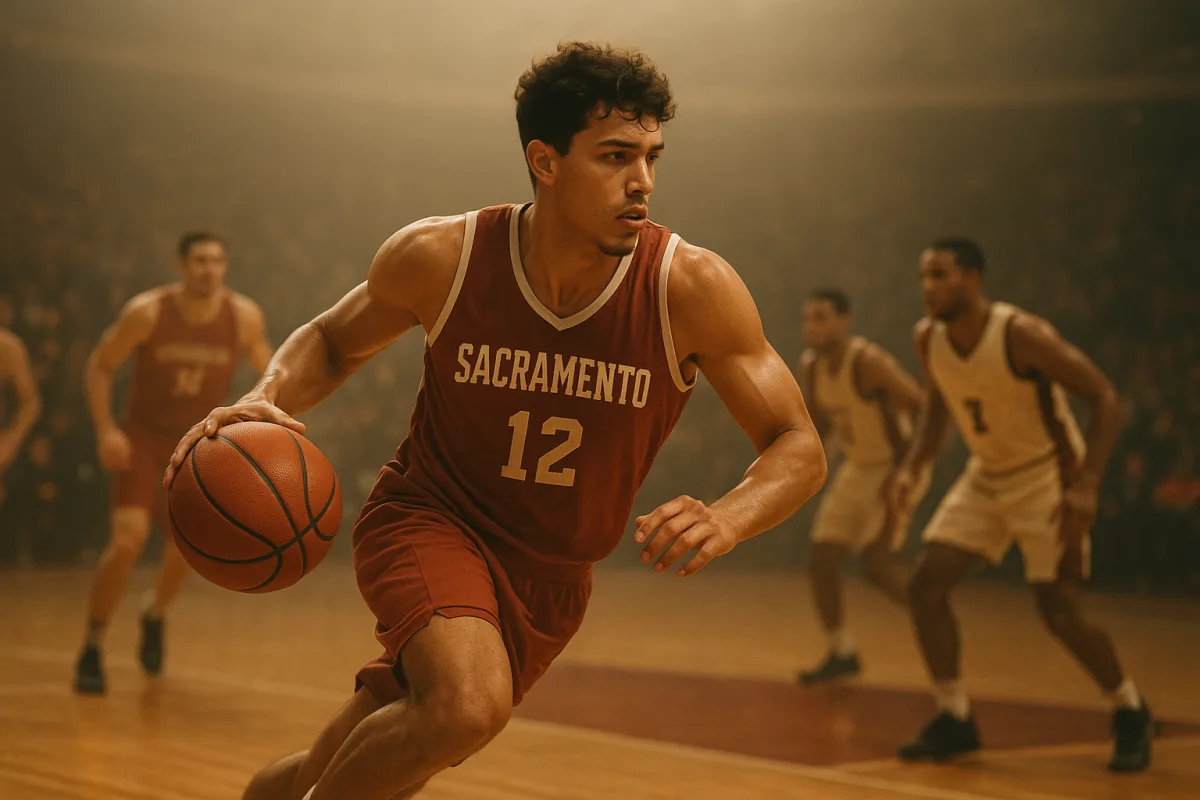
The rookie scoring board begins with Sacramento guard Darius Acuff Jr. He leads first-year players at 26.2 points per game, ahead of Caleb Wilson at 19.3 and AJ Dybantsa at 16.7. [1]
That lead tells you Acuff is carrying a major offensive role, not that he has solved every part of NBA offense. A rookie can score 26 points through difficult self-created attempts, transition chances, free throws, or efficient finishing. Those routes ask different questions.
Acuff is shooting 41.8% from the field, compared with 40.6% for Wilson and 43.3% for Dybantsa. [1] The figure is a starting point, because field-goal percentage blends threes, pull-ups, runners, and shots at the rim into one number.
Use the right name before evaluating the player
The Sacramento rookie is Darius Acuff Jr. There is no NBA player named Darius Aiyukoff, despite that name appearing in online commentary. Keep that correction in mind before repeating viral numbers or attaching another player’s record to Acuff.
Mike Korzemba’s discussion of Acuff centers on the familiar argument around high-usage rookies on losing teams. The useful part is the question beneath the noise: can he turn possessions that begin as his scoring chances into efficient team offense?
We would not label Acuff an empty-calorie scorer from points per game or team record alone. A young guard with the ball constantly in his hands will make visible mistakes, especially when the surrounding offense has few easy release valves.
Separate volume from shot quality
Start each Acuff game by watching his first six to eight half-court possessions. Mark whether he is getting into the lane off a screen, attacking a tilted defense, or settling for a contested pull-up before the defense has moved.
A 22-shot night can be productive if the attempts include rim pressure, kickout passes, free throws, and late-clock bailouts. It becomes a warning sign when the same possession repeatedly ends with a difficult jumper over a set defender.
The percentage matters less than the sequence. If Acuff beats the first defender, forces the low man to step up, and finds a corner shooter or diving big, he has created a good possession even if the box score gives him no assist.
Watch Acuff’s second read
Acuff’s early scoring profile makes his second read the next development marker. Defenses will increasingly send help early, chase him over screens, and place a second defender near the paint when he turns the corner.
Look for the pass after the first help defender commits. That may be a pocket pass to the screener, a skip pass to the weak-side wing, or a quick swing that lets a teammate attack a rotating defense.
Korzemba highlighted possessions in which Acuff used hesitation dribbles and changes of pace to create passing windows. That is the film trait we would monitor, because it travels better than a single hot shooting stretch.
Do not invent a defensive verdict on Acuff
There are not published defensive impact figures available for Acuff Jr. that allow a full comparison with his rookie peers. That leaves a real gap, particularly for a lead guard who will be targeted in pick-and-roll until he proves otherwise.
You can still watch the work. Track whether he gets back in transition, stays attached when screened, tags rollers on time, and rotates out to shooters under control. Those are possession-level habits, not a catchall reputation.
Avoid declaring that Acuff is either a defensive liability or secretly strong based on a few steals. Steals measure disruption, but they can also come from gambling. Blocks reveal little about a smaller guard’s screen navigation or off-ball positioning.
Check Flagg’s scoring menu before his highlights
Dallas forward Cooper Flagg gives you a different evaluation problem. He already produced 21.0 points, 6.7 rebounds, and 4.5 assists per game while winning the 2025-26 Kia NBA Rookie of the Year award. [3]
His second season has brought stronger overall scoring efficiency. Flagg is at 23.5 points per game on 46.9% shooting from the field and 88.5% at the foul line. [2] Those numbers point to a scorer finding cleaner routes to points.
The highlight plays matter, especially when he finishes through traffic or makes a late defensive stop. But begin with how he reaches the paint: post seals, transition pushes, cuts, closeout attacks, and pick-and-rolls each reveal a different tool.
Test Flagg’s outside shot honestly
Flagg’s three-point shooting remains the pressure point. He made 72 of 244 threes, 29.5%, as a rookie, then opened this season at 17 of 62, or 27.4%. [2]
That decline does not erase his progress, because his field-goal and free-throw numbers have improved. It does change how opponents can defend him. A defender willing to duck under a ball screen can crowd his driving lanes and station more help near the rim.
When watching Dallas, note whether Flagg punishes that space with a confident catch-and-shoot attempt, gets downhill before the help is set, or uses a re-screen to change the angle. We would focus on those decisions before worrying about one make or miss.
Track how Flagg handles physical coverage
Flagg’s second year is also about the NBA’s physicality. Teams now have a full season of tape and can use stronger wings to deny his catches, bump him off driving lines, and test his balance on post-ups.
NBA.com identified his sophomore season as one of the league’s key young-player storylines, while projections placed him around 24.2 points, 5.7 rebounds, and 6.4 assists across 70 games. [3][4] The assist projection is especially revealing.
A forward becomes far harder to load up against when he can read the low-man rotation and create an open three or dunk for a teammate. That is where Flagg’s growth can reduce the burden of needing a difficult shot every trip.
Credit the playmaking and defense separately
Do not fold Flagg’s passing, scoring, and defense into one vague claim that he is “complete.” Give each skill its own evidence. A strong pass to a corner shooter proves a read, while a weak-side block proves timing and rotation.
Hoop Dungeon emphasized Flagg’s ability to affect games through assists, steals, and blocks as well as points. The specific totals in a single game can fluctuate, but the broader point is sound: his defensive activity expands Dallas’s lineup options.
A bigger forward who can handle the ball, make the extra pass, and defend multiple matchups lets a coaching staff play faster or switch more frequently. That value shows up in the possessions around the points, not only in the final scoring line.
Put team context beside every young-player stat
Dallas asked Flagg to carry unusual responsibility after the Luka Dončić trade, and his rookie workload came on a team that finished 26-56. [3] That context explains opportunity, but it should not become an excuse for every inefficient possession.
Flagg has also worked with Kyrie Irving on skill development entering his second season. [7] Watch for evidence in his footwork, pace, and passing angles, rather than assuming an offseason partnership automatically fixes a weakness.
The same rule applies to Acuff in Sacramento. A poor team record can make a rookie’s mistakes louder, while a strong veteran roster can hide them. Use lineup context to explain a role, then return to the possession to judge the decision.
Ignore the false choice between hype and dismissal
TheRealMindCrime video framed Flagg’s early success as a rebuttal to skepticism, but the better approach is less dramatic. A 19-year-old can be ahead of schedule and still have a jump shot, strength, and coverage-reading problem to solve.
Mavs Moneyball has similarly described Flagg’s second-year work as unusually advanced for his age. [5] We agree with the direction of that evaluation, while keeping the standard clear: sustained creation against prepared defenses is the next test.
For Acuff, the comparison should not be whether he resembles a past star after 10 or 20 games. Watch whether his efficiency rises as his reads expand. For Flagg, watch whether defenders must guard him above the screen.
Add the next pipeline names to your list
The next wave begins before players enter the league. Adan Diggs, a five-star 2027 prospect from Millennium High School, committed to Arizona and is ranked No. 6 nationally in his class. [6][8]
Arizona gives Diggs a program with a clear opportunity to sharpen the parts NBA teams will study later: on-ball processing, decision-making against college pressure, and whether his scoring translates without monopolizing possessions. Draft projections have not been established.
Cayden Daughtry, a five-star point guard ranked No. 3 in the 2027 class, committed to Arkansas and coach John Calipari. [9] His fit is worth monitoring because Arkansas has recently assembled elite recruiting classes and will place young guards in high-leverage roles.
Do not turn either commitment into a draft promise. Put Diggs and Daughtry on a future watch list, then look for the same signs that matter with Acuff and Flagg: scalable scoring, decisive passing, and defensive habits that survive tougher competition.
Frequently Asked Questions
How do NBA rookies develop their scoring and passing skills?
Rookies like Darius Acuff Jr. develop scoring by creating their own shots through drives, pull-ups, and free throws, while also learning to read defenses to find passing opportunities after drawing help defenders. Watching their decisions in the first several possessions reveals whether they can convert scoring chances into efficient team offense by making timely passes to open teammates.
What are key indicators of rookie player growth in the NBA?
Key indicators include improvements in scoring efficiency, the ability to create quality shot opportunities rather than just volume, and developing a reliable second read, such as passing after drawing defensive help. For example, Cooper Flagg’s increased field-goal and free-throw percentages alongside his ability to finish through traffic signal real progress.
How can we analyze the efficiency of NBA rookies beyond scoring?
Efficiency analysis involves looking at shot quality and sequence rather than just points per game or field-goal percentage. Observing whether a rookie creates good possessions by beating defenders, drawing help, and finding open shooters or driving lanes provides a fuller picture of their offensive impact.
What challenges do NBA rookies face in their second season?
Second-year players like Cooper Flagg face increased physicality from opponents who now have a full season of tape to defend them. They must adapt to stronger defenders who deny catches, bump them off driving lanes, and test their balance, requiring improved decision-making and skill refinement.
How do young NBA players improve their decision-making on offense?
Young players improve decision-making by developing their second read, recognizing when to pass after the initial defender commits help. This includes making pocket passes, skip passes, or quick swings to teammates to exploit defensive rotations, which helps turn individual scoring attempts into efficient team possessions.
How we researched this
This article was assembled from 3 video sources across 3 channels, 2 published articles, 9 cited references.
Nothing here is based on hands-on testing. Where a figure or finding appears, it belongs to the source cited beside it, and the writing says so rather than implying otherwise. Every source is listed below so you can check it.
Sources
The NBA’s Worst Team Might Have Accidentally Found A Superstar, Mike Korzemba
The MEDIA Actually DOUBTED Cooper Flagg?, TheRealMindCrime
We Need To Talk About Cooper Flagg, Hoop Dungeon
5-Star Point Guard Cayden Daughtry Commits To Arkansas, RealGM
NBA Rookie of the Year Race 2026-27: Rookie Stats and Leaders
10 games to watch: Cooper Flagg’s sophomore NBA season | NBA.com
Cooper Flagg Fantasy Basketball Stats 2026-27, SF/PF, DAL | Smart Draft Board
What Mavericks forward Cooper Flagg is doing in year two isn’t normal | Mavs Moneyball
Arizona lands commitment from nation's No. 6 recruit Adan Diggs - Arizona Sports
Cooper Flagg Reveals 3 Things He's Worked on Entering Second Season With Mavericks
Millennium basketball star Adan Diggs announces college commitment - Yahoo Sports
Watch Rising NBA Rookies and Young Talent Spotlight on Youtube
Also from the sources
Related Articles
Darius Acuff Jr. Rookie Season Analysis: A Polarizing Start
Explore Darius Acuff Jr.'s rookie season analysis, usage rate, scoring, and playmaking in Sacramento's 2026-27 NBA campaign.
Rising NBA Talent: Evaluating and Developing Young Players
Explore how rising NBA talent is evaluated and developed, focusing on skills, roles, and growth beyond stats and height.
AJ Dybantsa NBA Rookie Usage and Early Performance Analysis
Explore AJ Dybantsa's NBA rookie usage and why his strong start hasn't translated to major spotlight yet.

NBA Preseason Player Performances and Game Highlights
Explore NBA preseason player performances and game highlights with analysis of rookies, rotations, and team strategies from 2026 games.