
Philadelphia 76ers Early Season Performance and Player
Analyze the Philadelphia 76ers' early season performance and player roles, focusing on Maxey, Brown, James, and team offensive strategies.
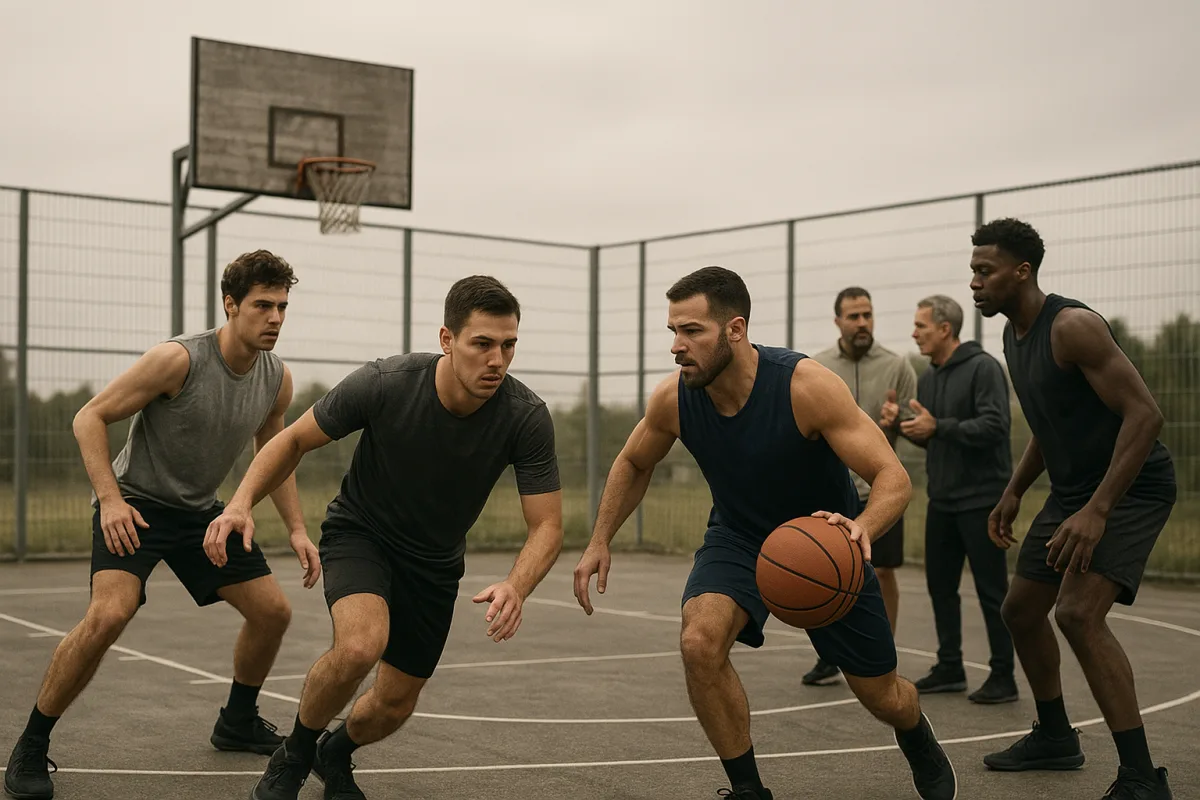
Philadelphia 76ers early-season film review: Which offensive hierarchy best fits the new core?
The quick list
- Best overall: The Maxey-led pace attack, for a Sixers team that needs one clear organizer without reducing Brown, James or Joel Embiid to spectators.
- Best value: The Brown wing-pressure model, for lineups that need a direct scorer who can attack a tilted defense without requiring every possession to begin with a high screen.
- Best for small spaces: The LeBron-Embiid control game, for late-clock possessions when Philadelphia can accept slower tempo in exchange for matchup hunting and interior passing.
The decision is not who gets the most touches
Philadelphia does not need to decide whether it is “Tyrese Maxey’s team,” “Jaylen Brown’s team” or “LeBron James’ team.” That framing misses what the first two games actually showed. The useful question is which player starts each type of possession.
The 76ers have enough high-usage talent that an equal-opportunity offense can become a nobody-creates-advantage offense. Cleveland’s first half was the warning. Philadelphia often watched the first action develop, waited for someone else to break the defense, then arrived late to the next read.
Brown described that problem after the comeback. He pointed to spacing, drive timing, cutting decisions and the need to know when not to drive as areas still being worked out. [2] Those are not vague chemistry clichés. They are the details that decide whether four stars look interconnected or merely take turns.
The good news is that the second half against Cleveland offered a cleaner template. Philadelphia played faster after stops, got into actions earlier, and used Brown as an attacker rather than a stationary release valve. Maxey’s ball pressure and pace created cracks, then Brown ran through them.
That distinction matters. A Brown isolation and a Brown attack are not the same possession. An isolation asks him to manufacture an edge against a set defense. An attack lets him receive after the defense has already been shifted by Maxey’s penetration, James’ advance pass or Embiid’s post gravity.
Comparison table
| Offensive option | Best initiator | “Price” of the approach | Size and matchup value | Layout on the floor | Main trade-off |
|---|---|---|---|---|---|
| Maxey-led pace attack | Tyrese Maxey | Reduces deliberate post and isolation volume | Smaller lead guard, but creates speed mismatches before the defense is set | Maxey high, Brown cutting or screening, James as connector, Embiid trailing or occupying the dunker spot | Requires disciplined transition defense and quick decisions from everyone else |
| Brown wing-pressure model | Jaylen Brown | Costs some Maxey on-ball reps and asks Brown to make more reads | Strong wing can absorb physical switches and punish smaller guards | Brown at the elbow or slot, Maxey relocating, James as second-side passer, Embiid spaced or screening | Can become predictable if Brown sees loaded paint without weak-side movement |
| LeBron-Embiid control game | LeBron James and Joel Embiid | Slows pace and limits open-floor chances | Largest playmaking and screening combination, especially against smaller units | James handling above the break, Embiid screening or posting, Brown as cutter, Maxey as movement shooter | LeBron’s early shooting has been inconsistent, and static possessions can crowd Brown and Maxey |
| Embiid defensive-anchor model | Joel Embiid, indirectly | Embiid sacrifices some scoring volume and carries more defensive responsibility | Philadelphia’s only true big defensive fulcrum in many preferred groups | More four-out spacing, with Embiid near the rim defensively and as a short-roll or post hub offensively | Depends on Embiid’s availability, mobility and willingness to defend in space |
The “price” here is not a literal purchase price. This is a roster-construction problem, and the only confirmed monetary number that changes the pressure is James’ $58.1 million 2026-27 salary. [3] A team paying that level of salary cannot use him as a ceremonial fifth option, but it also cannot ask him to recreate a peak-volume scoring role.
Best overall: Maxey-led pace attack
CBS Sports’ early read is sensible: Maxey should lead Philadelphia in scoring and operate as its primary offensive engine. [7] That does not mean every possession must be a Maxey pick-and-roll. It means the offense should begin with his speed often enough that opponents have to make their first defensive decision while moving backward.
Against Cleveland, the comeback began to look different when Philadelphia stopped trying to solve everything with static star possessions. Maxey advanced the ball with intent, got downhill, and put Cleveland’s bigs into retreat. That gave Philadelphia a chance to use its other stars as second and third actions.
The best version of this layout puts Brown in motion before he catches. Brown’s value rises when he can make a defender choose between cutting off his first step and staying attached to a shooter or cutter. The tape from FreeDawkins’ Cavaliers highlights showed Brown making the most damage after Philadelphia generated a steal, pushed ahead, or forced a recovery.
This is also the lineup structure that best uses James without requiring his jumper to carry the offense. James shot 38.5% from the field in the opener, then 25.0% against Cleveland. [1] The decline is too sharp to treat his early scoring as stable, and the available reports even disagree on whether he scored 14 or 17 points against New York. [1][10]
The better read is that James can still change a possession before he shoots. He hit ahead in transition, found cutters, fed Embiid inside and added physical rebounding. Those plays do not require him to win a one-on-one matchup from a standstill, and they reduce the burden on his current scoring efficiency.
Best value: Brown as the pressure release
Brown is the most important variable in Philadelphia’s new hierarchy because he is the player most likely to be misused. If he spends whole possessions waiting in the corner while James and Embiid work two-man actions, the Sixers will have paid a major opportunity cost in offensive force.
That concern is not theoretical. In the early national conversation, Charles Barkley argued that Maxey and Brown should be Philadelphia’s two central players, with James and Embiid functioning as elite complements. That is an opinion, not a settled fact, but the first two games offer some support for its basketball logic.
Brown’s postgame comments after Cleveland were revealing. He said he was still learning when to take his opportunities and working to earn trust within a new group. [2] That is a reasonable early-season answer, but it also describes a real tactical challenge: Brown must know when to wait, and the team must know when not to make him wait.
His confirmed 21 points against Cleveland should not be treated as proof that the hierarchy is solved. Detailed Brown data from the Knicks opener and preseason is unavailable, so there is no honest way to build a broad efficiency profile from two games. What can be said is that his Cleveland scoring came with useful variety.
Brown scored through straight-line drives, ran into space after turnovers, and attacked from the wing when the defense had already shifted. That is the version Philadelphia should cultivate. He does not need to be the point guard, but he should receive enough early-clock touches to make the defense account for his strength and first step.
The trade-off is decision-making. A Brown-led wing attack works only if the weak side stays active. If Maxey stands, James watches and Embiid occupies the same side of the floor, defenses can load bodies into Brown’s driving lane and live with difficult pull-ups.
Best for small spaces: the LeBron-Embiid control game
There will be games when Philadelphia needs to slow down. In those moments, the James-Embiid pairing remains the roster’s most imposing half-court option. A LeBron screen for Embiid, an Embiid screen for LeBron, or a post entry followed by a James cut all force a defense to choose which physical advantage it can tolerate.
The problem is not whether that duo can create a decent shot. It can. The problem is what happens to the other two primary creators while that action unfolds. Maxey can shoot off the ball, with a 37.7% career three-point mark cited by CBS Sports, but his speed is most destructive when he has a runway. [7]
Brown presents the tougher fit. He can cut off the strong side or occupy the weak-side slot, but neither role should become permanent. A packed paint is particularly dangerous when James is not punishing defenses from outside and Embiid is operating near the lane.
Philadelphia should therefore reserve this package for specific matchups and late-game needs. Use it against switching defenses that give James a smaller defender, against teams without a credible Embiid matchup, or after timeouts when the staff can prescribe the spacing precisely.
The tape-based concern is that slow LeBron possessions can turn into spectator possessions. That is not a criticism of James’ ability. It is an argument for role sequencing. He can be the closer without needing to be the opener.
Embiid remains the structural question
The most important Sixer may still be Embiid, not because he must lead the team in shots, but because he determines what Philadelphia can defend. The public preseason baseline was uneven: 18.5 points, 9.0 rebounds and 3.5 assists per game on 38.7% shooting across five games. [9]
Those numbers should not be used as a projection. Preseason usage and intensity are too unstable for that. They do, however, fit the visual evidence from Cleveland, where Embiid was still finding his balance and rhythm before making key late possessions count.
Embiid has said he wants to prioritize defense and return to an All-Defensive level, believing that change would reshape the team. [7] That is the correct emphasis. Philadelphia can survive a few lower-volume Embiid scoring nights if Maxey and Brown have room to attack. It cannot easily survive if Embiid cannot anchor the paint.
This is where the chemistry discussion becomes practical. Six new players, including James and Brown, create a large learning curve. [2][4] The team does not need a single emotional leader or a single scorer. It needs agreement on who runs after a stop, who cuts when Embiid posts, and who takes the first difficult defensive assignment.
Expectations are high, but the market has left room for failure
Philadelphia’s projected win total sits between 49.5 at BetMGM and 50.5 in another published market assessment. [5][11] That one-win discrepancy is minor. The more meaningful point is that oddsmakers see the Sixers as a 50-win-caliber team, not an automatic Finals entrant.
The title price around +900 and Eastern Conference price around +375 make similar sense. [7] The roster’s top-end talent is obvious, and a 2-0 start provides early evidence of resilience. The 29-point Cleveland comeback was not ordinary, particularly for a newly assembled group.
But comebacks are not a sustainable offensive system. Brown said as much after the game, noting that Philadelphia cannot expect to recover from poor first halves every night. [2] The Sixers’ next step is not another dramatic win. It is a normal, organized 48 minutes.
Who each option suits
The Maxey-led pace attack suits Philadelphia’s standard identity. It best leverages the roster’s athleticism, keeps James involved as a passer and transition organizer, and gives Brown driving opportunities before defenses construct a wall.
The Brown wing-pressure model suits matchups with smaller guards or switch-heavy defenses. It gives Philadelphia a physical downhill scorer without asking him to create every advantage from scratch, especially if Maxey and James keep moving around him.
The LeBron-Embiid control game suits late-clock situations and specific matchup advantages. It should be a closing package, not the full-season default, because slower possessions can compress the floor and mute Maxey’s best skill.
The Embiid defensive-anchor model suits every version of the team. If Embiid protects the rim, rebounds and holds up in coverage, Philadelphia can afford a more flexible offensive hierarchy. If that foundation slips, no amount of star power guarantees clean possessions.
Frequently Asked Questions
How have the Philadelphia 76ers performed in the early 2026-27 season?
The 76ers started the season 2-0, including an opening-night win over the Knicks and a notable 29-point comeback victory against the Cavaliers. However, the Cleveland game revealed some ongoing issues with spacing, timing, and turnovers that the team is still working to resolve.
What offensive strategies are the 76ers using with their new core?
Philadelphia employs three main offensive hierarchies: a Maxey-led pace attack that emphasizes speed and early action; a Brown wing-pressure model that focuses on direct scoring and attacking a tilted defense; and a LeBron-Embiid control game designed for slower, matchup-focused possessions. Each approach balances different strengths and trade-offs to fit the talents of Maxey, Brown, James, and Embiid.
Who leads the Philadelphia 76ers' offense in the 2026-27 season?
Tyrese Maxey is favored as the primary offensive engine and pace-setter for the team. He initiates many possessions and creates opportunities for teammates like Jaylen Brown and LeBron James, who play complementary roles rather than monopolizing the offense.
How do Tyrese Maxey, Jaylen Brown, and LeBron James fit into the 76ers' offense?
Maxey serves as the main ball-handler and pace driver, creating cracks in the defense. Brown functions as the main downhill finisher, attacking after defenses have been shifted by Maxey or others. LeBron James fills gaps between possessions, facilitating ball movement and transition but with less emphasis on initiating offense, partly due to his uneven early shooting efficiency.
What are the strengths and weaknesses of the 76ers' early season play?
Strengths include the team's ability to mount comebacks and leverage multiple high-usage players to create varied offensive looks. Weaknesses involve unfinished spacing and timing, occasional passive offense where players wait for others to create, and LeBron James’ inconsistent shooting percentages, which dropped from 38.5% to 25.0% in the first two games. These issues highlight ongoing chemistry and decision-making challenges.
How we researched this
This article was assembled from 5 video sources across 3 channels, 7 published articles, 11 cited references.
Nothing here is based on hands-on testing. Where a figure or finding appears, it belongs to the source cited beside it, and the writing says so rather than implying otherwise. Every source is listed below so you can check it.
Sources
LeBron James and Jaylen Brown FULL Debut Highlights in 76ers Win vs Knicks — Chaz NBA
Philadelphia 76ers vs Cleveland Cavaliers Full Game Highlights | Oct 22, 2026 | FreeDawkins — FreeDawkins
Shaq and Chuck argue how important Embiid is & if he's 76ers 2nd best player — Chaz NBA
Sixers / Knicks Opening Night. AOH 's Full Breakdown | First Quarter — Angry Old Hoops Fan
76ers/Cavs Postgame: LeBron James, Jaylen Brown Reactions | Oct 22 — FreeDawkins
NBA player props, odds, picks, lines: Victor Wembanyama, Stephen Curry part of best bets for Friday — CBS Sports NBA
NBA Sure Things: Three days into the new season, these nine things feel like guarantees — CBS Sports NBA
Use DraftKings promo code to get $200 bonus, free NBA League Pass for Rays-Brewers, World Series Game 1, NBA — CBS Sports NBA
Use BetMGM bonus code CBSSPORTS to get $1,500 bonus bets for Rays-Brewers World Series Game 1, Knicks-Celtics — CBS Sports NBA
2026 NBA betting promos: Get over $3,000 in bonuses from top online betting apps, sportsbooks for Oct. 23 — CBS Sports NBA
2026 NBA odds, picks, predictions, best bets, player props: Experts, model backing Spurs, more on Friday — CBS Sports NBA
Knicks vs. Celtics prediction, odds, betting preview, start time: NBA picks, best bets on Friday, Oct. 23 — CBS Sports NBA
LeBron James builds 76ers chemistry for 2026-27 title run | News Minimalist
NBA 2026/27 Predictions: Season Preview, Best Bets & Title Contenders | Oddschecker
Philadelphia 76ers 2026-27 Season Preview: LeBron James, Jaylen Brown & Fantasy Outlook
Joel Embiid (F-C) - Philadelphia 76ers NBA Stats & Averages 2026-27 | FTA
Watch Philadelphia 76ers Early Season Performance and Player Dynamics on Youtube
Also from the sources
Related Articles
Philadelphia 76ers Preseason Struggles and Player Dynamics
Analyze Philadelphia 76ers preseason struggles, key player performances, and evolving roster dynamics including Embiid, James, and Brown.
LeBron James 76ers Title Contention and Team Dynamics
Explore LeBron James' impact on the 76ers and their realistic title contention prospects for the 2026-27 NBA season.
LeBron James 76ers Preseason Impact and Team Dynamics
Explore LeBron James' 76ers preseason impact, his playing style, and how he influences team offense and Embiid's role.
Sixers Trade Activity and New Era in 2026 Season
Explore the Sixers' 2026 trade activity and new era, including key roster moves and strategy shifts around Embiid, Brown, and LeBron James.