Thunder Injury Crisis and Roster Challenges Explained
Explore the Thunder injury crisis, Jalen Williams' impact, and roster challenges amid salary cap limits and lineup adjustments.
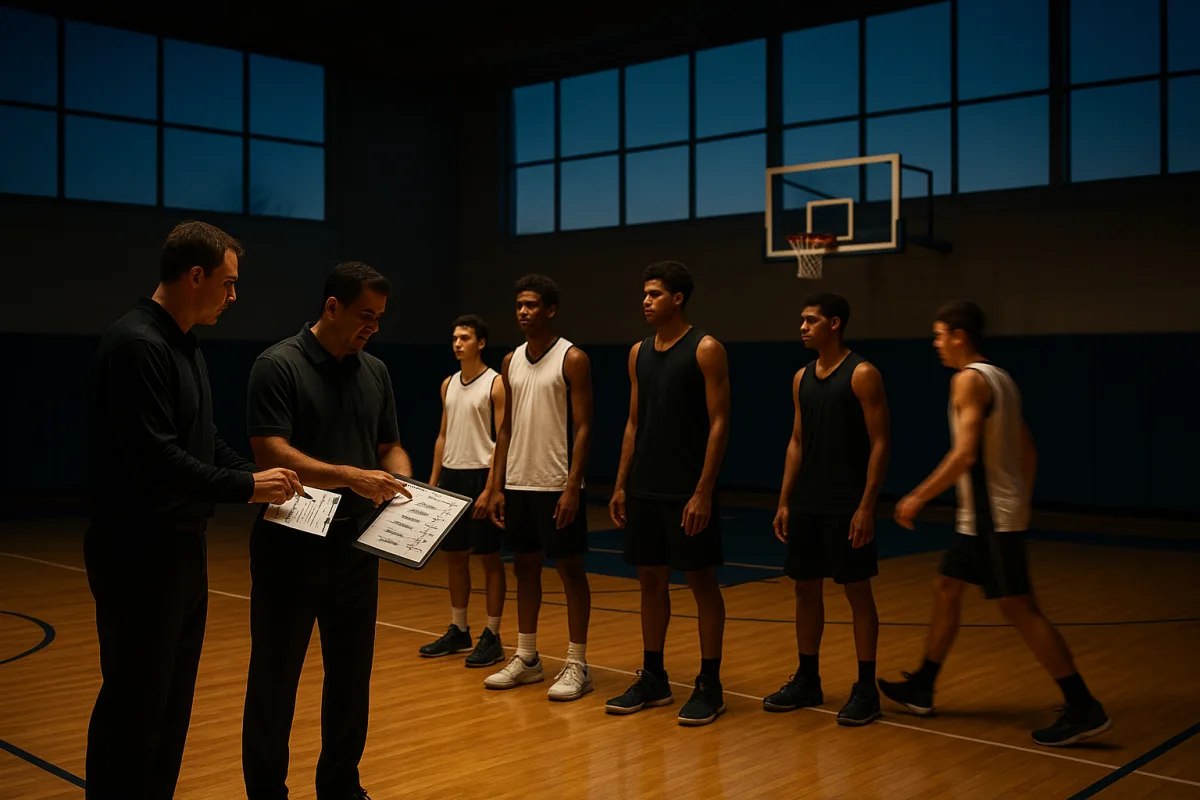
The shift is real: Oklahoma City is no longer insulated by depth
The Thunder’s roster question has changed quickly. This is no longer a team deciding how to distribute minutes among too many credible rotation players. It is now a contender trying to preserve its two-way identity after losing a player who made several lineup combinations work.
NBA.com confirmed that Jalen Williams suffered a fractured left fibula and dislocated left ankle, injuries requiring surgery. General manager Sam Presti has not offered a formal recovery timetable, so descriptions of a season-ending absence remain projections, even if they are reasonable ones. [1]
That distinction matters. A serious ankle dislocation and fibula fracture can plainly alter a season, but analysts should not turn an informed estimate into a team announcement. The Thunder know Williams will miss substantial time. The public does not yet know the precise endpoint.
The injury occurred in the third game of the 2026-27 season, according to Cadena SER’s reporting. That timing is especially disruptive because Oklahoma City has little new-season evidence showing which bench combinations can recreate Williams’ job on either side of the ball. [3]
The independent signals point in the same direction. NBA.com identifies the severity of the injury and the need for surgery, while salary-cap reporting shows that Oklahoma City has limited room to solve the problem through a straightforward purchase of replacement talent. [1][2][7]
That combination is the real trend. A championship-level team has lost a core connector, and the current collective bargaining agreement makes depth replacement less available precisely when the need becomes clearest.
What Jalen Williams changes on possessions
Williams’ 2025-26 line, 16.8 points, 4.8 rebounds and 5.6 assists over 24 games, tells part of the story. The more useful number is the assists, because it indicates how often he was asked to finish an advantage for someone else rather than merely finish his own possession. [1]
On tape, his value begins after Gilgeous-Alexander bends the defense. When the initial drive draws help, Williams is the player who can catch on the wing, attack the rotating defender, and make the next correct pass before the defense resets.
That is different from replacing 16.8 points with another 16.8 points. A spot-up shooter may preserve spacing. A reserve scorer may produce against second units. Neither necessarily handles the second-side decision that prevents opponents from loading two bodies toward Gilgeous-Alexander.
Williams also changes Oklahoma City’s defensive menu. A bigger wing who can switch, recover to shooters and take a turn on a high-level perimeter scorer allows the Thunder to avoid overusing smaller guards in unfavorable matchups.
Without him, the pressure moves elsewhere. Alex Caruso and Cason Wallace can take difficult point-of-attack assignments, but asking either to defend the opponent’s primary creator while also replacing Williams’ connective offense changes the workload, not just the depth chart.
The early concern around Wallace is separate and should remain separate. The available research does not establish a public injury diagnosis or recovery timeline for him, so any claim that Oklahoma City knows exactly when he will return goes beyond the confirmed information.
This is why the injury crisis is more than a headline about one star. If Williams is unavailable and Wallace’s status remains unclear, Oklahoma City risks losing both a large wing creator and a guard who helps make its aggressive perimeter defense sustainable.
Why last year’s depth is not a reliable comparison
A.M. Hoops and TheFlightMike both identify the same roster-level issue, even though their framing is more dramatic than the confirmed reporting supports. Oklahoma City’s previous depth does not automatically carry forward after offseason moves and new financial restrictions changed the available options.
The temptation is to say the Thunder won plenty of games without Williams before, therefore they can do it again. That skips the lineup question. Availability is not interchangeable when the surrounding wing group has changed and the payroll is more crowded.
A team can survive a missing star for stretches if it still has three or four players who can absorb the missing job. The job in this case includes secondary ballhandling, wing defense, transition decision-making and lineup versatility, which is a harder package to reproduce.
The relevant tape question is not, “Who scores in Williams’ place?” It is, “Which five-man group can still force a defense into rotation without giving up the switchability that has made Oklahoma City difficult to attack?”
One answer is more Gilgeous-Alexander on the ball, but that has a cost. It can simplify the offense into more high pick-and-roll possessions, allowing opponents to load the nail, top-lock shooters, and dare other Thunder players to create late in the clock.
Another answer is more frontcourt size. Isaiah Hartenstein alongside Chet Holmgren can create different offensive angles through screening and short-roll passing, while also reducing some rebounding strain. But bigger lineups can lose lateral coverage options against teams with multiple pull-up guards.
That is the central roster challenge. The Thunder are not looking for a player with Williams’ name-brand profile. They are trying to retain enough two-way optionality that a playoff opponent cannot target the replacement slot possession after possession.
The cap is a basketball constraint, not an accounting footnote
Oklahoma City’s salary structure limits the easy answers. NBA Salaries lists the Thunder at approximately $214.28 million in 2026-27 payroll, about $6.91 million below the $221.69 million second apron and roughly $5.76 million above the first apron. [2]
Being under the second apron is meaningful, but it does not mean the Thunder can operate normally. The club is already above the first apron, a position that removes access to the non-taxpayer mid-level exception and blocks sign-and-trade flexibility. [7]
The taxpayer mid-level exception remains available, up to roughly $6.1 million under the current framework described by AS. That can help fill a roster spot, but it is not a clean mechanism for acquiring a playoff-caliber wing who can replace Williams’ entire role. [7]
There is also disagreement in public payroll estimates. Legion Report places Oklahoma City closer to $221.9 million and estimates a tax bill around $32 million, while NBA Salaries has the team below the second apron. [2][4]
That discrepancy is worth stating rather than smoothing over. Public cap sites can differ on roster counts, options, incentives, timing and estimated tax calculations. The broad conclusion is sturdier than either single number: Oklahoma City has very little room for a careless move.
TheFlightMike’s broader point about future payroll pressure is directionally useful, but the immediate claim that Oklahoma City has only a tiny amount of usable salary space should not be treated as an official cap ruling. The team’s exact maneuverability depends on transaction structure.
What is clear is that the Thunder cannot simply aggregate contracts without consequences. Apron rules restrict trade matching and limit how teams move future first-round picks, reducing the number of ways a contender can turn excess draft capital into immediate rotation help. [7]
Trade speculation is running ahead of the evidence
The popular response to a contender’s injury is to name veterans. That is understandable, but it is not reporting. There is no confirmed list of Thunder trade targets, no finalized transaction, and no public indication that Oklahoma City has selected a single roster solution.
Russell Westbrook speculation is a useful example of the difference between an idea and a plan. AS reported that Presti publicly denied negotiations or an imminent plan to bring Westbrook back to Oklahoma City. [7]
That does not mean the Thunder will do nothing. It means the evidence currently supports patience more than a specific reunion narrative. A team with Oklahoma City’s draft inventory can call almost anyone, but calls are not transactions and assets do not erase apron restrictions.
The more plausible near-term path is internal sorting. Oklahoma City can test whether its current guards can handle larger offensive responsibilities, whether Caruso can survive more wing minutes, and whether Holmgren-Hartenstein groups can stabilize games where the perimeter creation thins out.
That evaluation process should happen before a panic trade. A deal that sends out a useful defender, a capable big, or long-term flexibility for a marginal replacement can make the team worse in the specific playoff series it is trying to survive.
What the Thunder should be watching now
The next stretch should be evaluated through lineup function, not just wins and losses. Watch whether opponents can keep Gilgeous-Alexander out of the paint by helping early from Oklahoma City’s least threatening creator, then recovering before the ball reaches the corner.
Watch the defensive matchups, too. If Caruso and Wallace, when available, are consistently assigned to bigger wings, Oklahoma City may be signaling that it lacks a clean Williams replacement. That can be manageable in November and decisive in a playoff series.
Also watch the closing groups. If Hartenstein and Holmgren frequently close together, it suggests the Thunder are prioritizing defensive rebounding and rim protection. If they close with more guards, it suggests the offense needs additional handling and shooting to function.
For a front office planning its own contender build, Oklahoma City’s situation is a useful warning. Depth is not merely the number of competent players on a roster. It is whether those players cover the same jobs when a core player disappears.
The Thunder still have elite top-end talent, major draft resources and multiple viable lineup shapes. But the evidence does not support pretending the Williams injury is routine, or that cap exceptions will automatically restore what his absence removes.
Frequently Asked Questions
What is the impact of Jalen Williams' injury on the Thunder?
Jalen Williams’ injury removes a key secondary creator who connected Shai Gilgeous-Alexander’s drives to the weak side and provided size on defensive switches. His absence affects both offense and defense, as he facilitated passing that prevented opponents from doubling Gilgeous-Alexander and allowed the Thunder to maintain versatile defensive matchups. The injury is severe, requiring surgery for a fractured fibula and dislocated ankle, and is expected to sideline him for a substantial part of the season.
How is the Thunder roster affected by recent injuries?
The Thunder face a significant loss of depth and versatility with Williams’ injury and the uncertain status of Cason Wallace. These injuries remove important wings and perimeter defenders who contribute to both offensive creation and defensive assignments. The team now must adjust rotations without clear evidence of which bench combinations can replicate the injured players’ roles.
What lineup changes can the Thunder make during the injury crisis?
Oklahoma City is expected to rely on internal lineup adjustments, including increased roles for Cason Wallace and Alex Caruso, as well as deploying more frontcourt-heavy groups. These changes aim to compensate for the loss of Williams’ unique skill set, though they alter the workload and defensive assignments rather than simply replacing players one-for-one.
Why can't the Thunder easily replace injured players via trade?
The Thunder’s salary cap situation restricts their ability to add replacement talent through trades. They are operating above the first apron and close to the second apron, losing access to some exceptions and trade mechanisms. This limits salary matching options and the ability to move future first-round picks, making straightforward trades or signings to replace injured players difficult.
What challenges does the Thunder face with the NBA salary cap amid injuries?
With a payroll around $214.28 million—above the $165 million salary cap and luxury tax line—the Thunder face a significant luxury tax bill and limited financial flexibility. Their position above the first apron restricts mid-level exceptions and trade capabilities, forcing the team to balance maintaining roster competitiveness with preserving future flexibility or accepting a larger tax burden to add players.
How we researched this
This article was assembled from 2 video sources across 2 channels, 7 cited references.
Nothing here is based on hands-on testing. Where a figure or finding appears, it belongs to the source cited beside it, and the writing says so rather than implying otherwise. Every source is listed below so you can check it.
Sources
The Thunder Have An Impossible Decision to Make — A.M. Hoops
The Thunder’s $200M Problem Just Got Worse — TheFlightMike
Thunder’s Jalen Williams has fractured leg, dislocated ankle and will need surgery | NBA.com
Thunder Payroll 2026-27: Every Player's Salary - Legion Report
Oklahoma City Thunder Salary Cap, Payroll, Depth Chart and Draft Picks | TheDraftDay
Oklahoma City Thunder salary cap questions, answered | Capmath
Watch Thunder's Injury Crisis and Roster Challenges on Youtube
Also from the sources
Related Articles
Knicks Contract Extension Issues and Team Dynamics Explained
Explore the Knicks contract extension issues, roster challenges, and how salary cap rules impact team dynamics and future moves.
Lakers Roster Challenges and Trade Options in 2026
Explore the Lakers' 2026 roster challenges, defensive issues, and trade options for a wing defender amid salary cap limits.
NBA Trade and Contract Updates for Stars and Teams 2026
Get the latest NBA trade and contract updates for 2026, including key player moves, team roster changes, and salary cap impacts.
Jaren Jackson Jr. Injury and Utah Jazz Frontcourt Challenges
Explore how Jaren Jackson Jr.'s injury impacts Utah Jazz's defense and frontcourt depth, plus potential adjustments during his 6-8 week absence.