
Jaren Jackson Jr. Injury and Utah Jazz Frontcourt Challenges
Explore how Jaren Jackson Jr.'s injury impacts Utah Jazz's defense and frontcourt depth, plus potential adjustments during his 6-8 week absence.
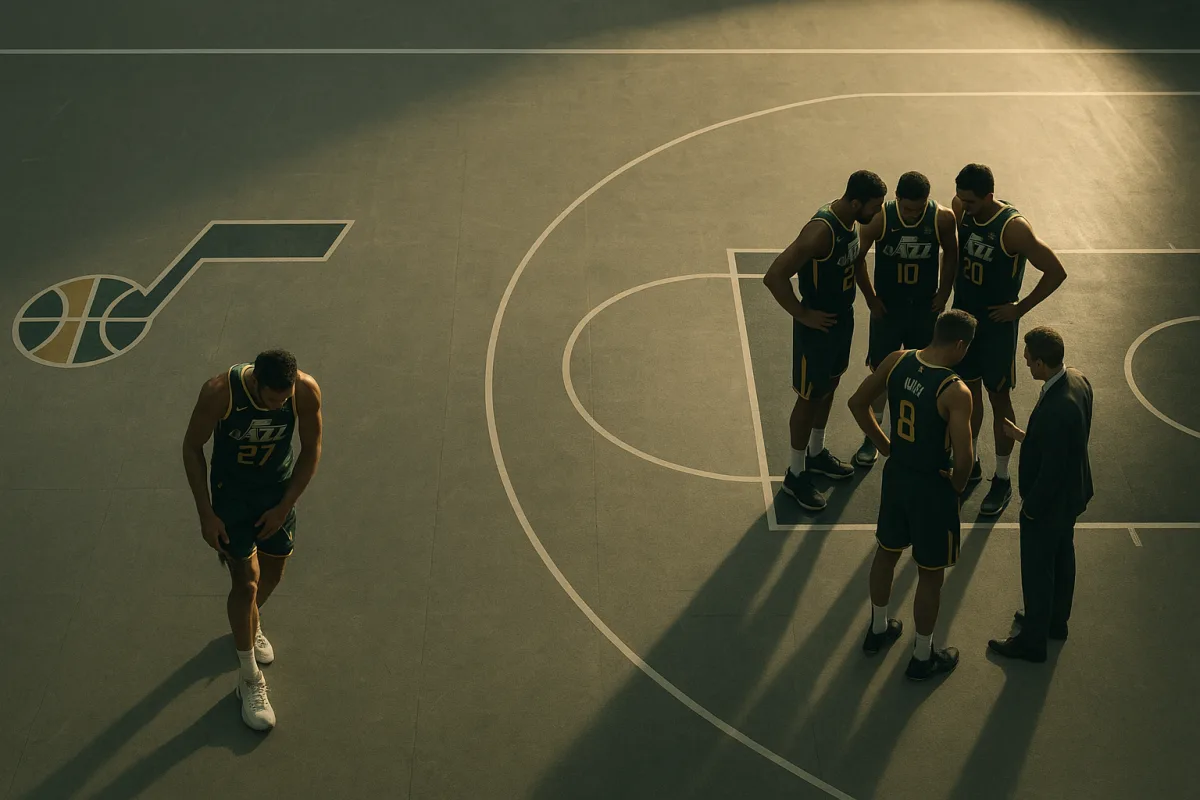
Jaren Jackson Jr.’s Absence Removes Utah’s Defensive Eraser
The missing job is weak-side rim protection
A team does not replace Jaren Jackson Jr. merely by inserting another tall player. It has to replace the job he performs after the initial defensive action has already broken down: arriving from the weak side to erase a drive.
NBA.com reported that Jackson injured his right knee in the first quarter of Utah’s October 26 loss to the Memphis Grizzlies. Lauri Markkanen also exited that game after injuring his right wrist, leaving the Jazz with two frontcourt problems on the same night. [1]
NBC Sports reported that Jackson has a torn MCL, will not need surgery, and is expected to miss six to eight weeks. The current plan includes reevaluation in roughly six weeks, which places a realistic return around or after Christmas. [5]
That timeline matters because an MCL injury can limit the lateral movement and bracing required for a defender whose value comes from covering ground. The Jazz cannot reasonably expect Jackson to return and immediately play his former roaming defensive role at full speed.
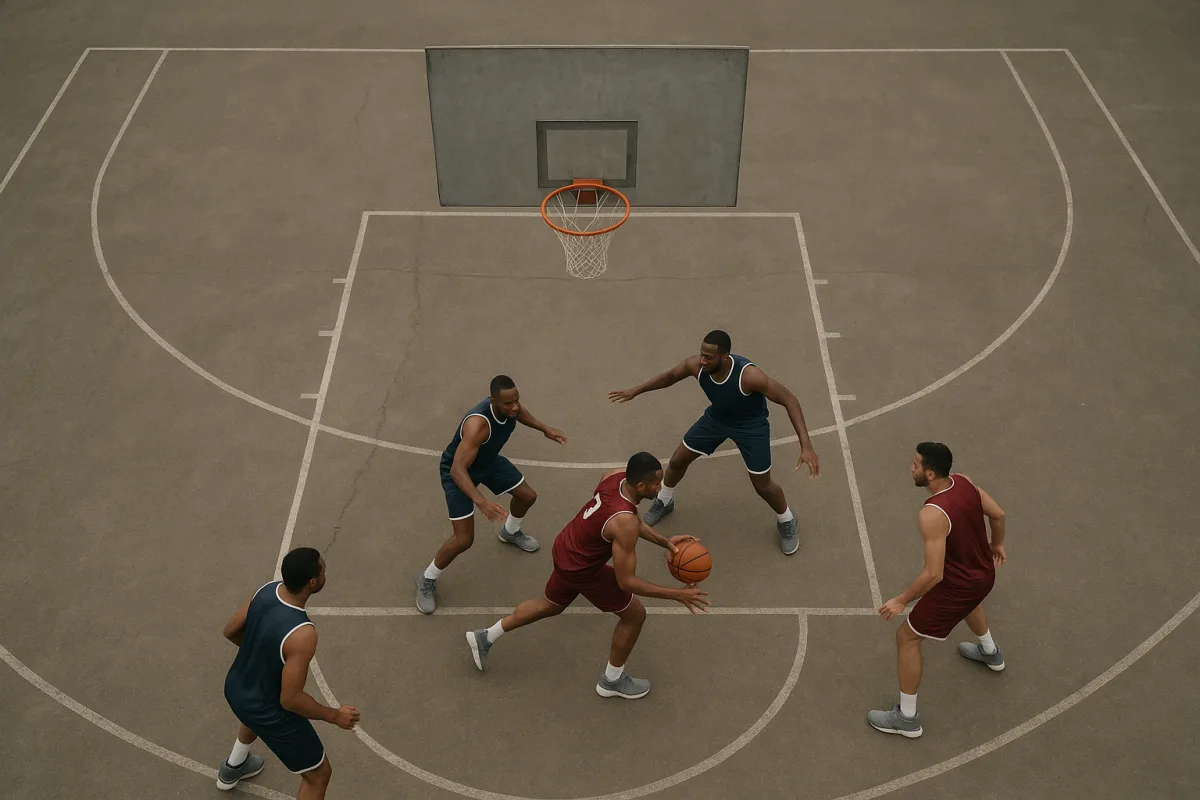
The useful way to understand Jackson’s absence is through a common possession. An opposing guard uses a high ball screen, Utah’s primary big contains the ball near the paint, and a second defender must protect the rim behind him.
That second defender is often called the low man. He begins on the weak side, usually guarding an opponent in the corner or along the baseline. His decision determines whether the defense gives up a layup, a lob, or a corner three.
Jackson has the length and timing to make that decision late. He can appear to remain attached to his own assignment, then rotate toward the restricted area when the ball-handler commits to the rim. That delay is the skill.
If the low man rotates too early, the offense fires the ball to the corner before the driver reaches the paint. If he rotates too late, the on-ball defender and center are left trying to contest a finish from disadvantage.
The best weak-side protectors bend the possession without fully breaking it. They show enough size at the rim to discourage a layup, then recover or force one extra pass, buying perimeter teammates time to rotate behind them.
Why a block is not the whole possession
A block is the visible endpoint of rim protection, not the entire process. The more important defensive outcome is often an altered drive, a pass thrown away from the basket, or a contested floater that never becomes a clean attempt.
That distinction matters for Utah because replacing Jackson’s shot-blocking total would not automatically replace his defensive effect. A reserve can record blocks while still arriving too early, surrendering corner threes, or failing to complete the possession with a rebound.
The Jazz’s present personnel problem makes those tradeoffs sharper. NBC Sports reported that Nurkić is also sidelined for at least another week with a partial plantar plate tear, while Markkanen’s wrist status remains uncertain after the Memphis game. [1][5]
When both a center and a power forward are unavailable, the remaining frontcourt players must take on jobs outside their ideal assignments. A backup center may need to defend in space, while a young forward may become the low man.
That is where the apparent depth problem becomes a coverage problem. Utah can field five players and still be short-handed if its bigs cannot simultaneously contain the ball screen, tag the roller, close the corner, and secure the rebound.
The center’s first responsibility in a conservative drop coverage is to stay between the ball-handler and the rim. He retreats toward the paint, discouraging the direct drive while trying to remain close enough to contest the screener’s roll.
The power forward or weak-side wing then has to tag the rolling big. A tag is a brief step toward the roller that prevents an uncontested lob, ideally without abandoning a shooter long enough to concede an easy three.
Jackson’s defensive usefulness comes from allowing Utah to use more ambitious versions of that structure. He can help at the rim without requiring the center to leave the paint, and he can recover with more reach than most forwards.
Without him, Utah may have to simplify. That can mean deeper drop coverage, less switching, fewer aggressive stunts at drivers, and more willingness to concede pull-up jumpers rather than expose an undermanned back line.
That is not necessarily poor coaching or passive defense. It is an acknowledgment that every coverage chooses a shot to live with. Jackson’s availability lets a team choose more aggressively because he reduces the cost of a missed rotation.
The replacements change what Utah can call
Mo Bamba is the most obvious available source of vertical rim protection. He posted 14 points, seven rebounds, and four blocks against Memphis, according to RotoBaller’s report on the Jazz’s injury situation. [2]
Those four blocks are encouraging, but they do not establish that Bamba can reproduce Jackson’s assignment flexibility. Bamba’s clearest defensive value is as a large target near the rim, contesting shots from a set position and deterring direct drives.
That can work if Utah asks him to play a narrower role. Keep him near the basket, have guards fight over screens rather than switch casually, and make the first pass beat the defense instead of asking Bamba to solve everything alone.
The cost is that opposing offenses can test the space around him. A ball-handler who gets downhill can force the center to commit, then spray the ball to shooters while Utah’s wings rotate from farther away than they would in a Jackson lineup.
Tony Bradley, added to the roster as a familiar center option according to Sports Illustrated’s Jazz reporting, gives Utah another large body for conventional center minutes. [7] His presence can help absorb fouls and protect the rotation from overextension.
But conventional size does not automatically recreate Jackson’s role either. The central question is whether Utah can keep a center at the rim while still having a mobile second big available to close the next gap.
Rookie forward Ace Bailey may receive more minutes because injuries create an opening, but increased opportunity is not the same as a finished defensive role. Basketball-Reference’s Utah roster listing underscores how quickly the Jazz’s available frontcourt options have narrowed. [6]
For a young forward, the difficult part is often not guarding his own man. It is recognizing when an opponent’s drive has become more dangerous than the shooter he is temporarily leaving, then rotating without losing track of the next pass.
That read gets harder when the center is also a reserve learning new teammates’ habits. Defensive communication is not abstract. One player has to call the screen, another has to identify the roller, and someone must declare who owns the corner.
Rebounding is the bill that arrives after help defense
Every aggressive rotation has a second cost: rebounding position. When the weak-side forward leaves his man to protect the rim, he may be out of place when the shot hits the rim.
Jackson’s absence therefore affects more than the first shot. If Utah’s low man rotates to cover a drive and Bamba contests at the basket, the remaining three defenders must find perimeter bodies before the ball comes off the rim.
This is why “gang rebounding” is more than a broadcast phrase. Guards and wings must rebound down rather than leaking into transition, because the bigs who usually collect the ball may be busy contesting or recovering from help.
The Jazz can survive some opponent jump shooting if they finish possessions. They cannot survive a pattern of late help, contested miss, offensive rebound, and second paint touch. That sequence places too much stress on depleted frontcourt depth.
It also explains why Utah cannot simply chase blocks. A block that lands in the opponent’s hands can function like a turnover in reverse, extending the possession while defenders are scattered and the offense already has the paint compromised.
Walker Kessler is the context, not the solution
The Walker Kessler trade looks more consequential during this stretch because it removed a young interior defender from Utah’s depth chart. Kessler is now producing for the Los Angeles Lakers, rather than serving as the Jazz’s stabilizing center. [3][4]
StatMuse listed Kessler at 16.7 points, eight rebounds, and three blocks per game through his first three Lakers games. [3] The Los Angeles Times also noted his 12-for-12 shooting performance on October 21. [4]
Those numbers are context, not proof that Utah could have solved every current problem by retaining him. Kessler is a center, while Jackson’s special value is the ability to function as a roaming power forward beside another interior player.
Still, Kessler’s strong start illustrates what Utah lacks most in the short term: a dependable possession-ending big. A center who protects the rim, controls the defensive glass, and requires fewer exotic rotations allows everyone else to play more naturally.
The Jazz traded Kessler for future draft compensation, a reasonable long-horizon asset decision if the organization values flexibility. But frontcourt injuries reveal the present-day cost of converting a known rim protector into future optionality.
Utah’s next six weeks are about reducing decisions
NBC Sports reported that Utah sits 1-4 and ranks 23rd defensively in the early season. [5] That is too small a sample to define a season, but it is enough to show why this injury cluster carries real urgency.
The immediate goal should not be to find a one-for-one Jackson substitute. There may not be one on the roster. The goal is to make each possession ask fewer difficult questions of Bamba, Bradley, Bailey, and Utah’s perimeter defenders.
That means tighter screen navigation from guards, clearer rules on when to tag the roller, and lineups that preserve at least one credible rim presence at all times. It may also mean tolerating more midrange attempts.
A depleted frontcourt can still defend if its five players are connected. It usually fails when every defender has to cover two responsibilities, the center is dragged into space, and the final rebound becomes an unclaimed ball.
Markkanen’s uncertain wrist availability raises the stakes because his return would restore scoring and size, but it would not replicate Jackson’s particular back-line role. NBA.com has not provided a specific recovery timetable for Markkanen. [1]
Utah’s season outlook therefore hinges on a narrow but important question: can it protect the rim by committee without surrendering the corner, the lob, and the offensive board on consecutive actions?
If the answer is yes, the Jazz can reach Jackson’s return without letting an early injury stretch define their season. If not, the standings damage will come less from missing blocks than from the possessions that never properly end.
Frequently Asked Questions
What is the impact of Jaren Jackson Jr.'s injury on the Utah Jazz defense?
Jaren Jackson Jr.'s torn right MCL removes Utah's most important weak-side rim protector, forcing the team to adjust how aggressively its perimeter defenders can pressure the ball. His absence weakens the second layer of frontcourt defense, already impacted by injuries to Jusuf Nurkić and Lauri Markkanen, making it harder to prevent paint touches, offensive rebounds, and open corner threes.
How long will Jaren Jackson Jr. be out with his MCL injury?
Jackson is expected to miss six to eight weeks with a torn right MCL. He will not require surgery and is scheduled for reevaluation in about six weeks, with a likely return around or after Christmas 2026.
Who replaces Jaren Jackson Jr. in the Jazz frontcourt?
Mo Bamba is expected to take on a larger role in the frontcourt during Jackson's absence, providing vertical rim protection in short bursts. The Jazz have also added Tony Bradley and will increase rookie Ace Bailey's minutes to help cover the frontcourt rotation.
How does Jaren Jackson Jr.'s absence affect Utah Jazz rim protection?
Without Jackson, the Jazz lose a defender who excels at weak-side rim protection, arriving late to erase drives while allowing perimeter defenders to pressure the ball more aggressively. His replacements cannot replicate his ability to defend multiple roles on one possession, increasing the risk of conceding layups, lobs, and open corner threes.
What defensive adjustments can the Jazz make without Jaren Jackson Jr.?
The Jazz will need cleaner pick-and-roll coverage and more committed gang rebounding to compensate for the loss of Jackson's defensive versatility. They must rely on conservative drop coverage by the center and careful tagging of rolling bigs by forwards, but these adjustments are less effective without Jackson's length and timing.
How we researched this
This article was assembled from 8 published articles, 7 cited references.
Nothing here is based on hands-on testing. Where a figure or finding appears, it belongs to the source cited beside it, and the writing says so rather than implying otherwise. Every source is listed below so you can check it.
Sources
Jazz big man Jaren Jackson Jr. to reportedly miss 6-8 weeks, which stings even more after Walker Kessler move — CBS Sports NBA
Winners and losers of NBA's first week: Giannis' Heat are ice cold, OKC injuries and new-look wonders — CBS Sports NBA
Rockets Make Alperen Sengun Injury Announcement After Concerning Incident — Heavy.com
Jalen Williams receives support from NBA, Oklahoma City after gruesome injury — The New York Times
Concerning Kawhi Leonard Injury Update Doesn't Drop Raptors' NBA Finals Odds for 2026-27 Season — Sports Illustrated
Raptors' Kawhi Leonard out weeks due to knee, sources say — ESPN
How to watch Portland Trail Blazers vs Los Angeles Lakers: TV/live stream info for tonight's game — NBC Sports
Kawhi Leonard is out with swelling in left knee, will be re-evaluated in one week — NBC Sports
Lauri Markkanen Exits with Right Wrist Injury - NBA News | Fantasy Basketball
Walker Kessler's Lakers debut couldn't have gone much better - Los Angeles Times
Jazz big man Jaren Jackson Jr. reportedly out 6-8 weeks with torn MCL - NBC Sports
2025-26 Utah Jazz Roster and Stats | Basketball-Reference.com
Utah Jazz Fill Final Roster Spot With Familiar Face at Center
Related Articles
Thunder Injury Crisis and Roster Challenges Explained
Explore the Thunder injury crisis, Jalen Williams' impact, and roster challenges amid salary cap limits and lineup adjustments.
Yaxel Lendeborg Warriors Rookie Faces Criticism Amid
Explore Warriors rookie Yaxel Lendeborg's defensive struggles and Steve Kerr's critique amid Golden State's early season challenges.
Lakers Roster Challenges and Trade Options in 2026
Explore the Lakers' 2026 roster challenges, defensive issues, and trade options for a wing defender amid salary cap limits.
NBA Eastern Conference Outlook and Knicks' Position
Explore the NBA Eastern Conference outlook and the New York Knicks' position as they defend their title in the 2026-27 season.