
Lakers Roster Challenges and Trade Options in 2026
Explore the Lakers' 2026 roster challenges, defensive issues, and trade options for a wing defender amid salary cap limits.
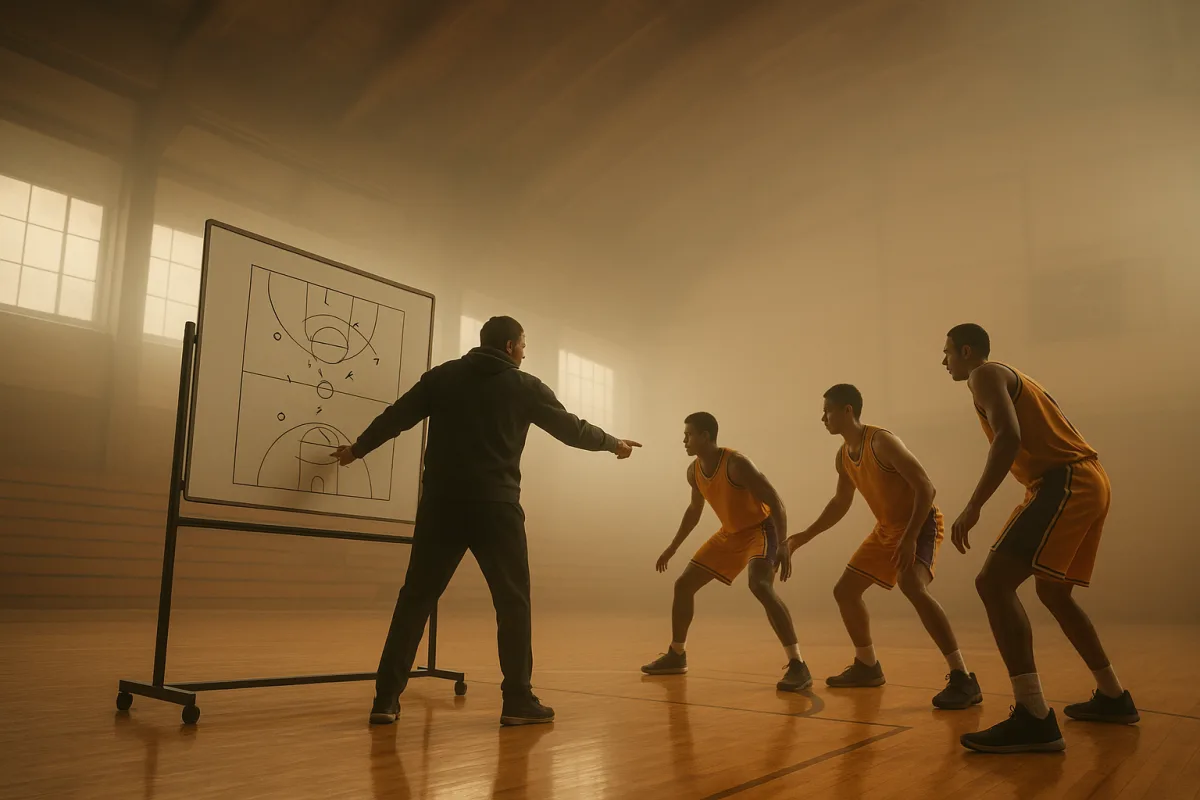
The decision: trade for a wing defender or preserve assets and build internally?
The Lakers’ current question is not whether the roster needs more talent. Luka Dončić and Austin Reaves give the club high-end offensive organization, while the July trade for Utah center Walker Kessler addressed a very visible need at the rim. [8][11]
The sharper decision is whether to spend more of the remaining trade inventory on a starting-caliber wing defender, or accept the transition year and let the new roster develop continuity around Dončić, Reaves and Kessler.
Those are not interchangeable plans. A wing trade attempts to fix the first line of defense, especially against teams that attack Dončić and Reaves with empty-corner pick-and-rolls or force cross-matches in transition. Standing pat preserves flexibility, but shifts responsibility to coaching, lineup selection and internal improvement.
The case for urgency begins with what the Lakers’ defensive rating actually says. Basketball-Reference lists the 2025-26 Lakers at 116.4 points allowed per 100 possessions, 19th in the league. That is not a raw total distorted by pace, it estimates defensive efficiency per possession. [2]
StatMuse’s on-off split makes an unpopular but necessary point about the prior roster: the Lakers also allowed 116.4 points per 100 possessions with LeBron James on the floor and without him. [3] His presence did not meaningfully change the team’s defensive output.
That does not mean James was an indifferent defender, or that one on-off number captures every assignment. It means the Lakers’ problem was broader than waiting for an older star to clean up the weak side.
The tape-level issue is usually earlier in the possession. When a point-of-attack defender loses the first screen or cannot contain a downhill guard, the big must meet the ball above the restricted area. The weak-side wing then tags the roller, and a corner shooter becomes available.
Kessler can help at the third step of that sequence. His size gives the Lakers more margin when the ball reaches the paint. But no center can simultaneously protect the rim, recover to a popping big and erase the open corner created by a late tag.
That is why the wing question matters more than the steal and block totals. The Lakers averaged 8.5 steals and 4.3 blocks per game last season, according to LA Sports Report. [4] Those are event stats, useful for describing disruption, but they do not show whether a defense consistently forced difficult attempts.
Option 1: trade for a starting-caliber two-way wing
The trade-first route means identifying a wing who can defend the opponent’s best large perimeter scorer, navigate a screen without automatic switching, and still make the low-usage offensive reads required next to Dončić and Reaves.
The target archetype matters more than a famous name. The Lakers do not principally need another high-volume creator. They need someone who can take the toughest non-center matchup, close out under control, and avoid turning every screen into a rotation drill.
That player would alter the matchup map. Instead of assigning Reaves or Dončić to a lower-usage perimeter player and hoping the opponent does not hunt them, the Lakers could place the new wing on the initiating scorer and keep their offensive engines closer to simpler assignments.
A real perimeter stopper also changes how aggressively Kessler can play. If the ball-handler is contained at the screen, Kessler can stay nearer the paint rather than repeatedly retreating into a deep drop. That preserves his rim deterrence and reduces the number of scramble closeouts behind him.
There is a price. Lakers Nation reported in January that Los Angeles had explored moving its 2032 first-round pick for a package of multiple first-round selections. [7] Since then, the Kessler trade reportedly cost the Lakers multiple future firsts and swaps, leaving a thinner margin for an imperfect move. [11]
The risk is not merely losing picks. It is spending the few remaining movable contracts and draft pieces on a player who is only nominally a wing defender, but cannot shoot enough to keep defenses from loading up on Dončić’s drives.
That distinction will show up in playoff possessions. If the acquired player is ignored in the corner, the opponent can place an extra body at the nail, shrink Dončić’s passing windows and force the Lakers into late-clock pull-ups. Defensive help becomes offensive congestion.
Financially, this route requires precision. Capsheets lists the Lakers at roughly $200.9 million in payroll, around $500,000 over the projected luxury-tax threshold, although still below the second apron. [9] This is not a team that can casually repair a mistake through cap space.
Silver Screen and Roll’s cap analysis similarly frames the Lakers as having limited ways to add free agents without corresponding moves. [5] A trade may be necessary, but necessity should not be confused with permission to overpay.
Option 2: preserve assets and solve the defense internally
The stand-pat option is not passive if the Lakers commit to a clear defensive identity. It means using training camp to establish which lineups can protect Dončić and Reaves without sacrificing too much spacing or secondary creation.
The new personnel offers some pathways. Kessler can anchor more conservative coverages, Quentin Grimes can take more perimeter responsibility, and Collin Sexton can provide another ball-handling option so Dončić does not have to carry every offensive possession. [8]
But those pieces also create a sorting problem. Grimes may be useful as a perimeter defender, yet one capable guard defender does not equal wing depth against bigger scorers. Yahoo Sports identified wing depth as the roster’s largest hole after the overhaul. [12]
The Lakers could compensate with matchup-specific schemes. They can top-lock off-ball shooters, pre-switch before the opponent isolates a weaker defender, or use Kessler in a deeper drop against elite pull-up shooters. Each choice solves one problem while exposing another.
Pre-switching reduces the chance that Dončić or Reaves gets isolated after a screen. It also demands communication, and communication is precisely where a rebuilt roster is most vulnerable. Yahoo Sports noted that nine new players joined the team, including key rotation additions. [12]
There is also a durability concern in relying on internal depth. Former Golden State center Kevon Looney joined on a one-year, $3.9 million deal, but recent reporting highlighted that he played only 21 games last season because of a knee injury. [12] He should be treated as insurance, not a guaranteed solution.
Standing pat has one major advantage: it gives the organization information. The Lakers can learn whether Kessler’s presence improves their shell defense, whether Grimes can hold up against larger wings, and whether Sandro Mamukelashvili’s offensive utility can coexist with adequate defensive rebounding. [8]
That information has value because current trade reporting is thin. The supplied Heavy headline about pursuit of a highly touted first-round pick does not identify a substantiated, current Lakers transaction. The more concrete reporting concerns the earlier 2032-pick discussions, not an active September deal. [7]
The downside is that the Lakers would be betting on improvement after losing multiple contributors. Silver Screen and Roll, Bolavip and RealGM all documented a substantial offseason exodus, including James, Marcus Smart, Rui Hachimura, Luke Kennard and Jaxson Hayes, with Deandre Ayton moved to Washington. [5][6][11]
Smart’s departure is especially relevant to the choice, even without reducing him to a reputation label. Losing an experienced physical guard removes one possible answer when an offense tries to initiate against a smaller Lakers backcourt. Replacing that function is a lineup issue, not simply a scoring issue.
Head-to-head comparison
| Criterion | Trade for a two-way wing | Preserve assets and build internally |
|---|---|---|
| Point-of-attack defense | Offers the clearest route to stopping penetration before Kessler must rotate. | Depends heavily on Grimes, scheme discipline and avoiding unfavorable matchups. |
| Wing-size matchup flexibility | Improves assignments against big scorers and reduces cross-match stress. | Leaves a recognized starting-lineup wing concern unresolved. [10][12] |
| Fit beside Dončić and Reaves | Works well only if the acquired wing shoots, cuts and makes quick decisions. | Keeps offensive roles clearer, but can force the guards into more difficult defensive assignments. |
| Kessler’s defensive value | Lets the center protect the rim instead of repeatedly covering perimeter breakdowns. | Can still improve the defense, but asks Kessler to solve problems created above the arc. |
| Chemistry | Adds another adaptation period to a roster already rebuilt around several newcomers. | Gives nine new players a chance to establish communication and role clarity. [12] |
| Draft flexibility | Costs scarce picks or swaps after the Kessler acquisition. [11] | Protects remaining assets for a later, better-defined need. |
| Financial feasibility | Must be salary-matched carefully because the Lakers are above the cap and tax threshold. [[5]](https://www.silverscreenandroll.com/lakers-free-agency-rumors-news/120806/lebron-james-lakers-nba-free-agency-cap-sheet-analysis?utm_source=openai "What LeBron James’ departure means for the Lakers’ free-agent plans | Silver Screen and Roll")[9] |
| Main failure mode | Overpaying for a defender who compromises spacing or is not truly switchable. | Discovering too late that a scheme cannot manufacture the size and containment the roster lacks. |
Why the trade option narrowly wins
The honest answer is close because the Lakers have already spent meaningful future capital on Kessler. If the only available wing is expensive, non-shooting, injury-prone, or merely average against elite scorers, the correct move is to wait.
But if Los Angeles can acquire a legitimate two-way wing without sending out another premium first-round pick, the trade route better addresses the actual defensive sequence. It reduces the number of possessions in which Kessler is asked to correct a breakdown that began 25 feet from the rim.
The Lakers cannot assume a defensive leap simply because James has departed. The 2025-26 on-off data says their defensive efficiency was unchanged by his presence, and Dončić’s on-court defensive rating was only marginally better at 116.2. [2][3]
That evidence points away from personality-based explanations. Los Angeles needs a roster solution that changes who takes the first assignment, who navigates the screen, and how often the back line has to rotate.
Who each option suits
Trade for a two-way wing suits the Lakers if: the front office can obtain a real starting defender who can guard up a position, hit open shots and fit without consuming another foundational pick. This is the better choice for a team trying to turn Kessler’s rim protection into a coherent top-half defense quickly.
Preserve assets and build internally suits the Lakers if: available trade targets are overpriced or offensively compromised, and the staff believes Grimes can handle more difficult assignments while Kessler stabilizes the paint. It is the safer asset-management choice, but it carries a higher risk that the wing problem remains visible in postseason matchups.
Frequently Asked Questions
What are the main defensive challenges facing the Lakers in 2026?
The Lakers struggled with structural perimeter defense issues, particularly in containing ball-handlers through screens and preventing open corner shooters. Their defensive rating was 116.4 points allowed per 100 possessions, ranking 19th in the league, indicating below-average efficiency. While Walker Kessler improved rim protection, the team still needs a wing defender who can survive switches and contain the ball before it reaches the paint.
Should the Lakers trade for a two-way wing defender in 2026?
Yes, the Lakers should prioritize trading for a credible two-way wing defender. Such a player would help address perimeter defensive problems by guarding the opponent’s best large perimeter scorer, navigating screens without automatic switches, and reducing pressure on Luka Dončić and Austin Reaves. Although this may cost valuable draft assets, it would improve defensive matchups and allow Kessler to focus more on rim protection.
How does Walker Kessler impact the Lakers' defense?
Walker Kessler strengthens the Lakers’ rim protection, providing more margin when opponents attack the paint. However, he does not eliminate the need for a strong perimeter defender because no center can simultaneously protect the rim, recover to a popping big, and cover open shooters created by perimeter defensive breakdowns. His presence improves the third step of defensive sequences but relies on perimeter containment to maximize effectiveness.
What are the Lakers' salary cap constraints for roster moves in 2026?
The Lakers are above the salary cap and near the luxury-tax line, which limits their ability to add players through free agency without creating cap space first. Therefore, trades are a more realistic option for roster improvement in 2026. The front office must manage these financial constraints carefully to facilitate meaningful roster changes.
What are the pros and cons of the Lakers preserving draft assets versus trading?
Preserving draft assets maintains future flexibility and avoids risking valuable picks on imperfect moves, allowing the roster to develop continuity internally around Dončić, Reaves, and Kessler. However, standing pat leaves the team’s perimeter defensive issues unaddressed, relying heavily on coaching and scheme adjustments. Trading for a wing defender can fix immediate defensive problems but may deplete scarce draft capital and limit long-term options.
How we researched this
This article was assembled from 1 video source, 4 published articles, 12 cited references.
Nothing here is based on hands-on testing. Where a figure or finding appears, it belongs to the source cited beside it, and the writing says so rather than implying otherwise. Every source is listed below so you can check it.
Sources
The Chicago Bulls are a Disgrace of a Franchise — Andy Hoops
Demar Kawhi - Done deal Kawhi Leonard goes to Raptors DeMar DeRozan goes to Spurs — defensorianna.gob.ar
Report: Lakers Pursue Trade of ‘Highly Touted’ 1st RD Pick in Major New Move — heavy.com
Mavericks Trade Assets Ranked: Players, Picks and Contracts — Sports Illustrated
Bronny James reacts to latest Lakers free agent signing elsewhere — NY Post Sports
NBA suspends Clippers owner Ballmer, fines team $30M, Kawhi Leonard $700K in cap circumvention case
2025-26 Los Angeles Lakers Roster and Stats | Basketball-Reference.com
Lakers Defensive Rating With And Without Lebron James In 2026 | StatMuse
What LeBron James’ departure means for the Lakers’ free-agent plans | Silver Screen and Roll
Lakers’ list of potential free agents after 2026 NBA playoffs exit - Bolavip US
Lakers Rumors: Looking To Trade 2032 First-Round Pick For Package Of Multiple Firsts
Lakers 2026-2027 Roster Construction: Building a New Identity Around Doncic and Reaves
Los Angeles Lakers Cap Sheet - 2026/2027 Season - Capsheets.com
Lakers Insider Identifies Major Concern With Team's Current Starting Lineup
Lakers’ Biggest Roster Hole and How They Can Fix It - Yahoo Sports
Watch Lakers' Current Challenges and Roster Moves on Youtube
Related Articles
NBA Trade Rumors Involving Miami Heat and Los Angeles Lakers
Explore the latest NBA trade rumors involving the Miami Heat and Lakers, including roster moves, player targets, and strategic analysis.
Jonathan Kuminga Timberwolves Signing: Contract and Team Fit
Explore Jonathan Kuminga's Timberwolves signing, contract details, and how he fits into Minnesota's roster and salary cap strategy.
Nikola Jokic Trade and Denver Nuggets Future Explained
Explore the Nikola Jokic trade rumors, Peyton Watson sign-and-trade, and how Denver Nuggets' salary cap affects their future roster moves.
NBA 2026 Offseason Team Moves and Surprises Explained
Explore key NBA 2026 offseason team moves and surprises, analyzing trades, strategies, and impacts on team depth and championship chances.