Washington Wizards Roster Outlook and New Era Analysis
Explore the Washington Wizards roster outlook and new era, focusing on Trae Young, Anthony Davis, and defensive challenges for 2026-27.
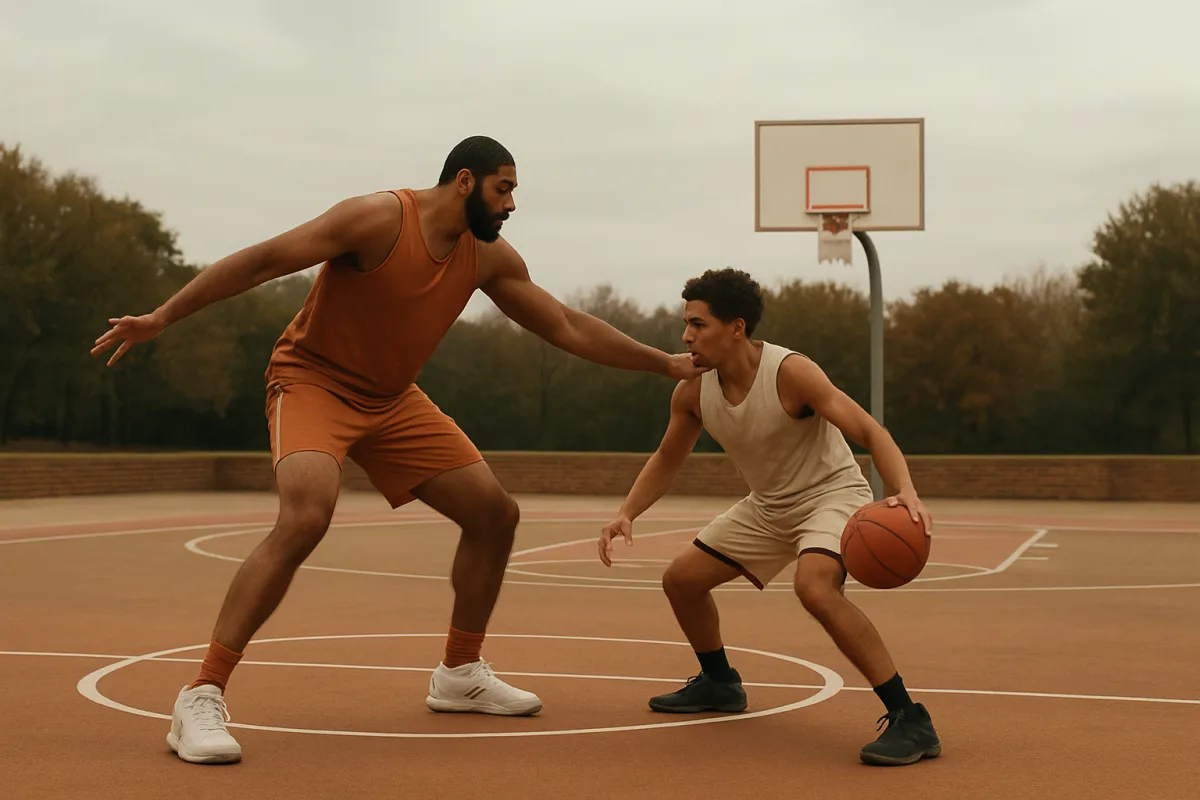
The actual question is whether Davis can make Trae Young survivable
The exciting version of Washington’s offseason is easy to state: Trae Young, sometimes branded “Ice Trae,” supplies high-volume pick-and-roll creation, while Anthony Davis supplies elite defensive range and rim protection. The harder question is what those skills change possession by possession.
That distinction matters because the Wizards did not merely have a bad record in 2025-26. They finished 17-65, last in the Eastern Conference, with a 111.0 offensive rating and a 122.7 defensive rating. [5] Those are points scored and allowed per 100 possessions.
A rating is useful because it strips out pace. A team that plays fast will naturally score and allow more raw points, creating the illusion of offense or defensive activity. Washington’s 122.7 defensive rating instead says opponents scored 122.7 points for every 100 possessions, regardless of tempo. [5]
That is the starting point for evaluating a Davis-Young partnership. Davis can improve a defense in ways a conventional box score only partly captures. Young can create efficient offense, but his defensive limitations are most damaging when a team’s coverage asks him to handle the first action alone.
The Wizards are not, as some online discussion has suggested, a completed Davis-Young-AJ Dybantsa trio. Hoop Dungeon’s video presents Dybantsa as Washington’s No. 1 pick and a future defensive wing, while The Athletic’s headline similarly frames him as part of the roster conversation. [1] Current roster material does not support that premise. [10]
That correction is more than housekeeping. A 6-foot-9 creator with real two-way potential would change the personnel math around Young. Without Dybantsa, Washington cannot assume it has a large wing ready to absorb difficult perimeter assignments or cover rotations created by Young’s matchup.
The real roster question is therefore narrower: can Davis anchor a coverage system sturdy enough to protect Young, while leaving enough shooting and ballhandling on the floor to make Young’s offense matter?
What “building a wall behind Trae” actually means
When opponents hunt a small guard, they usually do not ask their best scorer to beat him one-on-one from a standstill. They involve that guard in a screen, force a switch or a trailing position, then attack the chain reaction.
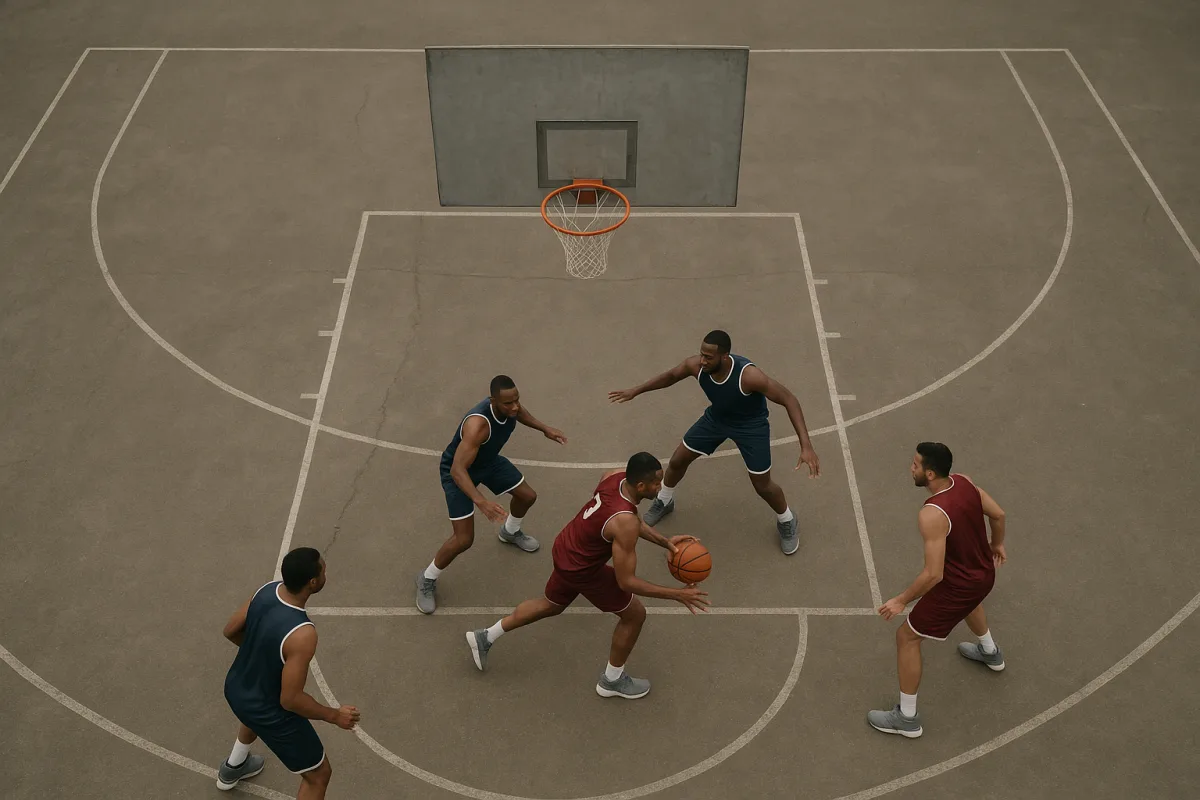
Picture Young guarding a ballhandler at the top of the floor. An opposing big sets a screen. If Young is caught on the screen, the ballhandler gets downhill. If a Wizards big steps up, the screener rolls toward the rim and forces another defender to rotate.
Davis’ value begins after that first screen. He can play in drop coverage, meaning he starts below the screen and protects the paint rather than chasing the ballhandler high above the arc. His job is to discourage the layup, deter the lob, and contest the shot after the guard recovers.
A good drop big is not simply a shot blocker waiting under the basket. He must set his depth correctly. Too deep, and the ballhandler walks into an uncontested pull-up jumper. Too high, and the roller has open space behind him for a lob or pocket pass.
Davis has historically offered more options than a stationary drop center because he can show higher, switch selectively, or recover from the foul line area to the rim. Those choices can keep Young from repeatedly facing the same losing matchup at the point of attack.
The phrase “rim protection” can obscure this. A block is the final event of a defensive possession. The more valuable outcome is often the drive that never happens, the lob pass that is not thrown, or the floater launched early because the ballhandler sees Davis waiting.
That is why Davis potentially changes Washington’s geometry. Young does not need to become a lockdown defender for the partnership to work. He needs to avoid being the point where every possession breaks, while Davis and the other three defenders maintain the coverage behind him.
The low man is the hidden player in this scheme
The decisive defensive role may not belong to Davis or Young. It is often the “low man,” the weak-side defender positioned nearest the rim when Davis helps upward against a pick-and-roll.
If Davis steps toward the ballhandler and the opposing center rolls, the low man must rotate to meet that roller. Then someone must “x-out,” rotating from the weak-side perimeter to cover the low man’s original shooter. It is a five-man exchange, not a Davis solo.
That is why Washington’s 2025-26 defensive rating cannot be fixed merely by importing a better big. The Wizards allowed 124.9 points per game and ranked near the league’s bottom defensively, but the rating is the cleaner warning: their problems involved repeated possessions, rotations, transition defense, and communication. [5]
Against a spread pick-and-roll offense, one late low-man rotation gives up a dunk. One slow x-out gives up a corner three. If the next closeout is undisciplined, the offense drives again and the defense starts another rotation cycle from a worse position.
Young is central to that chain because opponents will target him with screens, particularly late in games. If Washington switches, he may be placed against a bigger forward. If it stays in drop, he must fight over the screen and rejoin the play from behind.
The best version of the Davis partnership is therefore not “Davis erases Young.” No defender can erase repeated numerical disadvantages. It is “Davis lets Washington choose a less damaging answer,” buying time for Young to recover and allowing perimeter defenders to stay attached to shooters.
That requires size and discipline elsewhere. Washington’s depth chart remains more uncertain than the glamorous framing suggests, and external roster analysis has raised concerns about wing balance, perimeter shooting, and depth. [9][10] A defense can hide one weak link more easily than two.
The two-big answer has a price
Washington could place another big alongside Davis and build a more imposing interior shell. The appeal is obvious. A second interior defender can serve as the low man, take difficult rebounding assignments, and let Davis roam toward the action rather than wrestling a center all game.
The cost arrives on the other end. Two-big lineups work only if at least one big can space the floor, make rapid decisions from the short roll, or punish switches in the post. Otherwise, the opponent can crowd Young’s pick-and-roll lanes with an extra defender near the paint.
That is the central tension in a Young-Davis lineup. Young is at his best when the screen creates a two-on-one: he draws the big defender, then reads either his own floater, the rolling big, or the shooter lifted from the corner.
If Davis screens and dives while Washington surrounds them with reliable shooting, the defense has to pick a concession. Help from the corner opens a corner three. Stay home on shooters, and Davis has a clearer lane. Play soft drop, and Young can access his floater and midrange pull-up.
If the surrounding lineup lacks shooting, the defense can tag Davis’ roll early without surrendering much. That turns Young’s apparent advantage into a crowd of bodies. The offense may still produce assists, but an assist total does not tell us whether the initial action bent the defense efficiently.
This is why Washington’s weak shooting guard depth and limited spacing matter more than as a generic roster complaint. [9][10] They determine whether Davis functions as a vertical threat who creates an open shot, or as another body whose defender can shrink Young’s operating room.
The cap sheet makes the fit test immediate
Davis is under contract for 2026-27 and 2027-28, earning $58.5 million this season, with a $62.8 million player option for the following year. [2] His 2026-27 salary is roughly 35 percent of Washington’s cap, according to Capmath. [2]
Young signed a four-year agreement on July 6, 2026, after declining a $49 million player option. His new deal begins at $49.5 million in 2026-27 and rises to $58.4 million in 2029-30, with a player option in the final season. [3][4]
Together, those two 2026-27 salaries total about $108 million before accounting for the rest of the roster. That does not make the pairing misguided. It does mean Washington cannot treat surrounding shooting, defensive wings, and bench creation as optional finishing touches.
The NBA’s cap system does not require every strong team to have a deep bench full of expensive veterans. It does require cost-controlled contributors to outperform their contracts when two stars absorb this much payroll. Development is part of the roster construction, not a public-relations phrase.
That makes Anthony Gill’s opening-night spot mildly relevant. RealGM reported that the 6-foot-8 forward made the team after arriving at camp on a non-guaranteed Exhibit 9 deal, while Reece Beekman was converted from an Exhibit 10 arrangement to fill an open two-way slot.
Those transaction labels matter because they describe different degrees of commitment. An Exhibit 9 camp deal gives a team protection around a training-camp injury, while an Exhibit 10 deal can be converted to a two-way contract. Neither is a solution to high-leverage playoff possessions by itself.
Washington entered the season with the maximum 15 standard contracts and three two-way players, according to RealGM. That fills roster slots, but it does not answer whether the second unit can defend without Davis or generate quality offense when Young sits.
Takeoff requires coverage coherence, not just recognizable names
The 2025-26 Wizards were also thin outside their leading names. Their bench ranked 29th by the independent research summary, which aligns with the broader concern that Washington lacks proven two-way depth. That problem becomes sharper whenever Davis’ availability must be managed.
Davis has an extensive recent injury history, although no current injury was reported as of October 18, 2026. Young also missed significant time in 2025-26 with an MCL sprain, followed by back and quadriceps issues, before being medically cleared for this season. [1]
The point is not to predict missed games. It is to explain the structural consequence. A defense designed around Davis’ ability to clean up mistakes is fundamentally different when he sits, because the perimeter players can no longer press up on the ball with the same confidence.
There is also no detailed public evidence in the supplied reporting for a strong coaching-staff verdict, positive or negative. That leaves a practical unknown: can Washington teach the screen coverages, weak-side tags, scram switches, and transition rules needed to turn individual talent into a unit?
The Washington Post reported that the club’s big three framed training camp around changing the franchise narrative. [1] The basketball version of that change will not be measured first by headlines or even by a win total.
It will show up in the ordinary possessions. Can Young be screened without the defense collapsing? Can Davis protect the rim without abandoning corner shooters? Can the low man rotate, recover, and rebound? If Washington answers those questions consistently, the new era has a real foundation.
Frequently Asked Questions
What is the Washington Wizards' roster outlook for 2026-27?
The Wizards’ 2026-27 roster centers on Anthony Davis and Trae Young, both commanding significant salary cap space with Davis at $58.5 million and Young at $49.5 million. Despite some commentary suggesting AJ Dybantsa is part of the future core, current roster information does not include him. The team faces challenges with limited depth, particularly in defensive cohesion and bench scoring.
How will Anthony Davis impact the Washington Wizards' defense?
Anthony Davis is expected to serve as the back-line organizer, playing drop coverage to protect the paint and deter drives and lob attempts. His ability to set the correct depth and switch selectively can reduce the defensive burden on Trae Young by preventing easy scoring opportunities after screens. Davis’ defensive impact goes beyond shot-blocking to altering opponents’ offensive decisions.
Can Trae Young and Anthony Davis form an effective partnership?
Their partnership depends on Davis anchoring a coverage system that shields Young from being the sole defensive focus. Young’s offensive creation requires enough shooting and ballhandling around him, while Davis provides rim protection and defensive versatility. Young does not need to be a lockdown defender if Davis and the rest of the defense maintain strong coverage behind him.
Why is AJ Dybantsa not currently part of the Wizards' roster?
Despite some reports portraying AJ Dybantsa as a key future piece for Washington, current and reliable roster data does not list him on the Wizards for the 2026-27 season. There is no public information on his contract or injury status, indicating he is not yet integrated into the team’s plans.
What defensive challenges does the Washington Wizards team face?
The Wizards struggled defensively in 2025-26, finishing with a 122.7 defensive rating, the worst in the league. Their issues extend beyond shot-blocking to include repeated breakdowns in rotations, transition defense, and communication. The team’s defensive problems require coordinated effort from all five players, particularly the "low man" who must rotate effectively when Davis helps on ball screens.
How we researched this
This article was assembled from 1 video source, 2 published articles, 10 cited references.
Nothing here is based on hands-on testing. Where a figure or finding appears, it belongs to the source cited beside it, and the writing says so rather than implying otherwise. Every source is listed below so you can check it.
Sources
What NBA Legends ACTUALLY Think About The Wizards New Era — Hoop Dungeon
The Wizards have AD, Ice Trae and AJ Dybantsa. Is the team ready for takeoff? — The Athletic NBA
Wizards’ big three aims to ‘change the narrative’ as training camp commences - The Washington Post
2025-26 Washington Wizards Roster and Stats | Basketball-Reference.com
Washington Wizards 2026 Scores, Stats, Schedule, Standings | StatMuse
Washington Wizards Schedule for the 2026 NBA Season | Bleacher Report
Why the Wizards' Current Roster Isn't Built for Championship Success | Analysis
Washington Wizards Depth Chart | NBA Roster Analysis | CraftedNBA
Watch Washington Wizards' New Era and Roster Outlook on Youtube
Related Articles
NBA Offseason Team Building Strategies for 2026-27 Season
Explore NBA offseason team building strategies in 2026 and how moves shape Bulls and Timberwolves' 2026-27 outlooks.
New York Knicks 2026-27 Roster Moves and Season Preview
Explore the New York Knicks 2026-27 roster moves, preseason analysis, and key player updates including Brunson’s MVP case and Towns’ contract.
NBA Eastern Conference Outlook and Knicks' Position
Explore the NBA Eastern Conference outlook and the New York Knicks' position as they defend their title in the 2026-27 season.
NBA 2026 Offseason Analysis: Key Moves and Team Strategies
Explore the NBA 2026 offseason analysis with insights on major trades, signings, and team-building strategies shaping the upcoming season.