
Dwight Howard Overseas Career After NBA Retirement
Explore Dwight Howard's post-retirement overseas career, focusing on his role with Black Fortress Tbilisi in the Georgian Superliga.
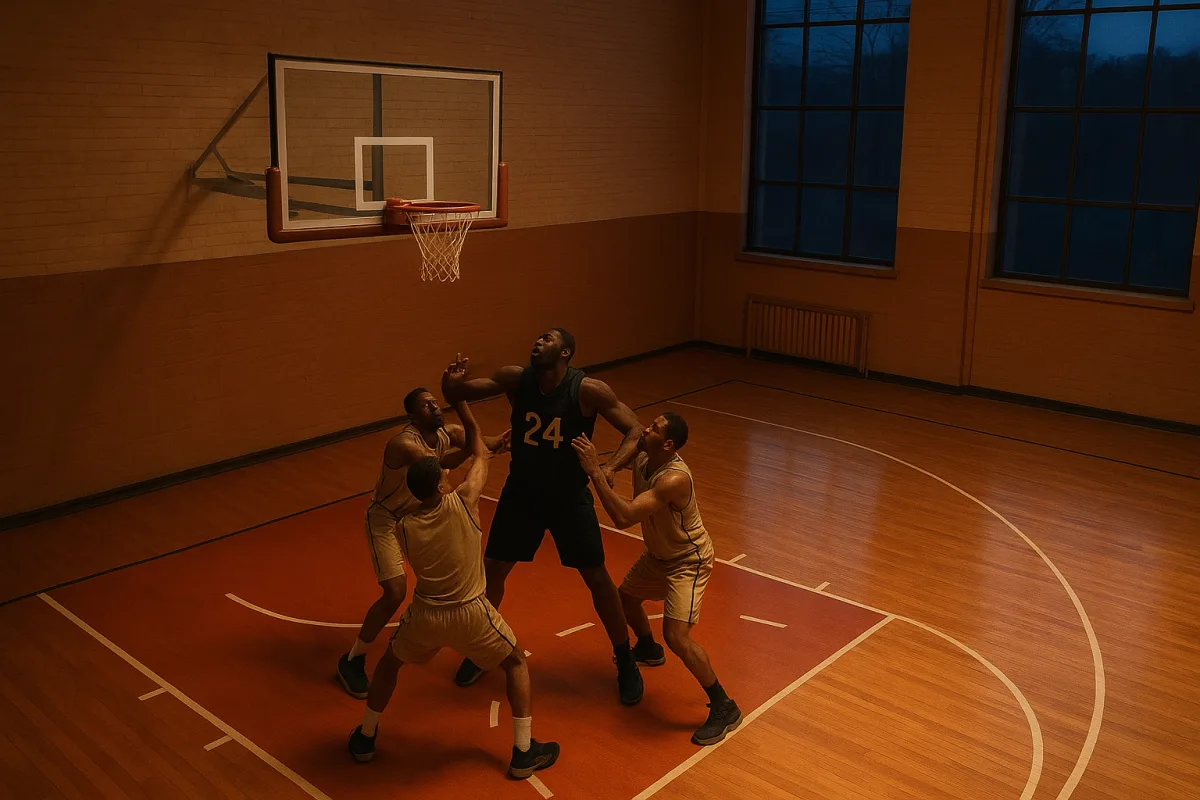
The important detail is promotion, not nostalgia
Dwight Howard’s decision to resume playing professionally with Black Fortress Tbilisi has naturally been framed around his résumé: a former No. 1 pick, NBA champion, three-time Defensive Player of the Year and 2025 Hall of Fame inductee choosing Georgia, the country rather than his home state. [1][6]
That history matters, but it does not explain the basketball decision. The useful lens is that Black Fortress is a recently promoted Georgian Superliga club, entering the country’s top division rather than operating as an established contender. [5]
There was initially some confusion around the team’s level. The Athletic’s first report described Black Fortress as a second-division side, while RealGM later reported that it had earned promotion after winning the second-tier title. The later club context is the one that matters now: Howard is joining a Superliga team. [1][5]
Promotion changes the question from, “Can Dwight Howard dominate a lower division?” to, “Can a newly promoted team build stable possessions around an older, famous center?” That is a much more interesting problem than the announcement itself.
In Georgia’s top league, the regular season consists of 10 teams playing 18 games, followed by playoffs and relegation consequences at the bottom of the table. [5] That is not an 82-game NBA environment where a team can survive a poor October and gradually discover its identity.
An 18-game schedule turns every lineup experiment into a larger slice of the season. A five-game adjustment period is not merely a slow start. It represents more than a quarter of a club’s regular-season calendar.
That is why the Howard signing should be evaluated through the mechanics of a newly promoted team’s half-court offense and defensive rebounding structure. Those are the areas where a veteran center can alter the quality of possession without needing to play like his Orlando peak.
What a veteran center actually changes
The most repeatable value Howard can provide is not necessarily scoring. It is the ability to end one possession and organize the next one.
For a newly promoted side, defensive rebounding is not a cosmetic statistic. It determines whether a sound initial defensive stand becomes a transition opportunity, or whether it turns into another 14 or 24 seconds of defending after an offensive rebound.
That distinction matters more than raw rebound totals. A center can collect eight rebounds in a game while still failing to solve a team’s actual problem if opponents are repeatedly retrieving misses outside his immediate area.
The better question is whether Howard allows Black Fortress to keep its wings attached to shooters rather than pulling them into the paint to help rebound. If that happens, the club can defend the three-point line with more integrity.
A center with size and experience can also simplify transition defense. When a team trusts its big man to secure the defensive board, its guards can begin leaking into outlet lanes and its wings can fan out rather than crashing inward.
That does not automatically create fast-break offense. The rebound still has to be secured, the outlet has to be clean and the ballhandler must make a correct decision before the defense sets. But it gives a team the option.
In the half court, Howard’s most direct offensive function is likely to be screening rather than post isolation. The screen is not valuable because it physically flattens a defender. It is valuable because it forces two defenders to make a choice.
If Howard sets a high ball screen, the opposing center must decide whether to stay close to the rim, step up toward the ballhandler, switch, hedge or drop back. Each answer creates a different passing window.
Against drop coverage, the opposing big stays near the paint to prevent a direct drive or lob. That can leave the ballhandler room for a pull-up jumper, while Howard rolls into space behind the first defender.
Against a switch, Howard may have a smaller player guarding him near the basket. But the possession only becomes an advantage if Black Fortress can enter the ball cleanly, space the floor and attack before help defenders collapse.
That is where lazy “too small for Howard” analysis usually fails. A mismatch does not become a basket just because it exists. It becomes useful only if the offense can deliver the pass and prevent the defense from loading two or three bodies into the lane.
Howard’s presence could also improve the offense without receiving the ball. A hard roll occupies the low defender, which can free a corner shooter. A seal can force weak-side help, which can open a skip pass.
Those are the possessions that matter for a developing club. A center does not need 20 post touches to influence offense. He can create an extra half-second for a guard or force a defender to tag the roll instead of staying home on a shooter.
The cost of building around him
Every coverage and lineup choice has a tradeoff. The tradeoff with an older traditional center is usually space and mobility, particularly when the opponent pulls him away from the rim.
If Black Fortress keeps Howard in deep drop coverage, it is prioritizing the basket and defensive rebounding. The potential cost is conceding pull-up shooting or allowing ballhandlers to build rhythm in the middle of the floor.
If the club asks him to show higher on screens, it may reduce that space for the ballhandler. But higher coverage creates a longer recovery route back to the basket, which puts more pressure on weak-side rotations.
That is where communication becomes as important as athleticism. The low-side wing must know whether to tag the rolling big man. The next defender must know whether to rotate to the corner. The original on-ball defender must recover from behind.
A veteran center can call coverages and direct traffic, but he cannot execute four teammates’ rotations. The success of this move will therefore depend heavily on the guards and wings around him, not on Howard alone.
The offensive version of that tradeoff is equally clear. If Black Fortress plays Howard with multiple shooters, his screens and rolls can widen the floor. If it pairs him with another non-shooting frontcourt player, the paint can become crowded.
Crowded paint is particularly damaging for a promotion-level team because it narrows the margin for error. Guards see smaller driving windows, post entries become easier to deny, and misses can turn into long rebounds and transition chances for opponents.
This is why it would be premature to project Howard’s individual statistics as the measure of the signing. Detailed recent Superliga player data and team-level lineup evidence are not readily available, so there is no responsible basis for declaring how many points or rebounds he will produce.
The more defensible forecast is structural. Black Fortress should be better positioned to play conventional center-based basketball, protect its own rim and create a clearer pick-and-roll identity than a typical newly promoted team without an experienced interior anchor.
Why this stop fits Howard’s recent career
Howard’s move is not his first post-NBA venture. After his last NBA season in 2022, he played for the Taoyuan Leopards in Taiwan’s T1 League, where he earned All-Star recognition and Most Valuable Import honors. [6]
He later joined the Taiwan Mustangs in a player and part-owner role, while also appearing in the BIG3 after joining the league in 2025. His debut there ended in an ejection, a reminder that competitive outlets after the NBA do not necessarily resemble the NBA’s controlled structure. [6]
Reporting also connected Howard to planned participation with Strong Group in Dubai’s International Basketball Championship, although available materials do not provide a reliable performance record from that event. That distinction matters because a planned appearance is not the same thing as a documented playing stint. [6]
The pattern is not simply that Howard is searching for one last contract. His choices have mixed playing opportunities, international visibility and direct involvement with basketball beyond the NBA’s usual pathway.
Howard said in his announcement that this would be the last time fans see him play professionally. [1] It is fair to treat that as his stated intention, but not as a tactical guarantee about his role, minutes or the club’s competitive ceiling.
His motivations are more legible than the financial terms. He has publicly described wanting to spread the game of basketball, and his overseas choices suggest he remains interested in playing in environments where his name can carry unusual attention. [1]
Still, attention is not the same as market impact. There is no reported evidence yet on ticket sales, sponsorship revenue, broadcast growth or local fan response connected to Howard’s arrival in Tbilisi.
It would also be a mistake to use basketball data from the U.S. state of Georgia to infer demand in Georgia the country. They are separate markets, separate leagues and entirely different basketball ecosystems. [3][4]
The practical test for Black Fortress Tbilisi
The first useful tape questions will be straightforward. Does Howard still get to the screen with enough force to create separation? Can Black Fortress’ guards use the space? Can the team protect him from repeated high-space defensive actions?
The second question is lineup compatibility. If Howard is on the floor, can the club keep enough shooting around him to make the roll threat real, while retaining enough perimeter defense to avoid asking him to defend every action in space?
A newly promoted club cannot afford ornamental roster construction. In an 18-game regular season, the rotation needs to generate usable possessions immediately, not merely produce a few highlight sequences and a larger social-media footprint. [5]
There are also practical adaptation issues. Foreign veterans in Georgian basketball can face visa and work-permit requirements, language differences, limited infrastructure and budget constraints, although no reporting establishes that any of those factors has affected Howard or Black Fortress specifically.
Those are not reasons to dismiss the move. They are reasons to avoid treating an announced signing as a finished basketball project.
Howard’s floor remains meaningful if he rebounds, screens, protects the rim and gives Black Fortress a reliable late-clock option near the basket. His ceiling depends on whether the team can convert those basic advantages into an organized five-man system.
That is the central distinction. Black Fortress did not sign the 2009 version of Dwight Howard. It signed a decorated veteran center whose value, at this stage, will be measured by whether he makes a promoted team’s possessions simpler, cleaner and harder to break.
Frequently Asked Questions
What teams has Dwight Howard played for overseas after retiring from the NBA?
After his NBA career, Dwight Howard played for the Taoyuan Leopards in Taiwan’s T1 League during the 2022–23 season, earning All-Star and Most Valuable Import honors. He then joined the Taiwan Mustangs in 2024 as both a player and part-owner. Additionally, he participated in the BIG3 league in 2025 and had plans to play in Dubai’s International Basketball Championship with the Philippines’ Strong Group.
Why did Dwight Howard join Black Fortress Tbilisi after retirement?
Howard’s signing with Black Fortress Tbilisi is best understood as a strategic move by a newly promoted Georgian Superliga team to acquire a high-usage interior reference point. The decision is less about nostalgia or fame and more about whether Howard can help the team improve its possession quality, particularly in defensive rebounding and half-court offense.
How does Dwight Howard impact a newly promoted basketball team overseas?
Howard’s impact centers on improving defensive rebounding, rim protection, and organizing possessions rather than just scoring. His presence allows wings to defend the three-point line more effectively and helps simplify transition defense by securing defensive boards. Offensively, he contributes mainly through setting screens that create passing and scoring opportunities for teammates.
What is Dwight Howard's role in the Georgian Superliga?
In the Georgian Superliga, Howard serves as a veteran center expected to stabilize Black Fortress’s half-court offense and defensive rebounding. Given the league’s short 18-game regular season, his ability to quickly integrate and improve possession efficiency is critical for the team’s success in the top division.
How does Dwight Howard's overseas career differ from his NBA career?
Unlike the NBA’s long 82-game season, Howard’s overseas career involves shorter seasons with fewer games, such as the Georgian Superliga’s 18-game schedule. His role overseas focuses more on leveraging experience to improve team structure and possession quality rather than dominating through individual scoring or athleticism as in his NBA peak.
How we researched this
This article was assembled from 3 published articles, 6 cited references.
Nothing here is based on hands-on testing. Where a figure or finding appears, it belongs to the source cited beside it, and the writing says so rather than implying otherwise. Every source is listed below so you can check it.
Sources
Dwight Howard announces he will play in Georgia, but not that Georgia — The Athletic NBA
Kuany, Weems & Williams Ink With Bulldogs - University of Georgia Athletics
Superleague — Basketball standings, fixtures & stats | Betmana - Sports Data & Analytics
Related Articles
Charles Barkley Retirement and Inside the NBA Future
Learn about Charles Barkley's retirement and what it means for the future of Inside the NBA, including production and hosting changes.
NBA Legends' Perspectives on Today's Game and Players
Explore NBA legends' insights on how past skills and coaching translate to today's game and players across eras.
NBA Smart Basketball Technology Testing Explained
Explore NBA smart basketball technology testing in 2026 preseason and what data it provides without impacting officiating decisions.
LeBron James 76ers Preseason Impact and Team Dynamics
Explore LeBron James' 76ers preseason impact, his playing style, and how he influences team offense and Embiid's role.