
Jonathan Kuminga Team Choice and Trade Controversy Explained
Explore Jonathan Kuminga's team choice, contract details, and trade controversy in the NBA, including Minnesota vs Lakers offers and career impact.
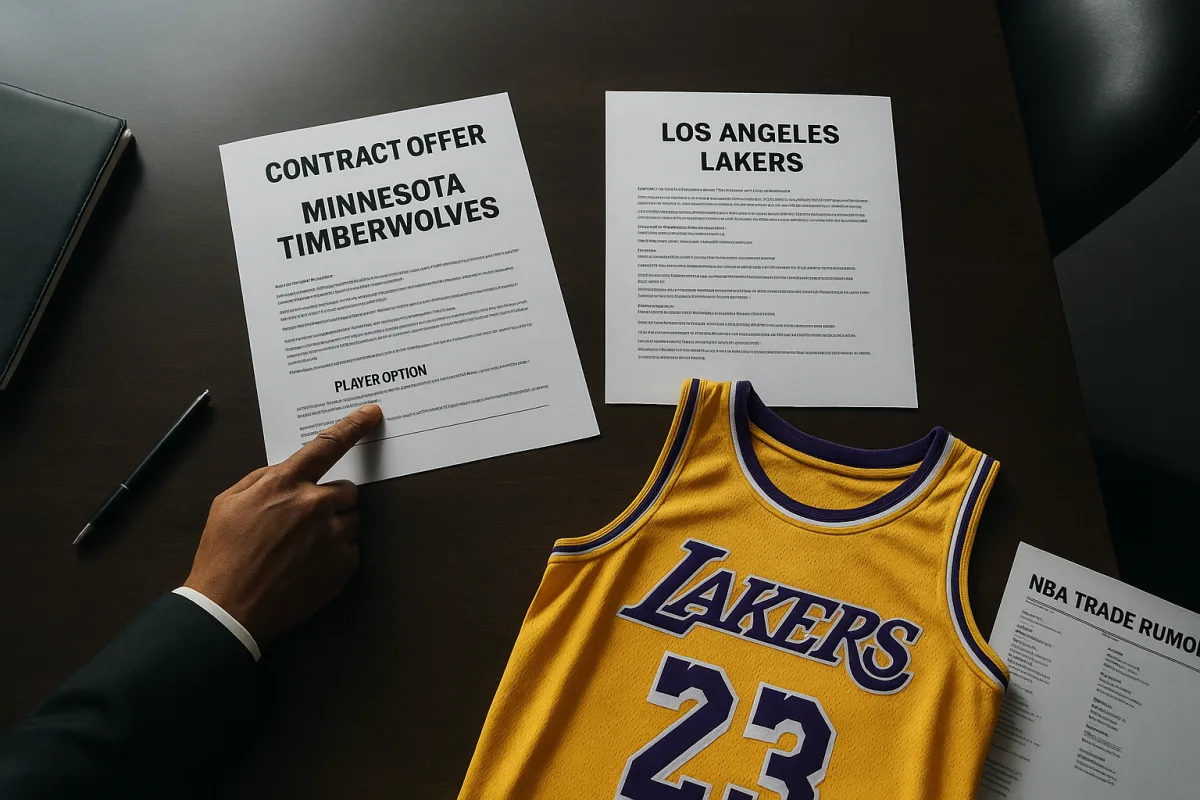
The quick list
- Best overall: Minnesota Timberwolves, for Kuminga if role clarity, short-term flexibility and a winning defensive structure matter more than maximum guaranteed salary.
- Best value: Los Angeles Lakers, for Kuminga if the priority is annual pay and longer guaranteed security through a three-year sign-and-trade.
- Best for long-term security: Golden State Warriors’ prior extension path, for a player who values a major guaranteed commitment, though Kuminga already declined the reported three-year, $75 million offer in 2025. [7][8]
The reader’s real question is not whether Minnesota “won” a recruiting battle. It is whether Kuminga made the rational basketball choice by taking less money, whether the Wolves’ roster can support his game, and whether the trade controversy has any substance.
The clean answer is that Minnesota’s deal makes basketball sense if Kuminga wanted a shorter runway to prove himself. The controversy does not currently clear the evidence threshold required to call it shady.
| Option | Reported financial terms | Contract size and control | Roster layout | Primary trade-off |
|---|---|---|---|---|
| Minnesota Timberwolves | About two years, $12 million, with a player option [[1]](https://slta.news/lakers-pursue-jonathan-kuminga-sign-and-trade/?utm_source=openai "Jonathan Kuminga Signs Two-Year Deal with Minnesota Timberwolves, Spurning Lakers Offer | slta.news")[[6]](https://www.foxsports.com/articles/nba/jonathan-kuminga-picked-the-timberwolves-for-the-oncourt-fit-and-the-genuine-connection-he-felt?utm_source=openai "Jonathan Kuminga picked the Timberwolves for the on-court fit and the genuine connection he felt | FOX Sports") | Short deal, Kuminga can return to the market quickly |
| Los Angeles Lakers | About three years, $12 million per season through a sign-and-trade [[1]](https://slta.news/lakers-pursue-jonathan-kuminga-sign-and-trade/?utm_source=openai "Jonathan Kuminga Signs Two-Year Deal with Minnesota Timberwolves, Spurning Lakers Offer | slta.news")[[2]](https://www.bballrumors.com/2026/08/heres-why-kuminga-turned-down-double.html?utm_source=openai "Here's Why Kuminga Turned Down Double The Money From Lakers To Go To Minnesota | NBA Trade Rumors") | Longer commitment and materially greater guarantee |
| Golden State Warriors, 2025 offer | Reported three years, $75 million extension [7][8] | Largest known guarantee, but no immediate market reset | Familiar system, but a long-running fit debate beside Stephen Curry and Draymond Green | Kuminga would have committed before resolving role uncertainty |
Minnesota’s offer was cheaper, but not necessarily worse
The headline framing, “Kuminga chose Minnesota over double the Lakers money,” is directionally useful but incomplete. The Lakers reportedly offered roughly $12 million per year for three years, while Minnesota landed him on a two-year deal worth approximately $12 million total. [1][2]
That is a substantial gap in guaranteed earnings. The Lakers route reportedly put the annual number around $12 million, and the Minnesota route put the total contract near that same figure, depending on the report. [1][2][6]
But contract comparison cannot stop at annual salary. Minnesota’s second-year player option changes the layout of the deal, because it offers Kuminga a potential return to free agency after one season if his role and production rise. [1][6]
That is especially relevant after Kuminga reportedly turned down Golden State’s three-year, $75 million extension in 2025. The decision may look aggressive, and some commentary has questioned the representation strategy, but it establishes that security was not his only priority. [7][8]
A player seeking the maximum guaranteed bag would choose the Lakers’ reported structure. A player seeking a proving year, a clean positional opening and control over his next negotiation could reasonably prefer Minnesota, even while accepting less immediate money.
That distinction matters because it removes the need for a conspiracy theory. Kuminga did not have to be talked into an irrational deal if his internal calculation was flexibility plus fit rather than total guarantee.
Why the Timberwolves’ basketball pitch fits the tape
Minnesota’s need is straightforward. Following the departures of Julius Randle and Naz Reid, the Wolves needed a power forward, and public reporting identified Kuminga as the answer to that roster vacancy. [5]
That is more meaningful than a generic “young core” pitch. A fourth option joining a loaded wing room faces an immediate minutes problem, but a transition athlete joining a roster with a real frontcourt vacancy has a defined lane.
Kuminga described Minnesota’s recruitment as personal and consistent in comments transcribed by Chaz NBA. He cited conversations with president of basketball operations Tim Connelly, staffer Alonzo Gee, Anthony Edwards and LaMelo Ball as a major comfort factor.
FOX Sports similarly reported that Kuminga valued the on-court fit and the genuine connection he felt with Minnesota’s organization. [6] Those are normal recruiting variables, not evidence of inducements or irregular dealings.
On possessions, the fit begins with pace and rim pressure. Edwards and Ball can push early offense, while Kuminga is most useful when he runs the lane, attacks a tilted defense and cuts behind ball-watching help.
The Wolves can also use him as the screener in empty-corner actions. If Ball or Edwards draws two defenders at the level, Kuminga’s short-roll catch can become a direct rim attack rather than an isolation possession.
His defensive value could determine whether that offensive role remains available. Minnesota already has Gobert as the back-line anchor and McDaniels as its most natural difficult-wing assignment defender, allowing Kuminga to play more aggressively at the point of attack.
That is the optimistic lineup logic. Kuminga does not need to become Minnesota’s primary scorer for this to work, because the best version of his game is a force multiplier: run, cut, crash, switch where appropriate and finish advantages created by others.
The spacing problem is not cosmetic
The difficult part is half-court geometry. Kuminga has made 33.2 percent of his career three-point attempts, and a lineup with Gobert already contains one non-shooting big whose defender will often live near the paint. [5][6]
That is not a criticism of Kuminga’s talent. It is a coverage problem. Against a defense that parks Gobert’s defender at the rim and helps off Kuminga in the corner, Minnesota can see two bodies waiting before Edwards reaches the restricted area.
The Wolves have answers, but each answer changes the lineup’s layout. They can station Kuminga in the dunker spot, but that risks crowding Gobert. They can use him as a screener, but that makes McDaniels and Ball’s shooting more important.
They can also stagger the frontcourt. Kuminga at power forward beside a shooting center changes the floor completely, because his defender cannot simply combine help responsibilities with Gobert’s defender at the rim.
The public reaction captured by Hoop Dungeon gets at this tension, even if its presentation is more speculative than reporting. The question is not whether Minnesota has enough athleticism, it plainly does, but whether its highest-leverage five can create clean paint access in playoff possessions.
Former players cited in Hoop Dungeon focused on role allocation as well. Their concern was that Edwards, Ball and Kuminga all need enough touches, while McDaniels’ expanding offensive role and Gobert’s interior needs complicate the possession map.
That read is fair when stated precisely. There are only so many on-ball reps, but Kuminga does not need a large share of them if he accepts an off-ball power-forward job. The fit worsens only if he treats every touch as an audition.
The controversy has more smoke than evidence
Yahoo Sports published a short item framing Gilbert Arenas’ comments as a warning about possible shady dealing in Kuminga’s Minnesota move. [4] That framing deserves scrutiny, but a question raised on a show is not evidence of wrongdoing.
No credible reporting or official league action has identified improper benefits, secret inducements, cap circumvention or recruitment-rule violations in Minnesota’s acquisition. The available reporting describes a conventional free-agency recruitment and contract negotiation. [1][5][6]
NBA team-building rules do police the financial mechanism. The Collective Bargaining Agreement includes salary-matching rules, apron restrictions and limits such as the Stepien Rule, while salary-cap circumvention can bring serious consequences. [3]
The league’s Clippers findings in the Kawhi Leonard matter show that the NBA can investigate and announce sanctions when it determines rules may have been violated. [4] No comparable finding, investigation or formal allegation exists here.
It is also important not to confuse a sign-and-trade discussion with a suspect transaction. The Lakers’ reported offer was a three-year sign-and-trade, while Minnesota ultimately signed Kuminga to its own shorter agreement. [1][2]
That means the “trade controversy” is mostly a narrative built around the unexpected choice of a lower-salary contract. It is understandable for observers to ask why a player left money behind, but the documented answer is short-term flexibility and role preference.
Minnesota’s ownership transition adds another layer of public curiosity. Marc Lore sold the franchise to Marc Stad for $4.5 billion in August 2026, but ownership change alone does not establish any link to Kuminga’s recruitment or contract. [5]
The standard should remain high. If a report eventually documents a cap violation, undisclosed payment or prohibited arrangement, then the story changes. Until then, calling the transaction shady goes beyond the available record.
Who each option suits
Minnesota Timberwolves: This was the best fit for Kuminga if he wanted a starting-level power-forward opportunity, a defensive infrastructure behind him and an early chance to reset his market value. The cost is lower immediate security and a lineup fit dependent on better shooting decisions.
Los Angeles Lakers: This was the best fit if Kuminga’s priority was contract certainty. Roughly $12 million annually over three years would have provided a much stronger guaranteed financial floor, but it also would have reduced his ability to revisit his role quickly. [1][2]
Golden State Warriors’ prior extension path: This suited the player who wanted the biggest reported commitment, three years and $75 million. Kuminga’s rejection suggests he valued future control more highly, though the financial risk of that choice remains impossible to ignore. [7][8]
Frequently Asked Questions
Why did Jonathan Kuminga choose the Minnesota Timberwolves over the Lakers?
Jonathan Kuminga chose the Timberwolves primarily for a shorter-term contract and a clearer on-court role. He valued the two-year deal with a player option that allowed an earlier return to free agency, as well as the opportunity to fill the power-forward vacancy next to key players like Rudy Gobert. Additionally, Kuminga felt a genuine connection with Minnesota’s leadership and star guards, which influenced his decision beyond financial considerations.
What are the details of Jonathan Kuminga's contract with the Timberwolves?
Kuminga signed a two-year contract with the Minnesota Timberwolves worth about $12 million in total, including a player option for the second year. This deal offers him more flexibility to re-enter free agency sooner compared to longer-term offers, aligning with his preference for a shorter commitment and clearer role on the team.
Is there any controversy surrounding Jonathan Kuminga's trade and signing?
As of September 12, 2026, there are no credible reports or official NBA investigations alleging any wrongdoing, cap circumvention, or improper recruitment related to Kuminga’s signing by the Timberwolves. While some analysts have expressed skepticism about his agent’s past contract decisions, there is no evidence implicating Minnesota’s recruitment process.
How does Kuminga's contract offer from Minnesota compare to the Lakers' offer?
The Lakers reportedly offered Kuminga a three-year sign-and-trade deal worth roughly $12 million per year, providing greater guaranteed money and longer-term security. In contrast, Minnesota’s two-year deal is less lucrative annually but offers Kuminga more flexibility and a quicker path back to free agency, which he prioritized over maximum guaranteed salary.
What impact does Kuminga's team choice have on his NBA career?
Choosing Minnesota gives Kuminga a clearer power-forward role alongside players like Rudy Gobert, addressing a key roster need. However, his 33.2% career three-point shooting raises some questions about spacing in the Timberwolves’ lineups. The shorter contract also allows him to prove himself sooner and potentially seek a more lucrative deal in the near future.
How we researched this
This article was assembled from 2 video sources across 2 channels, 2 published articles, 8 cited references.
Nothing here is based on hands-on testing. Where a figure or finding appears, it belongs to the source cited beside it, and the writing says so rather than implying otherwise. Every source is listed below so you can check it.
Sources
Jonathan Kuminga talks picking Wolves over Lakers & playing with LaMelo and Ant — Chaz NBA
What NBA Legends ACTUALLY Think About The Timberwolves New Era — Hoop Dungeon
Jonathan Kuminga Says Feeling Wanted Led Him To Choose Wolves Over Lakers — RealGM
Gilbert Arenas Tips Off NBA Over Potential Shady Dealing in Jonathan Kuminga’s Timberwolves Deal — Yahoo Sports
Jonathan Kuminga Signs Two-Year Deal with Minnesota Timberwolves, Spurning Lakers Offer | slta.news
Here's Why Kuminga Turned Down Double The Money From Lakers To Go To Minnesota | NBA Trade Rumors
Kuminga's Timberwolves Contract Exposes Warriors' Reckless Move
Watch Jonathan Kuminga's Team Choice and Trade Controversy on Youtube
Also from the sources
Related Articles
Jonathan Kuminga Timberwolves Signing: Contract and Team Fit
Explore Jonathan Kuminga's Timberwolves signing, contract details, and how he fits into Minnesota's roster and salary cap strategy.

NBA Offseason Team Building Strategies for 2026-27 Season
Explore NBA offseason team building strategies in 2026 and how moves shape Bulls and Timberwolves' 2026-27 outlooks.
Jalen Duren Contract Standoff and Trade Rumors Explained
Explore the latest on Jalen Duren's contract standoff, trade rumors, and what it means for the Detroit Pistons' future plans.
Nikola Jokic Trade and Denver Nuggets Future Explained
Explore the Nikola Jokic trade rumors, Peyton Watson sign-and-trade, and how Denver Nuggets' salary cap affects their future roster moves.